
Title
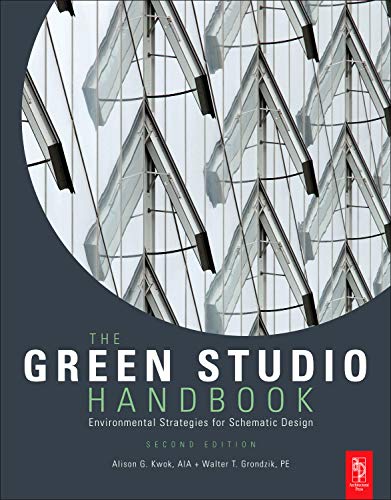
The Green Studio Handbook,New
Processing time: 1-3 days
US Orders Ships in: 3-5 days
International Orders Ships in: 8-12 days
Return Policy: 15-days return on defective items
Payment Option

Learn how to integrate green strategies into your building design. This practical handbook provides an essential introduction to green design strategieshelping you to understand how to save energy, water, and material resources.It provides the information required to make judgments about which strategy to use and includes tools to enable you to incorporate the chosen strategy during the early stages of design.Each of the fortytwo selected environmental strategies includes a description of principle and concept, stepbystep procedures for integrating the strategy, annotated design tables and charts, key issues to be aware of when implementing the strategy, and references to further resources. Over 500 sketches and color photos illustrate concepts and applications.In this second edition, 10 new case studies are included to show successful implementation of green strategies and assessments of building performance. Site analysis and glazing strategies have been added and new tables and updated drawings simplify the application of concepts, preliminary system sizing, and integration of strategies.Using real building projects as a guide, designers will be able to make informed choices about the most competitive and effective way to design a green building.The Green Studio Handbook is a reference guide and source of inspiration for students in design studios and architects in professional practice.From a review of the first edition: 'An excellent starting point for aspiring students. It is also a useful tool for the experienced architect looking to communicate key ideas and principles concisely.'Alison G. Kwok, Ph.D., AIA, LEED AP, ASES Fellow, is a licensed architect and a professor of architecture at the University of Oregon. She has taught in architecture programs in California, Hawaii, Hong Kong, Japan, and New York.Walter T. Grondzik, PE, LEED AP, ASES, and ASHRAE Fellow, is an architectural engineer and a professor of architecture at Ball State University. He has taught in architecture and architectural engineering programs in Florida, Oklahoma, Oregon, and Saudi Arabia. Provides information required to implement green design ideas with confidence and accuracy. Practical information provided in an easytouse format. Full color images throughout.
⚠️ WARNING (California Proposition 65):
This product may contain chemicals known to the State of California to cause cancer, birth defects, or other reproductive harm.
For more information, please visit www.P65Warnings.ca.gov.
- Q: What is 'The Green Studio Handbook' about? A: The Green Studio Handbook provides an introduction to green design strategies, focusing on how to integrate environmentally friendly practices into building design. It covers energy, water, and material resource conservation.
- Q: Who are the authors of this handbook? A: The handbook is authored by Alison G. Kwok, a licensed architect and professor, and Walter T. Grondzik, an architectural engineer and professor.
- Q: What can I expect to find in the second edition? A: The second edition includes 10 new case studies, updated drawings, and simplified tables for better application of green design concepts.
- Q: How many pages does the handbook have? A: The Green Studio Handbook contains a total of 436 pages.
- Q: Is this book suitable for beginners? A: Yes, the handbook is designed for both students and experienced architects, making it a useful tool for beginners and professionals alike.
- Q: What type of binding does this book have? A: The book is available in a paperback binding, making it portable and easy to use.
- Q: When was 'The Green Studio Handbook' published? A: The handbook was published on July 20, 2011.
- Q: Are there illustrations in the book? A: Yes, the handbook includes over 500 sketches and color photos to illustrate concepts and applications of green design strategies.
- Q: What is the main focus of the environmental strategies discussed in the book? A: The environmental strategies focus on principles and concepts, integration procedures, and key issues to consider during implementation.
- Q: Can this book help with real building projects? A: Yes, the handbook uses real building projects as examples, helping designers make informed choices in green building design.