
Title
The Handbook Of Multisensory Processes,Used
Sold by Ergodebooks, an authorized reseller.
Returns accepted within 30 days | support@ergodebooks.com
Shipping Information
- Free Standard Shipping — United States only
- Processing Time: 3–5 business days
- Estimated Delivery: 6–10 business days after dispatch
- Double-boxed, fully insured & discreetly packaged
- Tracking number sent via email once dispatched
Returns & Refund
Returns accepted within 30 days of delivery.
Damaged or Defective Item
Free return shipping + replacement or full refund
Wrong Item Received
Free return shipping + replacement or full refund
Change of Mind
Return shipping at customer's expense · 25% restocking fee applies
Payment Option

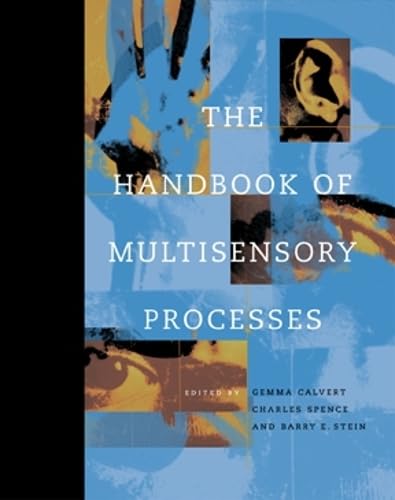
A Reference Work For The Emerging Field Of Multisensory Integration, Covering Multidisciplinary Research That Goes Beyond The Traditional 'Sensebysense' Approach And Recognizes That Perception Is Fundamentally A Multisensory Experience.This Landmark Reference Work Brings Together For The First Time In One Volume The Most Recent Research From Different Areas Of The Emerging Field Of Multisensory Integration. After Many Years Of Using A Modalityspecific 'Sensebysense' Approach, Researchers Across Different Disciplines In Neuroscience And Psychology Now Recognize That Perception Is Fundamentally A Multisensory Experience. To Understand How The Brain Synthesizes Information From The Different Senses, We Must Study Not Only How Information From Each Sensory Modality Is Decoded But Also How This Information Interacts With The Sensory Processing Taking Place Within Other Sensory Channels. The Findings Cited In The Handbook Of Multisensory Processes Suggest That There Are Broad Underlying Principles That Govern This Interaction, Regardless Of The Specific Senses Involved.The Book Is Organized Thematically Into Eight Sections; Each Of The 55 Chapters Presents A Stateoftheart Review Of Its Topic By Leading Researchers In The Field. The Key Themes Addressed Include Multisensory Contributions To Perception In Humans; Whether The Sensory Integration Involved In Speech Perception Is Fundamentally Different From Other Kinds Of Multisensory Integration; Multisensory Processing In The Midbrain And Cortex In Model Species, Including Rat, Cat, And Monkey; Behavioral Consequences Of Multisensory Integration; Modern Neuroimaging Techniques, Including Eeg, Pet, And Fmri, Now Being Used To Reveal The Many Sites Of Multisensory Processing In The Brain; Multisensory Processes That Require Postnatal Sensory Experience To Emerge, With Examples From Multiple Species; Brain Specialization And Possible Equivalence Of Brain Regions; And Clinical Studies Of Such Breakdowns Of Normal Sensory Integration As Brain Damage And Synesthesia.
⚠️ WARNING (California Proposition 65):
This product may contain chemicals known to the State of California to cause cancer, birth defects, or other reproductive harm.
For more information, please visit www.P65Warnings.ca.gov.
- Q: How many pages does The Handbook of Multisensory Processes have? A: The Handbook of Multisensory Processes has nine hundred fifteen pages. This extensive volume covers a wide range of research in multisensory integration.
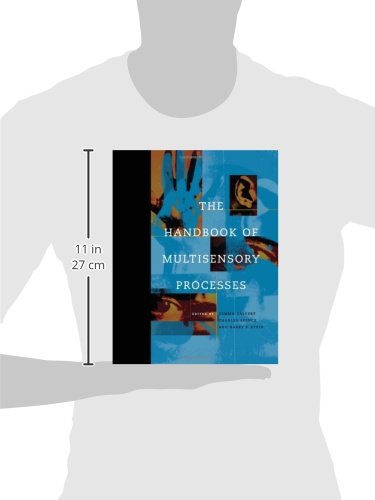
- Q: What are the dimensions of this book? A: The book measures nine point zero two inches in length, one point two six inches in width, and twelve point zero one inches in height. These dimensions make it suitable for both reading and reference.
- Q: What type of binding does this book have? A: This book has a hardcover binding. A hardcover provides durability and a more professional look, ideal for reference works.
- Q: Who is the author of The Handbook of Multisensory Processes? A: The author is Gemma A. Calvert. She is a prominent figure in the field of psychology and multisensory research.
- Q: What topics does this book cover? A: The book covers a variety of topics related to multisensory integration. These include sensory contributions to perception, neuroimaging techniques, and clinical studies.
- Q: How is the content organized in this book? A: The content is organized thematically into eight sections. Each section contains chapters that provide state-of-the-art reviews by leading researchers.
- Q: Is this book suitable for beginners in psychology? A: Yes, it is suitable for beginners as well as advanced readers. The comprehensive reviews present both fundamental concepts and advanced research findings.
- Q: Can I use this book for academic research? A: Yes, this book is an excellent resource for academic research. It compiles recent studies and reviews from various disciplines related to multisensory processes.
- Q: What is the primary audience for this book? A: The primary audience includes researchers, students, and professionals in psychology and neuroscience. It serves as a valuable reference for those studying multisensory integration.
- Q: How do I keep this book in good condition? A: To keep this book in good condition, store it upright on a shelf and avoid exposure to moisture. Handle it carefully to prevent wear and tear.
- Q: Is this book safe for children? A: No, this book is not specifically designed for children. It is targeted toward adults and professionals in the field of psychology and neuroscience.
- Q: What should I do if the book arrives damaged? A: If the book arrives damaged, you should contact the seller for a return or exchange. Ensure to keep the original packaging for the return process.
- Q: Does this book include illustrations or diagrams? A: Yes, this book includes various illustrations and diagrams. These visual aids help to clarify complex concepts in multisensory integration.
- Q: Is there a warranty or satisfaction guarantee for this book? A: Typically, books do not come with a warranty. However, check with the retailer for their specific return and satisfaction policies.
- Q: What if I have a question about the content in the book? A: If you have questions about the content, consider reaching out to professionals in the field or looking for academic forums online where discussions occur.