
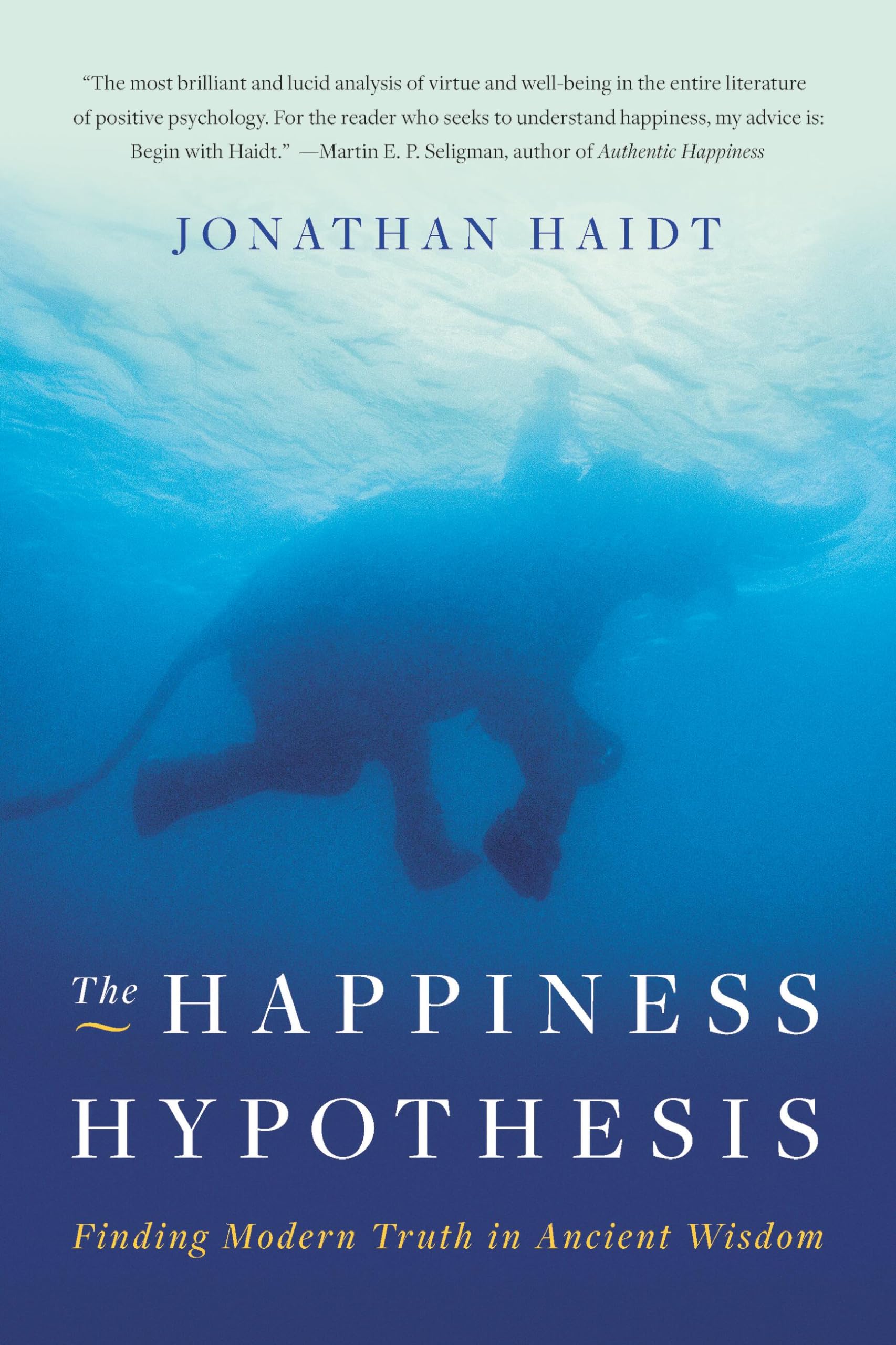
Title
Basic Books The Happiness Hypothesis: Modern Truth in Ancient Wisdom Book
Sold by Ergodebooks, an authorized reseller.
Returns accepted within 30 days | support@ergodebooks.com
Shipping Information
- Free Standard Shipping — United States only
- Processing Time: 3–5 business days
- Estimated Delivery: 6–10 business days after dispatch
- Double-boxed, fully insured & discreetly packaged
- Tracking number sent via email once dispatched
Returns & Refund
Returns accepted within 30 days of delivery.
Damaged or Defective Item
Free return shipping + replacement or full refund
Wrong Item Received
Free return shipping + replacement or full refund
Change of Mind
Return shipping at customer's expense · 25% restocking fee applies
Payment Option

The Happiness Hypothesis is a compelling exploration of ten profound ideas that have shaped human thought across civilizations. This book, authored by award-winning psychologist Jonathan Haidt, delves into the intersection of ancient philosophical wisdom and contemporary scientific research, offering insights into human flourishing and well-being.
This engaging read not only questions long-held beliefs but also enriches the reader's understanding of happiness and personal growth. Haidt effectively synthesizes knowledge from various cultures and traditions, making complex concepts accessible and relevant to modern life. The book serves as a guide for individuals seeking to enhance their lives through philosophical wisdom and practical applications.
Key Features:- Authoritative Insight: Written by Jonathan Haidt, a renowned psychologist recognized for his contributions to the understanding of happiness and morality.
- Cross-Cultural Wisdom: Explores ideas from multiple civilizations, highlighting the universal principles of happiness.
- Research-Driven: Each chapter is backed by scientific findings, bridging ancient philosophy with modern psychology.
- Practical Applications: Offers actionable lessons applicable to everyday life, encouraging readers to implement these ideas for personal growth.
- Engaging Narrative: Combines storytelling with scholarly analysis, making it an enjoyable read for both casual readers and serious learners.
- Promotes Human Flourishing: Focuses on the causes of well-being, providing readers with tools to enhance their quality of life.
- Accessible Language: Written in clear, straightforward language, making profound concepts easy to understand and apply.
The Happiness Hypothesis is ideal for anyone interested in self-improvement, psychology, and the pursuit of happiness. It caters to readers who appreciate the blend of ancient wisdom and modern science, offering valuable insights for personal development. This book is a must-have for individuals looking to understand the deeper meanings of happiness and how to cultivate it in their lives.
⚠️ WARNING (California Proposition 65):
This product may contain chemicals known to the State of California to cause cancer, birth defects, or other reproductive harm.
For more information, please visit www.P65Warnings.ca.gov.
- Q: How many pages does The Happiness Hypothesis have? A: This book has three hundred twenty pages. It's a comprehensive exploration of ten Great Ideas from various civilizations.
- Q: What is the binding type of The Happiness Hypothesis? A: This book is available in paperback binding. Paperback editions are often preferred for their portability and ease of handling.
- Q: Who is the author of The Happiness Hypothesis? A: The author is Jonathan Haidt. He is an award-winning psychologist known for his insights into human behavior and flourishing.
- Q: What is the genre of The Happiness Hypothesis? A: This book falls under the Self-Help genre. It combines philosophical wisdom with modern psychological insights to enrich readers' lives.
- Q: What are the dimensions of The Happiness Hypothesis? A: The book measures six inches in length, one point two inches in width, and nine point zero two inches in height. These dimensions make it a convenient size for reading.
- Q: How do I read The Happiness Hypothesis? A: You can read this book at your own pace. It's structured into chapters, each focusing on a significant philosophical idea related to happiness.
- Q: Is The Happiness Hypothesis suitable for teenagers? A: Yes, this book is suitable for teenagers. It offers insights into human behavior which can be valuable for young adults seeking personal development.
- Q: How can I apply the ideas from The Happiness Hypothesis in my life? A: You can apply the ideas by reflecting on the ten Great Ideas discussed in each chapter. They provide practical lessons that can enhance your daily life.
- Q: Is The Happiness Hypothesis easy to understand? A: Yes, it is generally easy to understand. Jonathan Haidt presents complex ideas in an accessible manner, making them relatable to modern readers.
- Q: How should I store The Happiness Hypothesis to keep it in good condition? A: Store the book in a dry and cool place, away from direct sunlight. This will prevent wear and tear on the pages and cover.
- Q: Can I lend The Happiness Hypothesis to a friend? A: Yes, you can lend the book to a friend. Just make sure to remind them to handle it with care to maintain its condition.
- Q: How do I clean The Happiness Hypothesis if it gets dirty? A: You can clean the book by gently wiping the cover with a dry cloth. Avoid using water or cleaning solutions on the pages.
- Q: What should I do if The Happiness Hypothesis arrives damaged? A: If the book arrives damaged, contact the seller or retailer for a return or exchange. Most sellers have policies for damaged goods.
- Q: Is there a warranty for The Happiness Hypothesis? A: Books typically do not come with a warranty. However, check with the retailer for their specific return policy.
- Q: How does The Happiness Hypothesis compare to other self-help books? A: The Happiness Hypothesis offers a unique blend of philosophical insights and scientific research, distinguishing it from many other self-help books that may focus only on personal anecdotes.