
Title

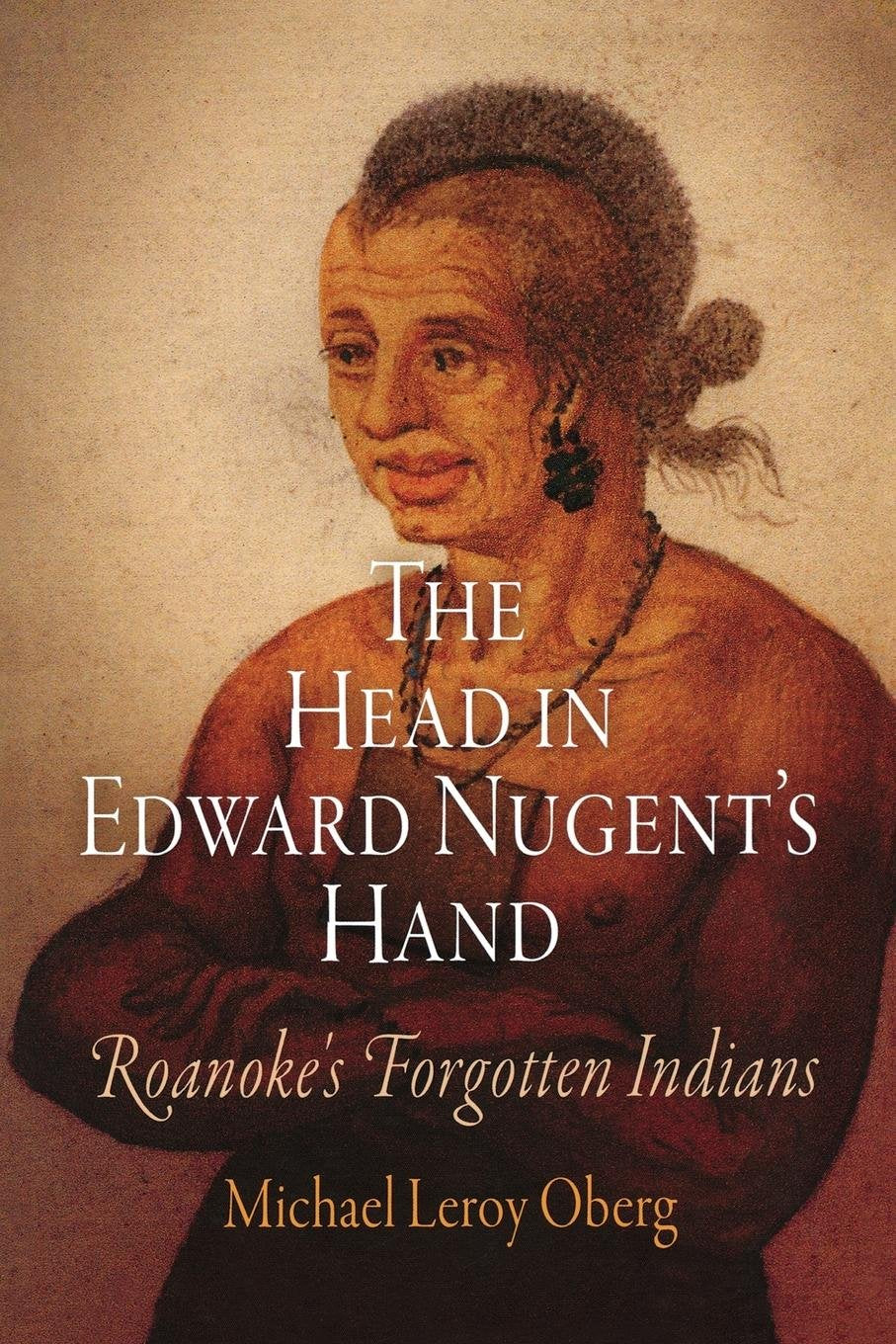
The Head in Edward Nugent's Hand: Roanoke's Forgotten Indians (Early American Studies),Used
Sold by Ergodebooks, an authorized reseller.
Returns accepted within 30 days | support@ergodebooks.com
Shipping Information
- Free Standard Shipping — United States only
- Processing Time: 3–5 business days
- Estimated Delivery: 6–10 business days after dispatch
- Double-boxed, fully insured & discreetly packaged
- Tracking number sent via email once dispatched
Returns & Refund
Returns accepted within 30 days of delivery.
Damaged or Defective Item
Free return shipping + replacement or full refund
Wrong Item Received
Free return shipping + replacement or full refund
Change of Mind
Return shipping at customer's expense · 25% restocking fee applies
Payment Option

Roanoke is part of the lore of early America, the colony that disappeared. Many Americans know of Sir Walter Ralegh's illfated expedition, but few know about the Algonquian peoples who were the island's inhabitants. The Head in Edward Nugent's Hand examines Ralegh's plan to create an English empire in the New World but also the attempts of native peoples to make sense of the newcomers who threatened to transform their world in frightening ways.Beginning his narrative well before Ralegh's arrival, Michael Leroy Oberg looks closely at the Indians who first encountered the colonists. The English intruded into a wellestablished Native American world at Roanoke, led by Wingina, the weroance, or leader, of the Algonquian peoples on the island. Oberg also pays close attention to how the weroance and his people understood the arrival of the English: we watch as Wingina's brother first boards Ralegh's ship, and we listen in as Wingina receives the report of its arrival. Driving the narrative is the leader's ultimate fate: Wingina is decapitated by one of Ralegh's men in the summer of 1586.When the story of Roanoke is recast in an effort to understand how and why an Algonquian weroance was murdered, and with what consequences, we arrive at a more nuanced and sophisticated understanding of what happened during this, the dawn of English settlement in America.
⚠️ WARNING (California Proposition 65):
This product may contain chemicals known to the State of California to cause cancer, birth defects, or other reproductive harm.
For more information, please visit www.P65Warnings.ca.gov.
- Q: What are the dimensions of the book? A: The book measures six point twenty-six inches in length, zero point seventy-five inches in width, and nine point twenty-five inches in height.
- Q: How many pages does this book have? A: This book contains two hundred twenty-four pages, providing a comprehensive exploration of its subject matter.
- Q: What type of binding does this book have? A: The book features a hardcover binding, ensuring durability and a premium feel.
- Q: Who is the author of this book? A: The author is Michael Leroy Oberg, a scholar specializing in early American history.
- Q: What genre does this book belong to? A: This book is categorized under Native American studies, focusing on historical narratives.
- Q: Is this book suitable for young readers? A: This book is generally aimed at an adult audience due to its complex themes and historical analysis.
- Q: What themes are explored in this book? A: This book explores themes of colonization, cultural encounters, and the impact of English settlement on Native American societies.
- Q: How should I read this book for better understanding? A: For better understanding, read it with a focus on the historical context and the perspectives of the Native American inhabitants.
- Q: Is the book easy to understand? A: The writing is academic but accessible, suitable for readers with an interest in history and Native American studies.
- Q: How can I keep this book in good condition? A: Store the book in a cool, dry place, and avoid exposing it to direct sunlight to prevent fading and damage.
- Q: What should I do if the book gets damaged? A: If the book is damaged, consider contacting the seller for return or replacement options, depending on their policy.
- Q: Can I clean the book's cover? A: Yes, you can gently wipe the cover with a soft, dry cloth to remove dust without causing damage.
- Q: What if I receive the book with a defect? A: If you receive a defective book, reach out to the retailer for assistance with returns or exchanges.
- Q: Is there a warranty for this book? A: Typically, books do not come with a warranty, but check with the retailer for their specific return policy.
- Q: How does this book compare to others in its genre? A: This book offers a unique perspective on the Roanoke colony, distinguishing itself from other historical accounts by focusing on Indigenous experiences.
- Q: Is this book recommended for academic use? A: Yes, this book is highly recommended for academic purposes, especially for courses in early American history and Native American studies.