
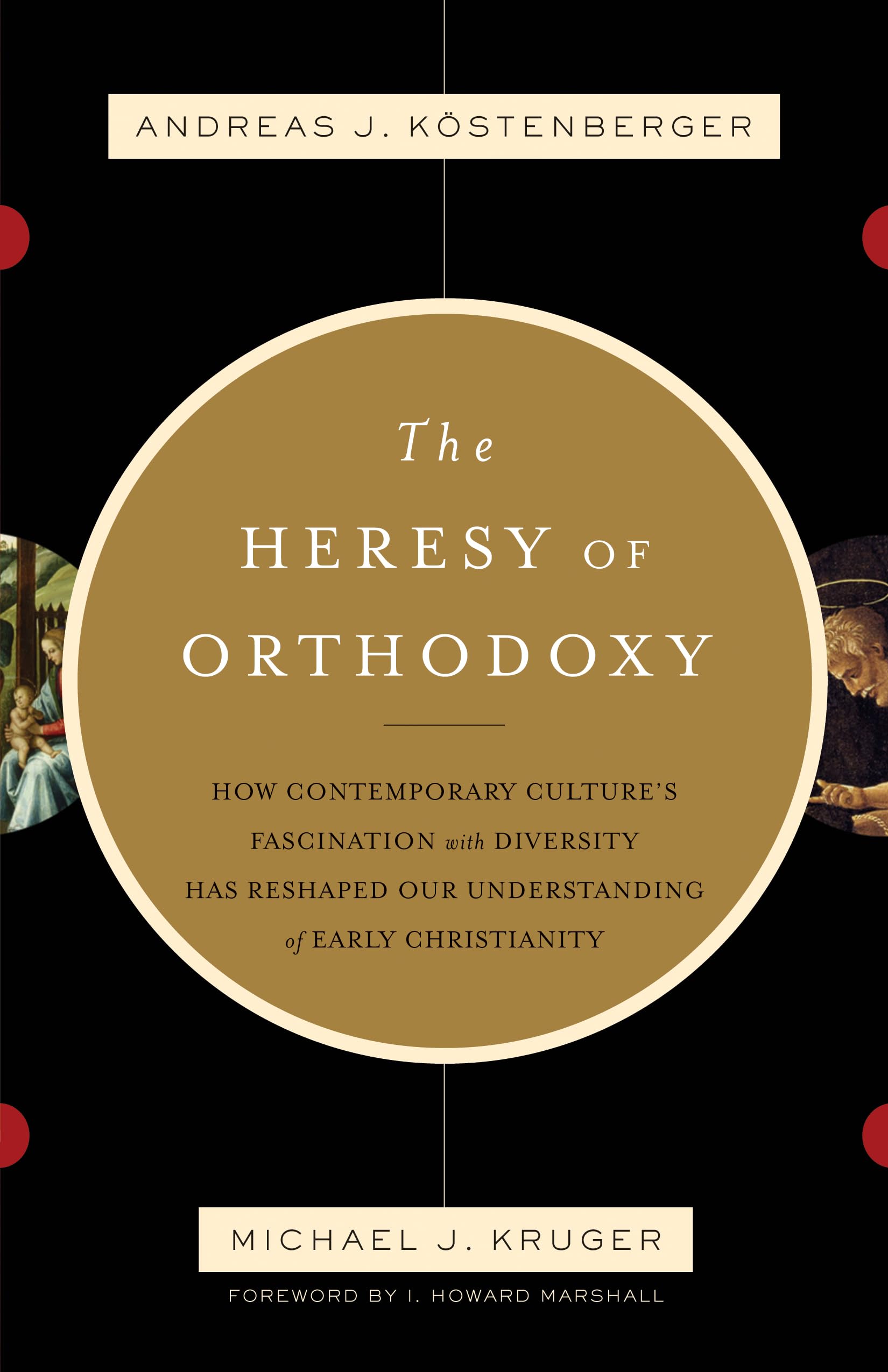
Title
The Heresy Of Orthodoxy: How Contemporary Culture'S Fascination With Diversity Has Reshaped Our Understanding Of Early Christian
Sold by Ergodebooks, an authorized reseller.
Returns accepted within 30 days | support@ergodebooks.com
Shipping Information
- Free Standard Shipping — United States only
- Processing Time: 3–5 business days
- Estimated Delivery: 6–10 business days after dispatch
- Double-boxed, fully insured & discreetly packaged
- Tracking number sent via email once dispatched
Returns & Refund
Returns accepted within 30 days of delivery.
Damaged or Defective Item
Free return shipping + replacement or full refund
Wrong Item Received
Free return shipping + replacement or full refund
Change of Mind
Return shipping at customer's expense · 25% restocking fee applies
Payment Option

Beginning With Walter Bauer In 1934, The Denial Of Clear Orthodoxy In Early Christianity Has Shaped And Largely Defined Modern New Testament Criticism, Recently Given New Life Through The Work Of Spokesmen Like Bart Ehrman. Spreading From Academia Into Mainstream Media, The Suggestion That Diversity Of Doctrine In The Early Church Led To Many Competing Orthodoxies Is Indicative Of Today'S Postmodern Relativism. Authors Kstenberger And Kruger Engage Ehrman And Others In This Polemic Against A Dogged Adherence To Popular Ideals Of Diversity.Kstenberger And Kruger'S Accessible And Careful Scholarship Not Only Counters The Bauer Thesis Using Its Own Terms, But Also Engages Overlooked Evidence From The New Testament. Their Conclusions Are Drawn From Analysis Of The Evidence Of Unity In The New Testament, The Formation And Closing Of The Canon, And The Methodology And Integrity Of The Recording And Distribution Of Religious Texts Within The Early Church.
⚠️ WARNING (California Proposition 65):
This product may contain chemicals known to the State of California to cause cancer, birth defects, or other reproductive harm.
For more information, please visit www.P65Warnings.ca.gov.
- Q: How many pages does the book have? A: The book contains two hundred fifty-six pages. This length provides a comprehensive exploration of early Christianity and the 'Bauer Thesis'.
- Q: What are the dimensions of the book? A: The book measures five point five one inches in length, zero point six four inches in width, and eight point five inches in height. These dimensions make it portable and easy to handle.
- Q: What type of binding does this book have? A: This book is available in paperback binding. This type of binding is lightweight and flexible, suitable for casual reading.
- Q: Who is the author of this book? A: The author is Andreas J. Köstenberger. He is known for his expertise in New Testament studies and early Christianity.
- Q: What is the main theme of the book? A: The main theme addresses the evolution of early Christian orthodoxy and critiques contemporary views on religious diversity. It engages with the 'Bauer Thesis' and offers scholarly insights.
- Q: Is this book suitable for beginners in theology? A: Yes, the book is accessible for beginners. Its clear writing and structured arguments make complex theological concepts easier to understand.
- Q: What is the book's target audience? A: The target audience includes scholars, students, and anyone interested in early Christianity. It's also valuable for readers exploring modern theological debates.
- Q: Can this book be used for academic purposes? A: Yes, it is suitable for academic purposes. Its rigorous scholarship and engagement with prominent scholars make it a credible source for research.
- Q: How should I store the book? A: Store the book in a cool, dry place, upright on a shelf. This helps prevent damage to the spine and pages.
- Q: Is there any special care needed for this paperback book? A: No special care is needed. However, avoid exposure to moisture and direct sunlight to preserve its condition.
- Q: What should I do if my book arrives damaged? A: If your book arrives damaged, contact customer support for assistance. They can guide you through the return or exchange process.
- Q: Is there a return policy for this book? A: Yes, there is a return policy. Typically, you can return it within a specified period if you are not satisfied with your purchase.
- Q: What if I lose my book? A: If you lose the book, you will need to purchase a replacement. Check with the retailer for availability.
- Q: Does this book contain any illustrations or charts? A: No, this book does not contain illustrations or charts. It focuses on textual analysis and scholarly arguments.
- Q: Are there any notable critiques in this book? A: Yes, the book critiques the perspectives of scholars like Bart Ehrman. It offers counterarguments to popular ideas regarding early Christian diversity.
- Q: What genre does this book belong to? A: This book belongs to the genre of religious studies, specifically focusing on Christianity and biblical criticism.