
Title
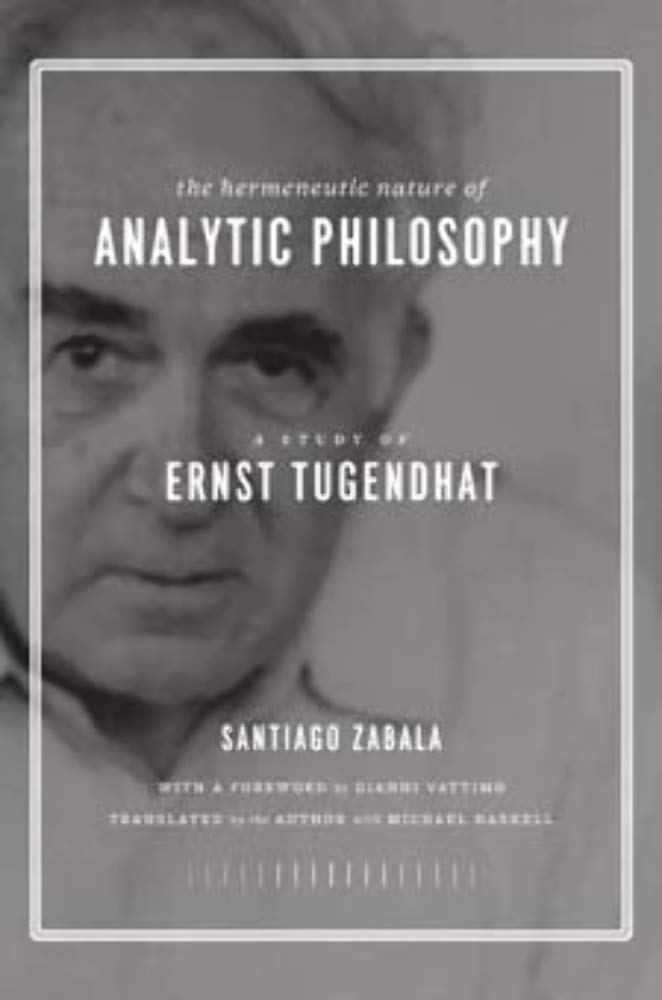
The Hermeneutic Nature Of Analytic Philosophy: A Study Of Ernst Tugendhat,Used
Sold by Ergodebooks, an authorized reseller.
Returns accepted within 30 days | support@ergodebooks.com
Shipping Information
- Free Standard Shipping — United States only
- Processing Time: 3–5 business days
- Estimated Delivery: 6–10 business days after dispatch
- Double-boxed, fully insured & discreetly packaged
- Tracking number sent via email once dispatched
Returns & Refund
Returns accepted within 30 days of delivery.
Damaged or Defective Item
Free return shipping + replacement or full refund
Wrong Item Received
Free return shipping + replacement or full refund
Change of Mind
Return shipping at customer's expense · 25% restocking fee applies
Payment Option

Contemporary philosopheranalytic as well as continentaltend to feel uneasy about Ernst Tugendhat, who, though he positions himself in the analytic field, poses questions in the Heideggerian style. Tugendhat was one of Martin Heidegger's last pupils and his least obedient, pursuing a new and controversial critical technique. Tugendhat took Heidegger's destruction of Being as presence and developed it in analytic philosophy, more specifically in semantics. Only formal semantics, according to Tugendhat, could answer the questions left open by Heidegger.Yet in doing this, Tugendhat discovered the latent 'hermeneutic nature of analytic philosophy'its postmetaphysical dimensionin which 'there are no facts, but only true propositions.' What Tugendhat seeks to answer is this: What is the meaning of thought following the linguistic turn? Because of the rift between analytic and continental philosophers, very few studies have been written on Tugendhat, and he has been omitted altogether from several histories of philosophy. Now that these two schools have begun to reconcile, Tugendhat has become an example of a philosopher who, in the words of Richard Rorty, 'built bridges between continents and between centuries.'Tugendhat is known more for his philosophical turn than for his phenomenological studies or for his position within analytic philosophy, and this creates some confusion regarding his philosophical propensities. Is Tugendhat analytic or continental? Is he a follower of Wittgenstein or Heidegger? Does he belong in the culture of analysis or in that of tradition? Santiago Zabala presents Tugendhat as an example of merged horizons, promoting a philosophical historiography that is concerned more with dialogue and less with classification. In doing so, he places us squarely within a dialogic culture of the future and proves that any such labels impoverish philosophical research.
⚠️ WARNING (California Proposition 65):
This product may contain chemicals known to the State of California to cause cancer, birth defects, or other reproductive harm.
For more information, please visit www.P65Warnings.ca.gov.