
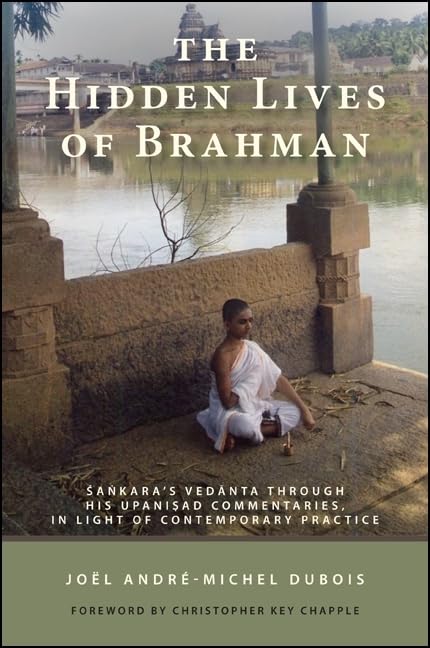
Title
The Hidden Lives of Brahman: Sankara's Vedanta through His Upanisad Commentaries, in Light of Contemporary Practice (SUNY Series,Used
Sold by Ergodebooks, an authorized reseller.
Returns accepted within 30 days | support@ergodebooks.com
Shipping Information
- Free Standard Shipping — United States only
- Processing Time: 3–5 business days
- Estimated Delivery: 6–10 business days after dispatch
- Double-boxed, fully insured & discreetly packaged
- Tracking number sent via email once dispatched
Returns & Refund
Returns accepted within 30 days of delivery.
Damaged or Defective Item
Free return shipping + replacement or full refund
Wrong Item Received
Free return shipping + replacement or full refund
Change of Mind
Return shipping at customer's expense · 25% restocking fee applies
Payment Option

FINALIST 2014 American Academy of Religion Best First Book Award in the History of ReligionsUses both textual and ethnographic sources to demonstrate that in Sa?karas vedanta, brahman is an active force as well as a transcendent ultimate.Sa?karas thought, advaita vedanta or nondual vedanta, is a tradition focused on brahman, the ultimate reality transcending all particular manifestations, words, and ideas. It is generally considered that the transcendent brahman cannot be attained through any effort or activity. While this conception is technically correct, in The Hidden Lives of Brahman, Jol AndrMichel Dubois contends that it is misleading.Hidden lives of brahman become visible when analysis of Sa?karas seminal commentaries is combined with ethnographic descriptions of contemporary Brahmin students and teachers of vedanta, a group largely ignored in most studies of this tradition. Dubois demonstrates that for Sa?kara, as for Brahmin tradition in general, brahman is just as much an active force, fully connected to the dynamic power of words and imagination, as it is a transcendent ultimate.The central idea of a multifaceted brahman in Sa?karas thought is original and will be well received. Frederick Smith, coeditor of Modern and Global Ayurveda: Pluralism and ParadigmsThe authors detailed descriptions of the actual pedagogical practices of contemporary Brahmin training is a welcome contribution. One gets a real sense of the teacherstudent relationship from this book. Andrew O. Fort, author of Jivanmukti in Transformation: Embodied Liberation in Advaita and NeoVedanta[Dubois] captures the sounds, sights, and tastes of Indias Brahmin schools and centers of study, conveying a sense of what he calls the hidden lives of young people who later emerge to carry on the tradition of advaita vedanta. In elegant, descriptive language, Dubois evokes the mood and energy of the daily life followed by these young men as they prepare for highly specialized careers. from the Foreword by Christopher Key Chapple
⚠️ WARNING (California Proposition 65):
This product may contain chemicals known to the State of California to cause cancer, birth defects, or other reproductive harm.
For more information, please visit www.P65Warnings.ca.gov.