
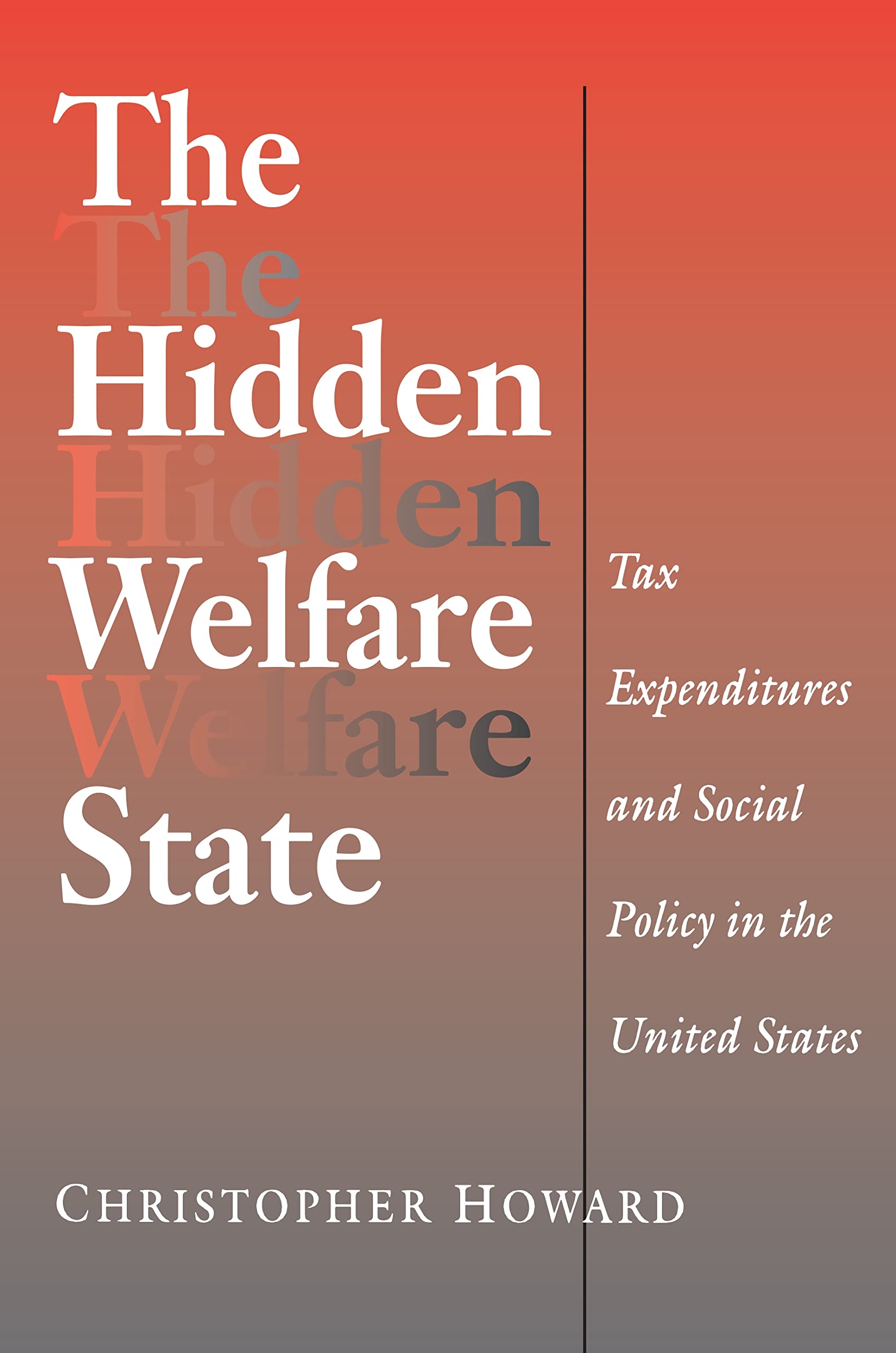
Title
The Hidden Welfare State: Tax Expenditures and Social Policy in the United States,New
Sold by Ergodebooks, an authorized reseller.
Returns accepted within 30 days | support@ergodebooks.com
Shipping Information
- Free Standard Shipping — United States only
- Processing Time: 3–5 business days
- Estimated Delivery: 6–10 business days after dispatch
- Double-boxed, fully insured & discreetly packaged
- Tracking number sent via email once dispatched
Returns & Refund
Returns accepted within 30 days of delivery.
Damaged or Defective Item
Free return shipping + replacement or full refund
Wrong Item Received
Free return shipping + replacement or full refund
Change of Mind
Return shipping at customer's expense · 25% restocking fee applies
Payment Option

Despite costing hundreds of billions of dollars and subsidizing everything from homeownership and child care to health insurance, tax expenditures (commonly known as tax loopholes) have received little attention from those who study American government. This oversight has contributed to an incomplete and misleading portrait of U.S. social policy. Here Christopher Howard analyzes the 'hidden' welfare state created by such programs as tax deductions for home mortgage interest and employerprovided retirement pensions, the Earned Income Tax Credit, and the Targeted Jobs Tax Credit. Basing his work on the histories of these four tax expenditures, Howard highlights the distinctive characteristics of all such policies. Tax expenditures are created more routinely and quietly than traditional social programs, for instance, and over time generate unusual coalitions of support. They expand and contract without deliberate changes to individual programs.Howard helps the reader to appreciate the historic links between the hidden welfare state and U.S. tax policy, which accentuate the importance of Congress and political parties. He also focuses on the reasons why individuals, businesses, and public officials support tax expenditures. The Hidden Welfare State will appeal to anyone interested in the origins, development, and structure of the American welfare state. Students of public finance will gain new insights into the politics of taxation. And as policymakers increasingly promote tax expenditures to address social problems, the book offers some sobering lessons about how such programs work.
⚠️ WARNING (California Proposition 65):
This product may contain chemicals known to the State of California to cause cancer, birth defects, or other reproductive harm.
For more information, please visit www.P65Warnings.ca.gov.