
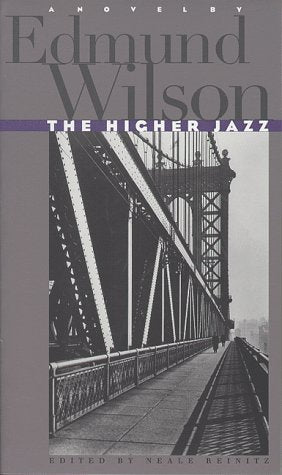
Title
The Higher Jazz,New
Sold by Ergodebooks, an authorized reseller.
Returns accepted within 30 days | support@ergodebooks.com
Shipping Information
- Free Standard Shipping — United States only
- Processing Time: 3–5 business days
- Estimated Delivery: 6–10 business days after dispatch
- Double-boxed, fully insured & discreetly packaged
- Tracking number sent via email once dispatched
Returns & Refund
Returns accepted within 30 days of delivery.
Damaged or Defective Item
Free return shipping + replacement or full refund
Wrong Item Received
Free return shipping + replacement or full refund
Change of Mind
Return shipping at customer's expense · 25% restocking fee applies
Payment Option

Review 'This book is based on superb research. It treats a heretofore unexplored subject in American agricultural history and makes an important contribution to American, agricultural, and New York history.' R. Douglas Hurt, Center for Agricultural History and Rural Studies, Iowa State University'This is an outstanding book. It provides revealing detail on how urbanization overtook a rich truckfarming area in Kings County, New York. It is a local study that has national significance. This is probably the best study in existence of the interaction between urbanization and farming.' Gilbert C. Fite, Richard B. Russell Professor Emeritus, University of Georgia'Wilson is at his best in his vivisections of social scenes and all their petty power dynamics. There are wonderful fictionalized recollections of the brittle, sarcastic atmosphere of the famed Algonquin Round Table set, with their predilection for punning, word games and childish roleplaying. Everything unfolds in a milieu of languid, alcoholsoaked jocularity spiked with sudden flashes of wit and suppressed bitterness. The best scenes take place in burlesque houses and nightclubs, which are juxtaposed with pretentious highbrow music recitals.' Speak (magazine) Product Description Edmund Wilson, the preeminent American literary critic of the first half of the twentieth century, often fretted that he was not taken seriously as a creative writer. In the course of a career that produced Axed Castle, To the Finland Station, and Patriotic Gore, among many other works of criticism and history, he published poems, plays, and two novels. Though he completed in draft this short novel, now entitled The Higher Jazz, it was never published. In midcareer, in 1939, Wilson planned a novel in three parts that would carry a man through fifteen years as a stockbroker, a Russian diplomat, and a writer. When he started on the first section of this book, set in the 1920s, it carried him away from his original project. His hero was instead transformed into a German American businessman who, aspiring to become a composer, seeks the spirit of America in music that combined the contemporary popular and the modern classical, in what Wilson called elsewhere the higher jazz. This portrayal of the 1920s provides a sense of the illusive glories of the Boom Era. It is filled with characters based on people Wilson knew well or had observed, such as Dorothy Parker, Robert Benchley, and the Fitzgerald circle, and composers as varied as Cole Porter and Charles Ives. Written at a turning point in his career, before he left contemporary literature and radical politics to focus on history, travel, and his own past, this novel reveals Wilson's second thoughts about the 1920s and his recognition of the aspirations and dilemmas of the artist in American society. Neale Reinitz has edited The Higher Jazz for the general reader. His introduction sets the novel in the historical context of Wilson'slife and writings, and his annotations explain the topical references and, more important, illustrate Wilson's method of composition.
⚠️ WARNING (California Proposition 65):
This product may contain chemicals known to the State of California to cause cancer, birth defects, or other reproductive harm.
For more information, please visit www.P65Warnings.ca.gov.