
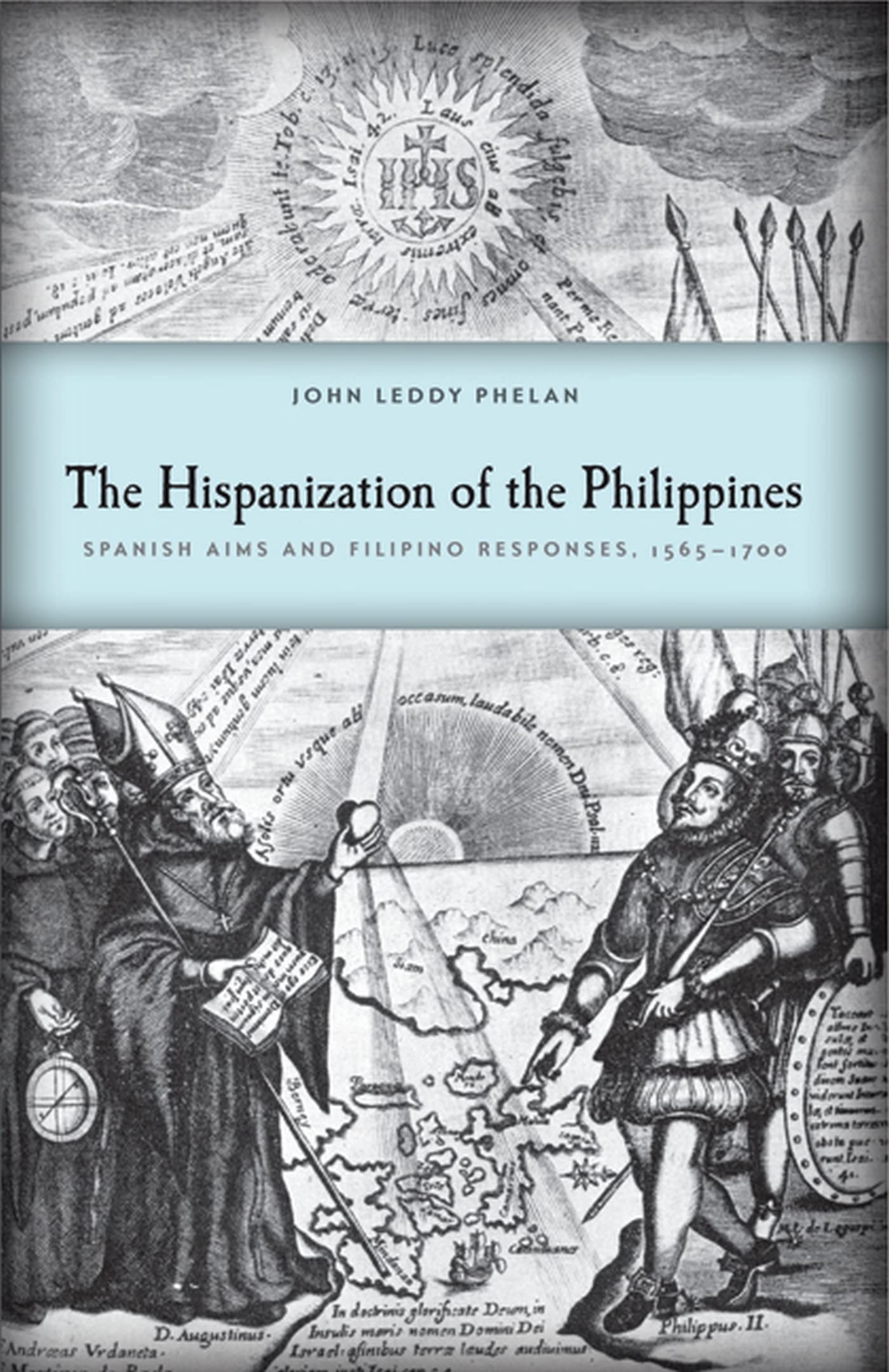
Title

The Hispanization of the Philippines: Spanish Aims and Filipino Responses, 15651700 (New Perspectives in SE Asian Studies),New
Sold by Ergodebooks, an authorized reseller.
Returns accepted within 30 days | support@ergodebooks.com
Shipping Information
- Free Standard Shipping — United States only
- Processing Time: 3–5 business days
- Estimated Delivery: 6–10 business days after dispatch
- Double-boxed, fully insured & discreetly packaged
- Tracking number sent via email once dispatched
Returns & Refund
Returns accepted within 30 days of delivery.
Damaged or Defective Item
Free return shipping + replacement or full refund
Wrong Item Received
Free return shipping + replacement or full refund
Change of Mind
Return shipping at customer's expense · 25% restocking fee applies
Payment Option

After conquest of the Philippine archipelago in the late sixteenth century, Spanish colonizers launched a sweeping social program designed to bring about dramatic religious, political, and economic changes. But the limitations of Spanish colonial resources, together with the reactions of Filipinos themselves, combined to shape the outcome of that effort in unique and unexpected ways, argues John Leddy Phelan. With no wealth in the islands to attract conquistadores, conquest was accomplished largely by missionaries scattered among isolated native villages. Native chieftains served as intermediaries, thus enabling the Filipinos to react selectively to Spanish innovations. The result was a form of hispanization in which the resilient and adaptable Filipinos played a creative part.
⚠️ WARNING (California Proposition 65):
This product may contain chemicals known to the State of California to cause cancer, birth defects, or other reproductive harm.
For more information, please visit www.P65Warnings.ca.gov.
- Q: What is the main focus of 'The Hispanization of the Philippines'? A: The book explores the social, religious, political, and economic changes initiated by Spanish colonizers in the Philippines from 1565 to 1700, highlighting both Spanish aims and Filipino responses.
- Q: Who is the author of this book? A: The author is John Leddy Phelan, a noted historian specializing in Southeast Asian studies.
- Q: What is the publication date of this book? A: This book was published on December 15, 2010.
- Q: How many pages does 'The Hispanization of the Philippines' have? A: The book contains 218 pages.
- Q: What is the condition of the book? A: The book is listed as 'New'.
- Q: What type of binding does this book have? A: The book is available in paperback binding.
- Q: Is there an edition number for this book? A: Yes, this is the first edition of the book.
- Q: What category does this book fall under? A: The book is categorized under 'United States'.
- Q: What are the key themes discussed in the book? A: Key themes include the interaction between Spanish colonizers and Filipinos, the process of hispanization, and the unique outcomes of colonial efforts due to Filipino agency.
- Q: Can this book be a useful resource for understanding Philippine history? A: Yes, it provides valuable insights into the historical context of the Philippines during Spanish colonization, making it a useful resource for students and enthusiasts of Philippine history.