
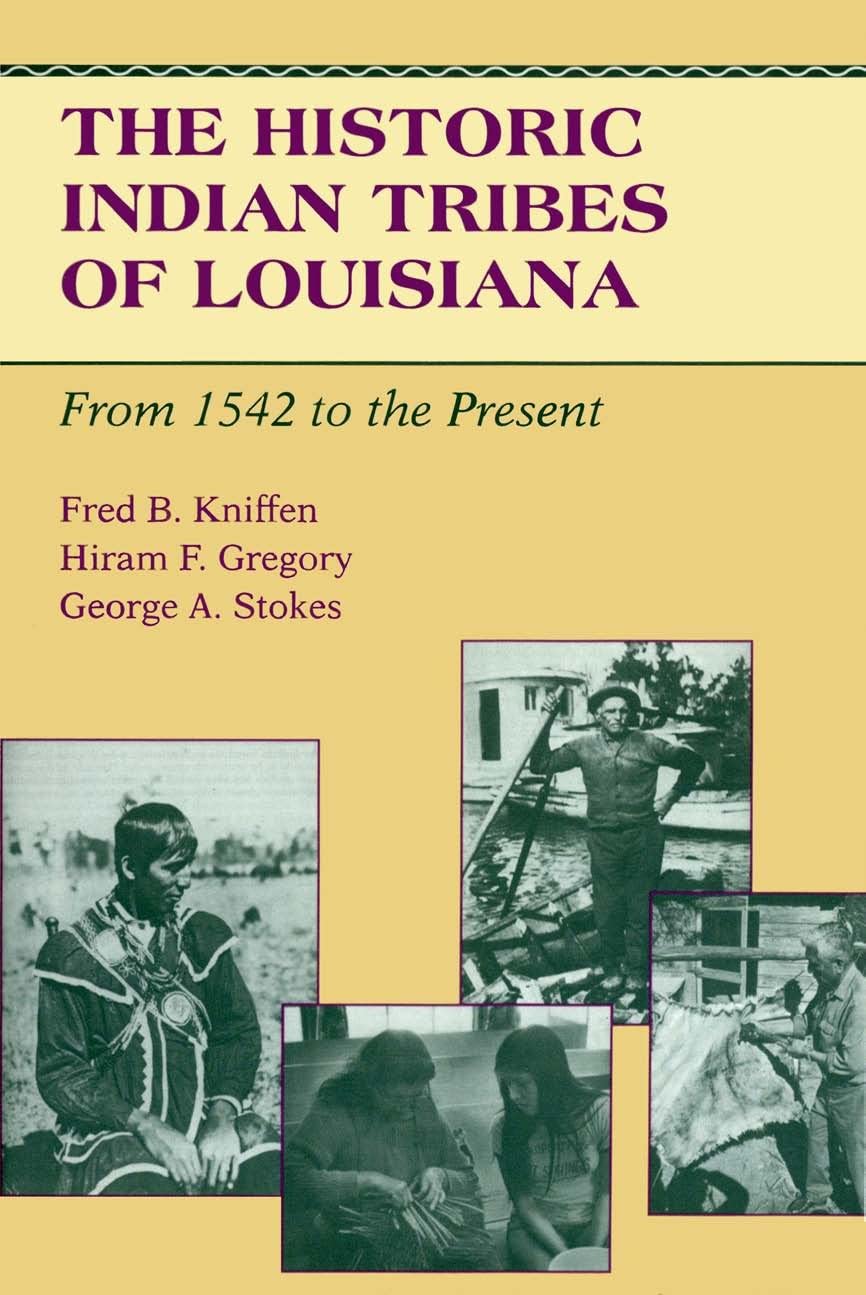
Title
The Historic Indian Tribes of Louisiana: From 1542 to the Present Louisiana,Used
Sold by Ergodebooks, an authorized reseller.
Returns accepted within 30 days | support@ergodebooks.com
Shipping Information
- Free Standard Shipping — United States only
- Processing Time: 3–5 business days
- Estimated Delivery: 6–10 business days after dispatch
- Double-boxed, fully insured & discreetly packaged
- Tracking number sent via email once dispatched
Returns & Refund
Returns accepted within 30 days of delivery.
Damaged or Defective Item
Free return shipping + replacement or full refund
Wrong Item Received
Free return shipping + replacement or full refund
Change of Mind
Return shipping at customer's expense · 25% restocking fee applies
Payment Option

Although many specialized studies have been written about Louisiana's Indian tribes, no complete account has appeared regarding their long, varied history. The Historic Indian Tribes of Louisiana: From 1542 to the Present is a highly informative study that reconstructs the history and cultural evolution of these people. This study identifies tribal groups, charts their migrations within the state, and discusses their languages and customs. According to the authors, the first descriptions of Louisiana Indians are contained in accounts kept by members of Hernando de Soto's expedition In the 1540s. The next recorders of Indian life were the French in the 1700s. European influences irrevocably marked the Indians' lives. The natives lost tribal lands to the new settlers and replaced many of their weapons and tools with those of the Europeans. Diseases apparently introduced by the Spaniards decimated entire tribes and caused the disappearance of certain tribal languages that had never been recorded. However, much of Indian material culture has survived even to the present, including the dugout canoe, or pirogue, and the beautiful cane basketry of the Chitimacha tribe.According to the authors, current figures show that Louisiana has the third largest native American population in the eastern United States. Several of Louisiana's presentday Indian tribes, such as the TunicaBiloxi, Choctaw, and Koasati, entered the state in the second half of the eighteenth century. They gradually established settlements throughout the state, at times displacing the native tribes. Today, many of Louisiana's Indians work in business and industry and as farmers and loggers.The Historic Indian Tribes of Louisiana is a valuable contribution to the literature on Louisiana History. It will be of interest to anthropologists, geographers, historians, and anyone wanting to know more about these important members of Louisiana's population.
⚠️ WARNING (California Proposition 65):
This product may contain chemicals known to the State of California to cause cancer, birth defects, or other reproductive harm.
For more information, please visit www.P65Warnings.ca.gov.
- Q: What is the main focus of 'The Historic Indian Tribes of Louisiana'? A: The book provides a comprehensive account of the history and cultural evolution of Louisiana's Indian tribes from 1542 to the present, detailing their migrations, languages, and customs.
- Q: Who is the author of the book? A: The author of 'The Historic Indian Tribes of Louisiana' is Fred B. Kniffen.
- Q: How many pages does the book contain? A: The book has a total of 344 pages.
- Q: What is the condition of the book? A: The book is listed as a 'Used Book in Good Condition'.
- Q: When was 'The Historic Indian Tribes of Louisiana' published? A: The book was published on September 1, 1994.
- Q: What type of binding does the book have? A: The book is available in paperback binding.
- Q: What is the significance of this book in Louisiana history? A: This book is considered a valuable contribution to the literature on Louisiana history, providing insights into the state's Indian tribes and their cultural legacy.
- Q: Does the book cover contemporary issues faced by Louisiana's Indian tribes? A: Yes, the book discusses the current circumstances of several tribes, including their roles in business, industry, and agriculture.
- Q: Is this book suitable for academic research? A: Yes, it is suitable for scholars such as anthropologists, geographers, and historians interested in Native American studies and Louisiana history.
- Q: What topics are addressed regarding the impact of European colonization on Louisiana's Indian tribes? A: The book examines how European colonization affected tribal lands, introduced new diseases, and altered the material culture of Louisiana's indigenous peoples.