
Title


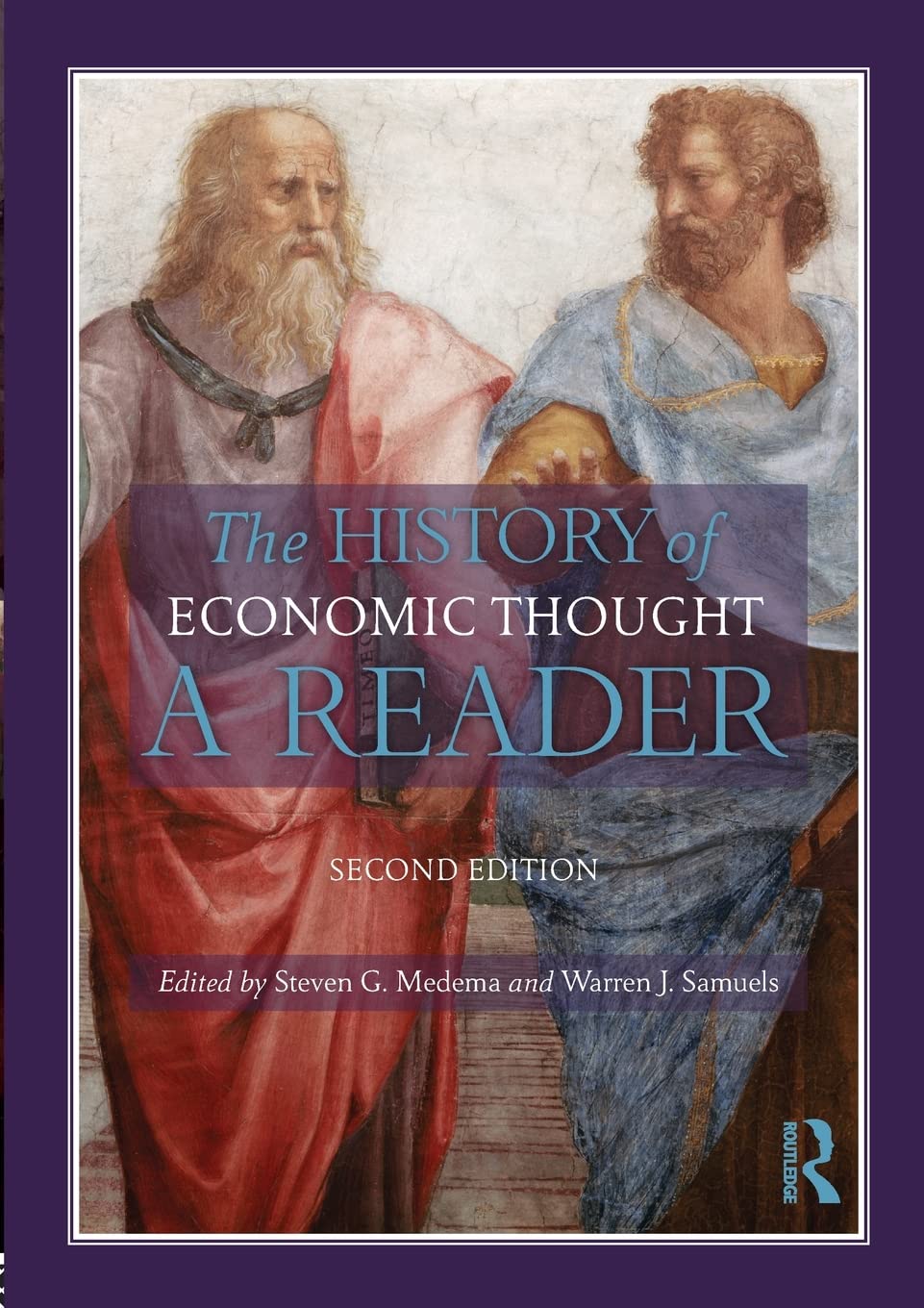
The History of Economic Thought,New
Sold by Ergodebooks, an authorized reseller.
Returns accepted within 30 days | support@ergodebooks.com
Shipping Information
- Free Standard Shipping — United States only
- Processing Time: 3–5 business days
- Estimated Delivery: 6–10 business days after dispatch
- Double-boxed, fully insured & discreetly packaged
- Tracking number sent via email once dispatched
Returns & Refund
Returns accepted within 30 days of delivery.
Damaged or Defective Item
Free return shipping + replacement or full refund
Wrong Item Received
Free return shipping + replacement or full refund
Change of Mind
Return shipping at customer's expense · 25% restocking fee applies
Payment Option

From the ancients to the moderns, questions of economic theory and policy have been an important part of intellectual and public debate, engaging the attention of some of historys greatest minds. This book brings together readings from more than two thousand years of writings on economic subjects. Through these selections, the reader can see firsthand how the great minds of past grappled with some of the central social and economic issues of their times and, in the process, enhanced our understanding of how economic systems function.This collection of readings covers the major themes that have preoccupied economic thinkers throughout the ages, including price determination and the underpinnings of the market system, monetary theory and policy, international trade and finance, income distribution, and the appropriate role for government within the economic system. These ideas unfold, develop, and change course over time at the hands of scholars such as Aristotle, St. Thomas Aquinas, John Locke, Franois Quesnay, David Hume, Adam Smith, Thomas Robert Malthus, David Ricardo, John Stuart Mill, Karl Marx, William Stanley Jevons, Alfred Marshall, Irving Fisher, Thorstein Veblen, John Maynard Keynes, Milton Friedman, and Paul Samuelson. Each reading has been selected with a view to both enlightening the reader as to the major contributions of the author in question and to giving the reader a broad view of the development of economic thought and analysis over time.This book will be useful for students, scholars, and lay people with an interest in the history of economic thought and the history of ideas generally.
⚠️ WARNING (California Proposition 65):
This product may contain chemicals known to the State of California to cause cancer, birth defects, or other reproductive harm.
For more information, please visit www.P65Warnings.ca.gov.
- Q: What is the main focus of 'The History of Economic Thought'? A: This book explores the evolution of economic theory and policy from ancient times to modern day, featuring readings from influential thinkers throughout history.
- Q: Who are some of the key authors included in this book? A: Key authors include Aristotle, Adam Smith, Karl Marx, John Maynard Keynes, and Milton Friedman, among others.
- Q: How many pages does the book have? A: The book contains 784 pages.
- Q: What is the publication date of this edition? A: This edition was published on May 16, 2013.
- Q: What condition is the book in? A: The book is listed as 'New' and is described as a used book in good condition.
- Q: What topics are covered in the readings? A: The readings cover major themes such as price determination, monetary theory, international trade, income distribution, and the role of government in the economy.
- Q: Is this book suitable for students? A: Yes, this book is useful for students, scholars, and anyone interested in the history of economic thought.
- Q: What type of binding does the book have? A: The book has a paperback binding.
- Q: What edition of the book is this? A: This is the second edition of 'The History of Economic Thought'.
- Q: Does the book include modern economic theories? A: Yes, it includes discussions on modern economic theories alongside historical perspectives.