
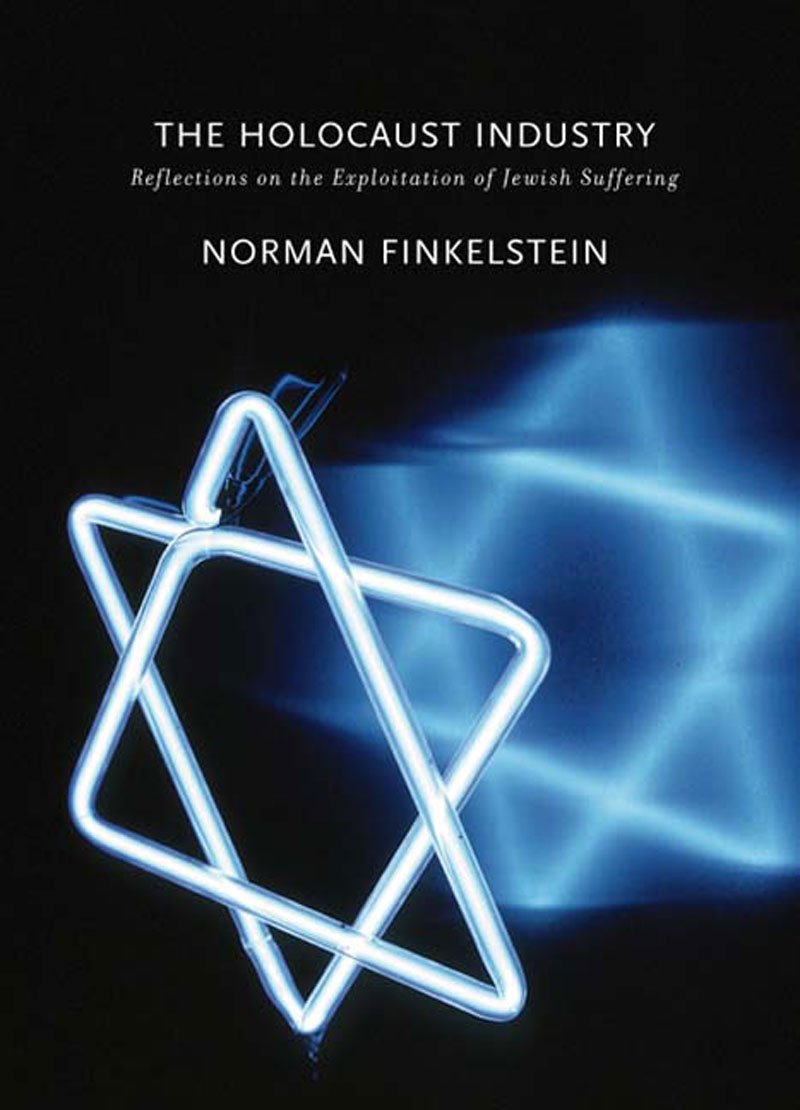
Title
The Holocaust Industry: Reflections On The Exploitation Of Jewish Suffering
Sold by Ergodebooks, an authorized reseller.
Returns accepted within 30 days | support@ergodebooks.com
Shipping Information
- Free Standard Shipping — United States only
- Processing Time: 3–5 business days
- Estimated Delivery: 6–10 business days after dispatch
- Double-boxed, fully insured & discreetly packaged
- Tracking number sent via email once dispatched
Returns & Refund
Returns accepted within 30 days of delivery.
Damaged or Defective Item
Free return shipping + replacement or full refund
Wrong Item Received
Free return shipping + replacement or full refund
Change of Mind
Return shipping at customer's expense · 25% restocking fee applies
Payment Option

It Was Not Until The Arabisraeli War Of 1967, When Israels Evident Strength Brought It Into Line With Us Foreign Policy, That Memory Of The Holocaust Began To Acquire The Exceptional Prominence It Enjoys Today. Leaders Of Americas Jewish Community Were Delighted That Israel Was Now Deemed A Major Strategic Asset And, Finkelstein Contends, Exploited The Holocaust To Enhance This Newfound Status. Their Subsequent Interpretations Of The Tragedy Are Often At Variance With Actual Historical Events And Are Employed To Deflect Any Criticism Of Israel And Its Supporters.Recalling Holocaust Fraudsters Such As Jerzy Kosinski And Binjamin Wilkomirski, As Well As The Demagogic Constructions Of Writers Like Daniel Goldhagen, Finkelstein Contends That The Main Danger Posed To The Memory Of Nazisms Victims Comes Not From The Distortions Of Holocaust Deniers But From Prominent, Selfproclaimed Guardians Of Holocaust Memory. Drawing On A Wealth Of Untapped Sources, He Exposes The Double Shakedown Of European Countries As Well As Legitimate Jewish Claimants, And Concludes That The Holocaust Industry Has Become An Outright Extortion Racket.Thoroughly Researched And Closely Argued, The Holocaust Industry Is All The More Disturbing And Powerful Because The Issues It Deals With Are So Rarely Discussed.
⚠️ WARNING (California Proposition 65):
This product may contain chemicals known to the State of California to cause cancer, birth defects, or other reproductive harm.
For more information, please visit www.P65Warnings.ca.gov.
- Q: How many pages does this book have? A: This book has one hundred sixty pages. It provides a comprehensive analysis of the Holocaust industry and its implications.
- Q: What is the binding type of this book? A: This book is hardcover bound. The hardcover ensures durability and makes it suitable for long-term reading.
- Q: Who is the author of this book? A: The author is Norman G. Finkelstein. He is known for his critical analysis of Holocaust memory and exploitation.
- Q: Is this book suitable for young readers? A: No, this book is not recommended for young readers. It discusses complex and sensitive historical issues which may not be appropriate for children.
- Q: What category does this book fall under? A: This book falls under the Holocaust category. It addresses the historical and social implications surrounding the Holocaust.
- Q: What themes are explored in this book? A: The book explores themes of exploitation, memory, and historical representation. It critically examines how the Holocaust is used in contemporary discourse.
- Q: How do I care for this hardcover book? A: To care for this hardcover book, keep it in a dry place and avoid direct sunlight. Use a soft cloth to dust off the cover.
- Q: Can this book be returned if I'm not satisfied? A: Yes, this book can be returned if you're not satisfied. Check the specific return policy of the retailer for details.
- Q: How should I store this book? A: Store this book upright on a shelf in a cool, dry environment. This helps maintain its condition and prevents damage.
- Q: Is this book a good choice for academic study? A: Yes, this book is an excellent choice for academic study. It is thoroughly researched and provides a critical perspective on Holocaust narratives.
- Q: What makes this book different from other Holocaust literature? A: This book differs from other Holocaust literature by critically analyzing the exploitation of Holocaust memory rather than solely recounting historical events.
- Q: Does this book contain any controversial viewpoints? A: Yes, this book contains controversial viewpoints. Finkelstein challenges mainstream narratives and may provoke discussion and debate.
- Q: What can I expect from the writing style of this book? A: Expect a scholarly and analytical writing style. Finkelstein presents his arguments in a clear, well-researched manner.
- Q: Are there any notable criticisms of this book? A: Yes, this book has faced criticism for its provocative conclusions. Some readers and scholars may find his views contentious.
- Q: Is there a specific audience this book targets? A: This book targets readers interested in Holocaust studies, history, and critical theory. It appeals to both scholars and general readers.
- Q: What historical events does this book reference? A: This book references events such as the Arab-Israeli War of 1967 and discusses the implications of Holocaust memory in contemporary politics.