
Title


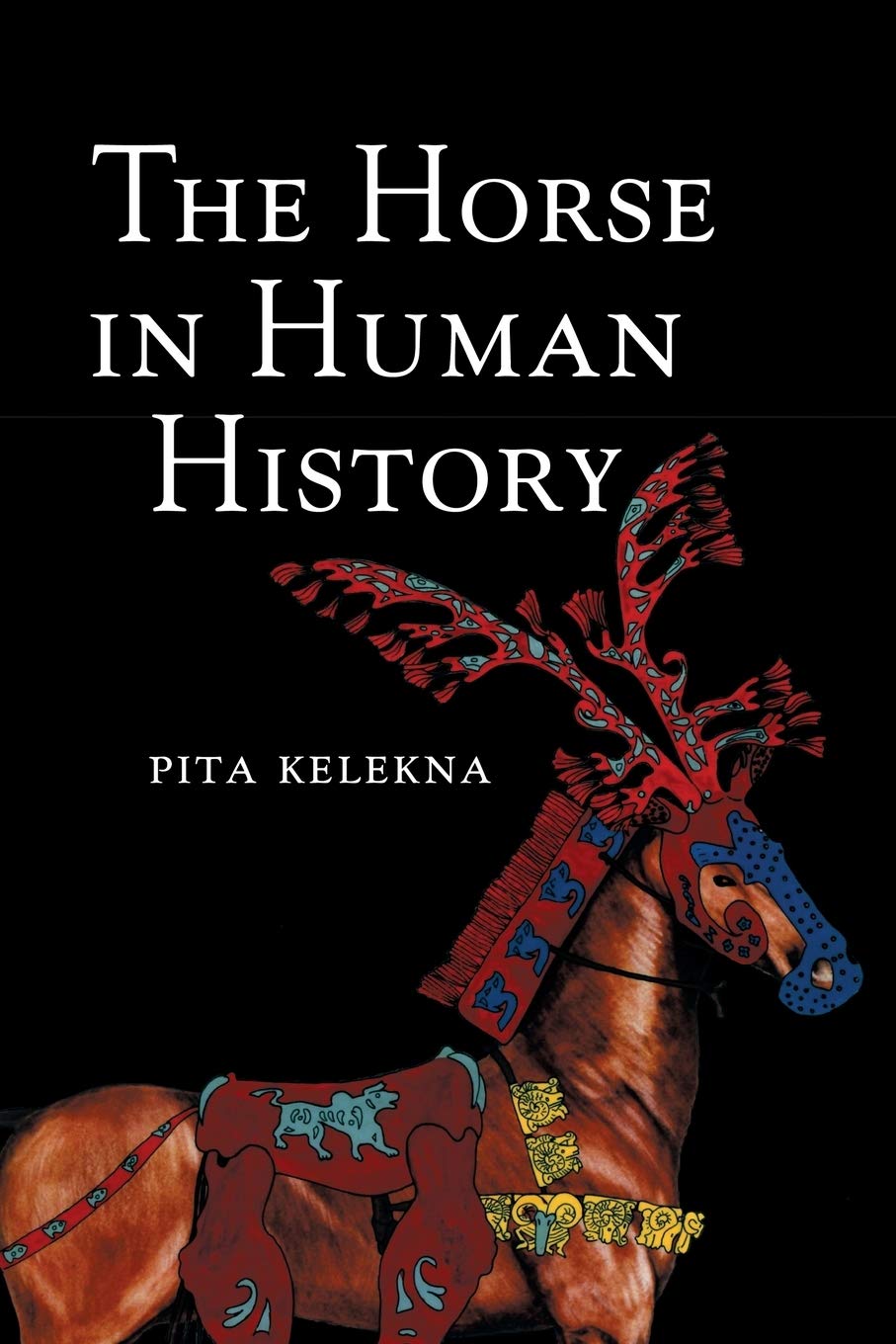
The Horse in Human History,New
Sold by Ergodebooks, an authorized reseller.
Returns accepted within 30 days | support@ergodebooks.com
Shipping Information
- Free Standard Shipping — United States only
- Processing Time: 3–5 business days
- Estimated Delivery: 6–10 business days after dispatch
- Double-boxed, fully insured & discreetly packaged
- Tracking number sent via email once dispatched
Returns & Refund
Returns accepted within 30 days of delivery.
Damaged or Defective Item
Free return shipping + replacement or full refund
Wrong Item Received
Free return shipping + replacement or full refund
Change of Mind
Return shipping at customer's expense · 25% restocking fee applies
Payment Option

The horse is surely the aristocrat of animals domesticated by man. This book documents the origins of horse domestication on the PonticCaspian steppes some 6,000 years ago and the consequent migration of equestrian tribes across Eurasia to the borders of sedentary states. Horsechariotry and cavalry in effect changed the nature of warfare in the civilizations of the Middle East, India, and China. But, beyond the battlefield, horsepower also afforded great advances in transport, agriculture, industry, and science. Rapidity of horse communications forged farflung equestrian empires, where language, law, weights, measures, and writing systems were standardized and revolutionary technologies and ideas were disseminated across continents. Always recognizing this dual character of horsepower both destructive and constructive the politicomilitary and economic importance of the horse is discussed in the rise of Hittite, Achaemenid, Chinese, GrecoRoman, Arab, Mongol, and Turkic states. Following Columbian contact, Old and New World cultures are contrastively evaluated in terms of presence or absence of the horse. And Spanish conquest of the horseless Americas is seen as the model for subsequent European equestrian colonization of horseless territories around the planet.
⚠️ WARNING (California Proposition 65):
This product may contain chemicals known to the State of California to cause cancer, birth defects, or other reproductive harm.
For more information, please visit www.P65Warnings.ca.gov.
- Q: What is the main topic of 'The Horse in Human History'? A: The book explores the origins of horse domestication and its impact on human societies, focusing on the migration of equestrian tribes and the role of horses in warfare, transport, agriculture, and communication throughout history.
- Q: Who is the author of this book? A: The author of 'The Horse in Human History' is Pita Kelekna.
- Q: What is the condition of the book? A: This book is listed as a 'Used Book in Good Condition'.
- Q: What are the key features of this book? A: The key features include its detailed historical analysis of horse domestication and its dual role in both warfare and societal advancement.
- Q: How many pages does 'The Horse in Human History' have? A: The book has a total of 478 pages.
- Q: What type of binding does this book have? A: This edition of the book is bound in paperback.
- Q: When was 'The Horse in Human History' published? A: The book was published on June 11, 2009.
- Q: Is this book suitable for academic research? A: Yes, the book provides a comprehensive historical overview that would be suitable for academic research on the topic of horse domestication and its effects on human civilization.
- Q: What edition of the book is available? A: This is the first edition of 'The Horse in Human History'.
- Q: What insights does the book provide about the cultural impact of horses? A: The book evaluates the cultural impacts of horses in various civilizations, contrasting the presence or absence of horses in Old and New World cultures and their influence on warfare and colonization.