
Title
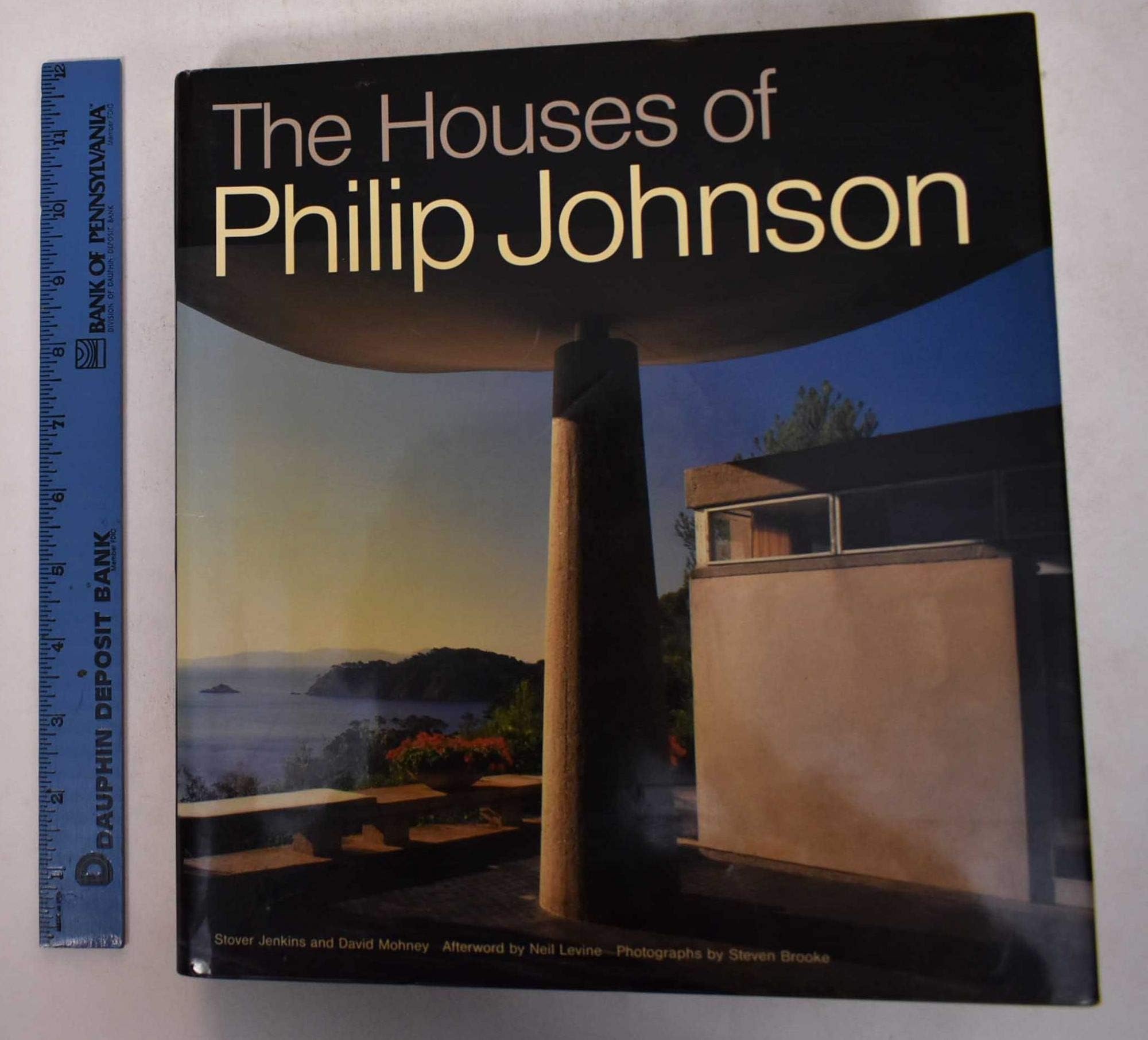
The Houses of Philip Johnson,Used
Sold by Ergodebooks, an authorized reseller.
Returns accepted within 30 days | support@ergodebooks.com
Shipping Information
- Free Standard Shipping — United States only
- Processing Time: 3–5 business days
- Estimated Delivery: 6–10 business days after dispatch
- Double-boxed, fully insured & discreetly packaged
- Tracking number sent via email once dispatched
Returns & Refund
Returns accepted within 30 days of delivery.
Damaged or Defective Item
Free return shipping + replacement or full refund
Wrong Item Received
Free return shipping + replacement or full refund
Change of Mind
Return shipping at customer's expense · 25% restocking fee applies
Payment Option

For almost threequarters of a century, as a critic and curator beginning in 1930s, and as a practicing architect since the 1940s, Philip Johnson has been at the center of modern architecture's development. His celebrated Glass House, built in 1949 in New Canaan, Connecticut a crystallization of Johnson's commitment to the high modernism of his mentor Mies van der Rohe is perhaps the single most famous house of the twentieth century. Until now, however, that house has not been looked at in the context of Johnson's many other house projects. This book, the first to comprehensively survey Johnson's residential work, not only brings to light a largely neglected side of Johnson's achievement, but freshly illuminates his entire career.By examining all of Johnson's houses, authors Stover Jenkins and David Mohney, both architects, help us understand the Glass House as an expression of Johnson's developing thought. Focusing first on Johnson's student work at Harvard and his early commissions, they show how the Glass House reflects Johnson's concentrated study not only of pioneering modern architects including Frank Lloyd Wright and Le Corbusier, but of masters of previous centuries such as ClaudeNicolas Ledoux and Karl Friedrich Schinkel. They detail the threeyear design process of the Glass House, and then show how Johnson moved beyond the influence of Mies to create a remarkably diverse body of work one that is nevertheless unified by characteristic themes, like Johnson's inventive development of the Miesian courthouse scheme, and his articulation of space by the use of connected pavilions.Johnson's clients have always included powerful patrons of art and architecture. Presented in this book are his jewellike townhouse for Blanchette Rockefeller and the Houston home of John and Dominique de Menil, with its enclosed court; projects for collector Joseph Hirshhorn; and the spectacular vacation house at Cap Bnat for the Biossonnas family. Recent projects include a sprawling desert compound in Israel and a villagelike vacation residence in the Caribbean. But from the beginning, when Johnson submitted a house he built for himself in Cambridge, Massachusetts, as his graduate thesis, he has been his own most effective client. The book concludes with a look at the ten built and seven unbuilt projects he has designed over the years for the New Canaan estate. As an afterword, the book includes a penetrating essay by architectural historian Neil Levine, who argues that we must now recognize Johnson's publication of the Glass House, in a 1950 article, as a turning point in the recognition of modernism as a historical movement.Supporting a critical account of approximately thirty built and forty unbuilt projects, the book includes numerous plans and drawings, many never before published, and historical photographs. New color photographs by Steven Brooke capture the ways Johnson has used light, space, and landscape to create some of modernism's most appealing houses. Essential reading for architects and students, this book is also a vital resource for the study of one of modern architecture's most influential figures.
⚠️ WARNING (California Proposition 65):
This product may contain chemicals known to the State of California to cause cancer, birth defects, or other reproductive harm.
For more information, please visit www.P65Warnings.ca.gov.
- Q: What is the main focus of 'The Houses of Philip Johnson'? A: The book primarily focuses on Philip Johnson's residential architecture, providing a comprehensive survey of his various house projects, including the famous Glass House.
- Q: Who are the authors of this book? A: The book is authored by Stover Jenkins and David Mohney, both of whom are architects.
- Q: How many pages does 'The Houses of Philip Johnson' have? A: The book contains a total of 288 pages.
- Q: What type of binding does this book have? A: This edition of the book is hardcover.
- Q: When was 'The Houses of Philip Johnson' published? A: The book was published in September 2001.
- Q: Does the book include photographs and illustrations? A: Yes, the book includes numerous plans, drawings, and historical photographs, as well as new color photographs by Steven Brooke.
- Q: Is this book suitable for architecture students? A: Yes, it is considered essential reading for architects and students interested in modern architecture.
- Q: What is the condition of the book? A: The item condition is listed as 'Good'.
- Q: Are there any essays included in the book? A: Yes, the book includes an afterword with a penetrating essay by architectural historian Neil Levine.
- Q: What is the significance of the Glass House according to the book? A: The book argues that the Glass House represents a turning point in recognizing modernism as a historical movement and reflects Johnson's developing architectural thought.