
Title
The Human Motor: Energy, Fatigue, and the Origins of Modernity,Used
Sold by Ergodebooks, an authorized reseller.
Returns accepted within 30 days | support@ergodebooks.com
Shipping Information
- Free Standard Shipping — United States only
- Processing Time: 3–5 business days
- Estimated Delivery: 6–10 business days after dispatch
- Double-boxed, fully insured & discreetly packaged
- Tracking number sent via email once dispatched
Returns & Refund
Returns accepted within 30 days of delivery.
Damaged or Defective Item
Free return shipping + replacement or full refund
Wrong Item Received
Free return shipping + replacement or full refund
Change of Mind
Return shipping at customer's expense · 25% restocking fee applies
Payment Option

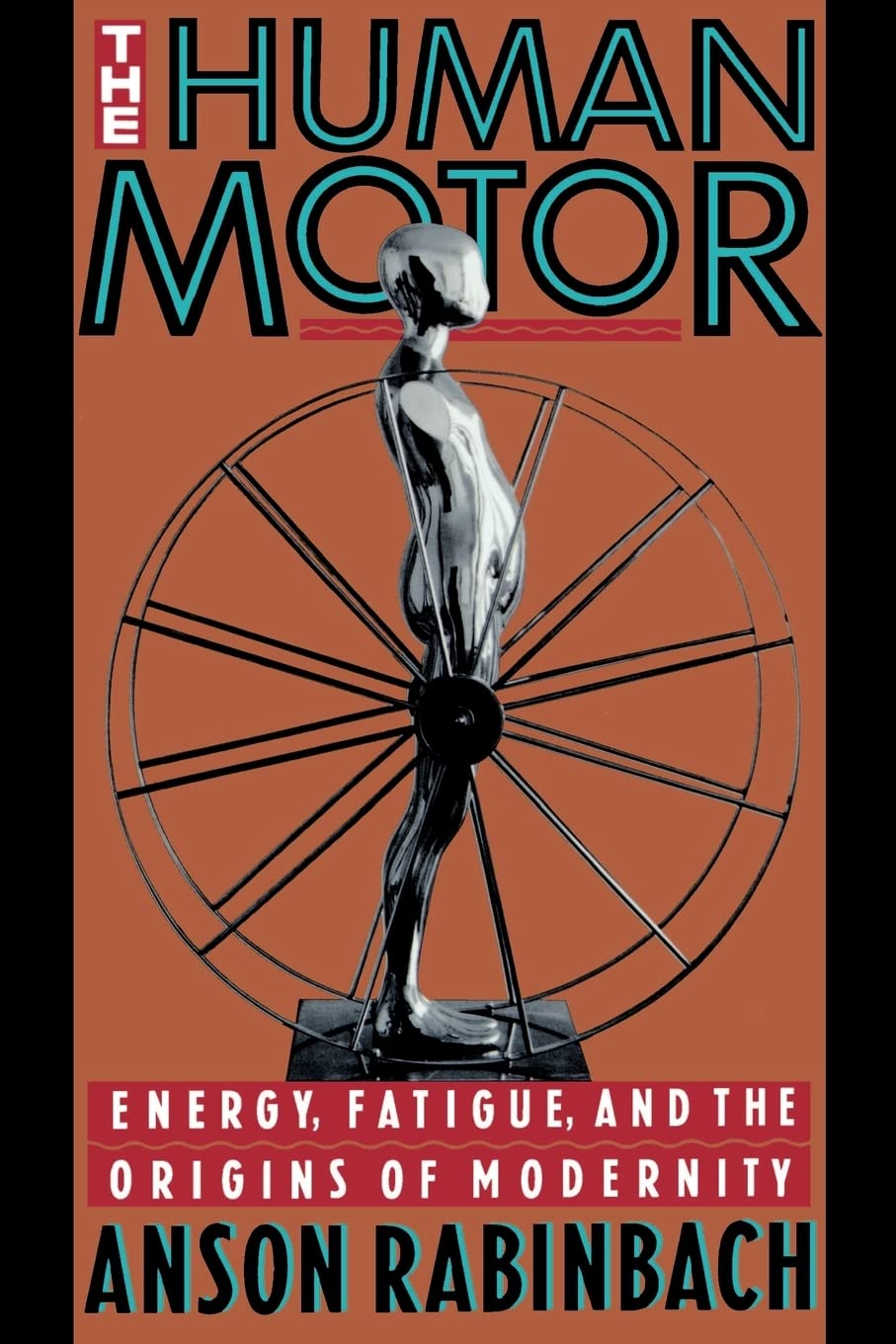
Science once had an unshakable faith in its ability to bring the forces of natureeven human natureunder control. In this wideranging book Anson Rabinbach examines how developments in physics, biology, medicine, psychology, politics, and art employed the metaphor of the working body as a human motor.From nineteenthcentury theories of thermodynamics and political economy to the twentiethcentury ideals of Taylorism and Fordism, Rabinbach demonstrates how the utopian obsession with energy and fatigue shaped social thought across the ideological spectrum.
⚠️ WARNING (California Proposition 65):
This product may contain chemicals known to the State of California to cause cancer, birth defects, or other reproductive harm.
For more information, please visit www.P65Warnings.ca.gov.
- Q: What is the main theme of 'The Human Motor'? A: 'The Human Motor' explores the metaphor of the working body as a human motor, examining how concepts from various disciplines like physics and psychology have influenced social thought regarding energy and fatigue.
- Q: Who is the author of 'The Human Motor'? A: The author of 'The Human Motor' is Anson Rabinbach, a noted scholar in the field of economic history.
- Q: When was 'The Human Motor' published? A: 'The Human Motor' was published on January 8, 1992.
- Q: What is the binding type of this book? A: This book is available in paperback binding.
- Q: How many pages does 'The Human Motor' have? A: 'The Human Motor' contains a total of 432 pages.
- Q: What condition is the book in? A: 'The Human Motor' is in new condition.
- Q: Is there a specific edition of 'The Human Motor'? A: Yes, this book is the first edition.
- Q: What category does 'The Human Motor' fall under? A: 'The Human Motor' is categorized under Economic History.
- Q: Does the book cover modern concepts in relation to historical theories? A: Yes, the book discusses how historical theories in thermodynamics and political economy relate to modern concepts like Taylorism and Fordism.
- Q: Can this book be useful for understanding societal views on work and energy? A: Absolutely, 'The Human Motor' provides insights into how societal views on work, energy, and fatigue have evolved over time.