
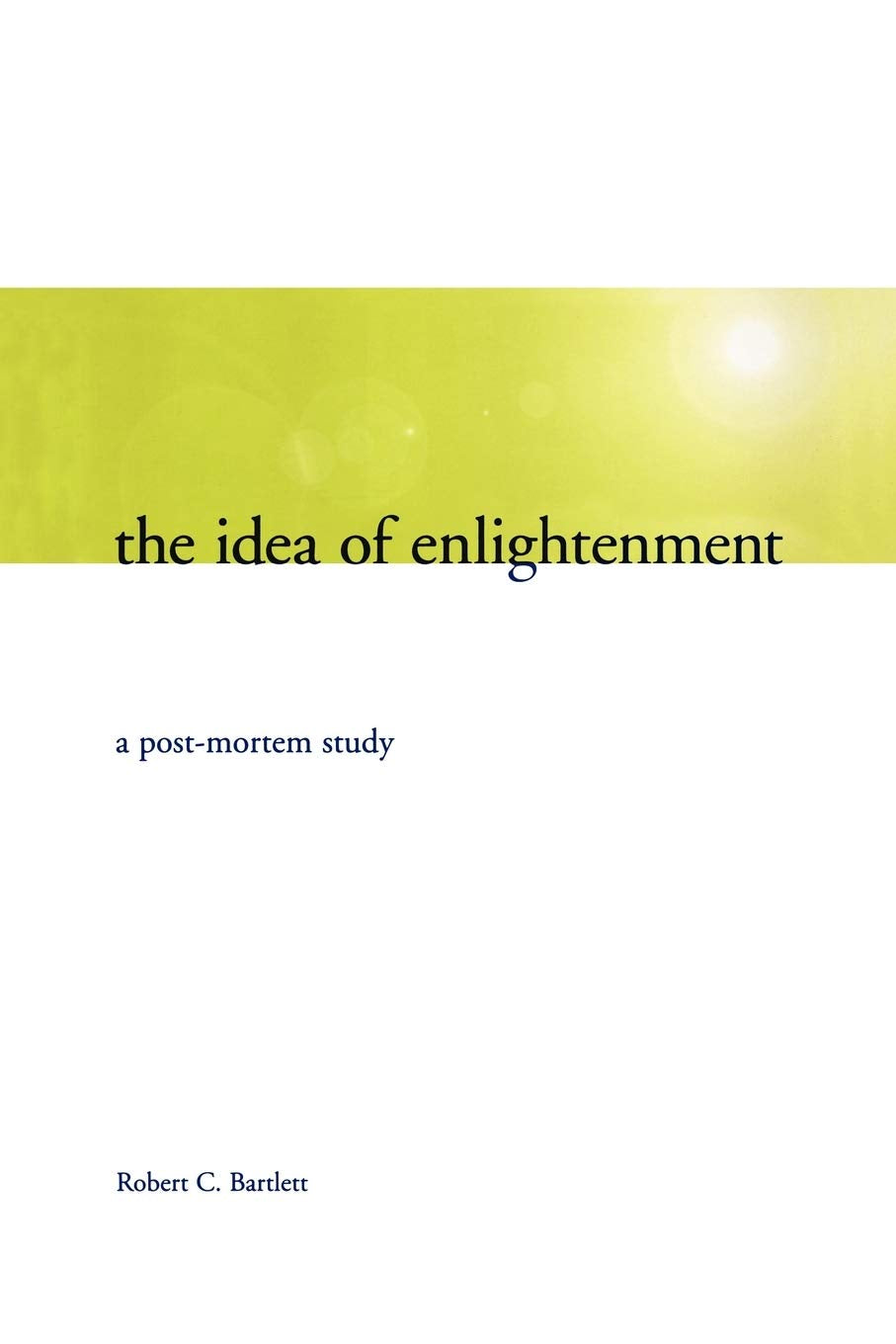
Title
The Idea Of Enlightenment: A Postmortem Study,Used
Sold by Ergodebooks, an authorized reseller.
Returns accepted within 30 days | support@ergodebooks.com
Shipping Information
- Free Standard Shipping — United States only
- Processing Time: 3–5 business days
- Estimated Delivery: 6–10 business days after dispatch
- Double-boxed, fully insured & discreetly packaged
- Tracking number sent via email once dispatched
Returns & Refund
Returns accepted within 30 days of delivery.
Damaged or Defective Item
Free return shipping + replacement or full refund
Wrong Item Received
Free return shipping + replacement or full refund
Change of Mind
Return shipping at customer's expense · 25% restocking fee applies
Payment Option

In 'The Idea of Enlightenment', Robert Bartlett explores the roots of the contemporary dissatisfaction with the modern Enlightenment, the momentous politicalphilosophical project that sought to liberate politics from religious control. What is unsatisfactory about our postEnlightenment condition, argues the author, is that the heralded 'death of God' has been rapidly followed by the death of reason and, with it, the Enlightenment's hope that politics might be governed by reason rather than by God or his ministers.Having undertaken close analysis of five seminal writings, both ancient and modern, Bartlett contends that the fundamental question at the heart of the Enlightenment was and remains the quarrel between reason and faith. What is more, the ancient founders of political philosophy too envisioned a kind of enlightenment that, though less politically active or hopeful than its modern counterpart, still supplies the means to understand that quarrel. For the ancient enlightenment permits us to reacquaint ourselves with the philosophic significance of the conflict between faith and reason, which the success of the modern Enlightenment encouraged us to forget or ignore. In the end, then, Bartlett's return to political philosophers of the past is meant to revive the possibility, against the tenor of our times, that human reason remains our proper 'Star and compass.'The book breaks important new ground in its interpretation of texts by Strauss, Bayle, Montesquieu, Thucydides, Plato, and Aristotle while integrating all of these thinkers into a lively and highly original account of the classical political philosophers' conception of enlightenment as a powerful alternative to the modern conception.
⚠️ WARNING (California Proposition 65):
This product may contain chemicals known to the State of California to cause cancer, birth defects, or other reproductive harm.
For more information, please visit www.P65Warnings.ca.gov.