
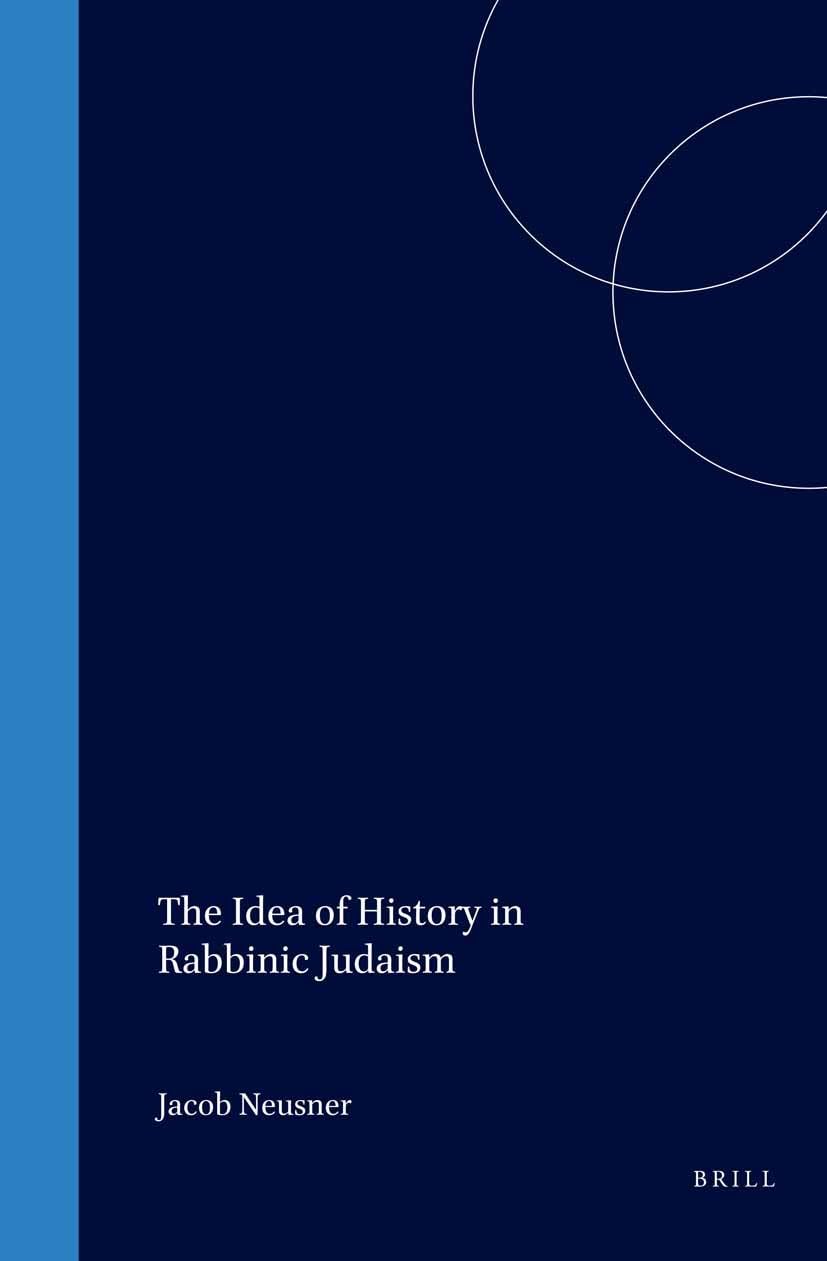
Title
The Idea of History in Rabbinic Judaism (Brill Reference Library of Judaism.),Used
Sold by Ergodebooks, an authorized reseller.
Returns accepted within 30 days | support@ergodebooks.com
Shipping Information
- Free Standard Shipping — United States only
- Processing Time: 3–5 business days
- Estimated Delivery: 6–10 business days after dispatch
- Double-boxed, fully insured & discreetly packaged
- Tracking number sent via email once dispatched
Returns & Refund
Returns accepted within 30 days of delivery.
Damaged or Defective Item
Free return shipping + replacement or full refund
Wrong Item Received
Free return shipping + replacement or full refund
Change of Mind
Return shipping at customer's expense · 25% restocking fee applies
Payment Option

History provides one way of marking time. But there are others, and the Judaism of the dual Torah, set forth in the Rabbinic literature from the Mishnah through the Talmud of Babylonia, ca. 200600 C.E., defines one such alternative. This book tells the story of how a historical way of thinking about past, present, and future, time and eternity, the here and now in relationship to the ages, that is, Scripture's way of thinking gave way to another mode of thought altogether. This other model Neusner calls a paradigm, because a pattern imposed meaning and order on things that happened. Paradigmatic modes of thought took the place of historical ones. Thinking through paradigms, with a conception of time that elides past and present and removes all barriers between them, in fact governs the reception of Scripture in Judaism until nearly our own time. Neusner here explains through the single case of Rabbinic Judaism, precisely how that other way of reading Scripture did its work, and why, for so many centuries, that reading of the heritage of ancient Israel governed. At stake are [1] a conception of time different from the historical one and [2] premises on how to take the measure of time that form a legitimate alternative to those that define the foundations of the historical way of measuring time. Fully exposed, those alternative premises may prove as logical and compelling as the historical ones. The approach follows the documentary history of ideas, and individual chapters describe the treatment of historical topics in the Mishnah, the Talmud of the Land of Israel (a.k.a., the Yerushalmi), Genesis Rabbah, that is, ca. 200, 400, and 450 CE, and Pesiqta deRab Kahana, ca. 500 CE.
⚠️ WARNING (California Proposition 65):
This product may contain chemicals known to the State of California to cause cancer, birth defects, or other reproductive harm.
For more information, please visit www.P65Warnings.ca.gov.