
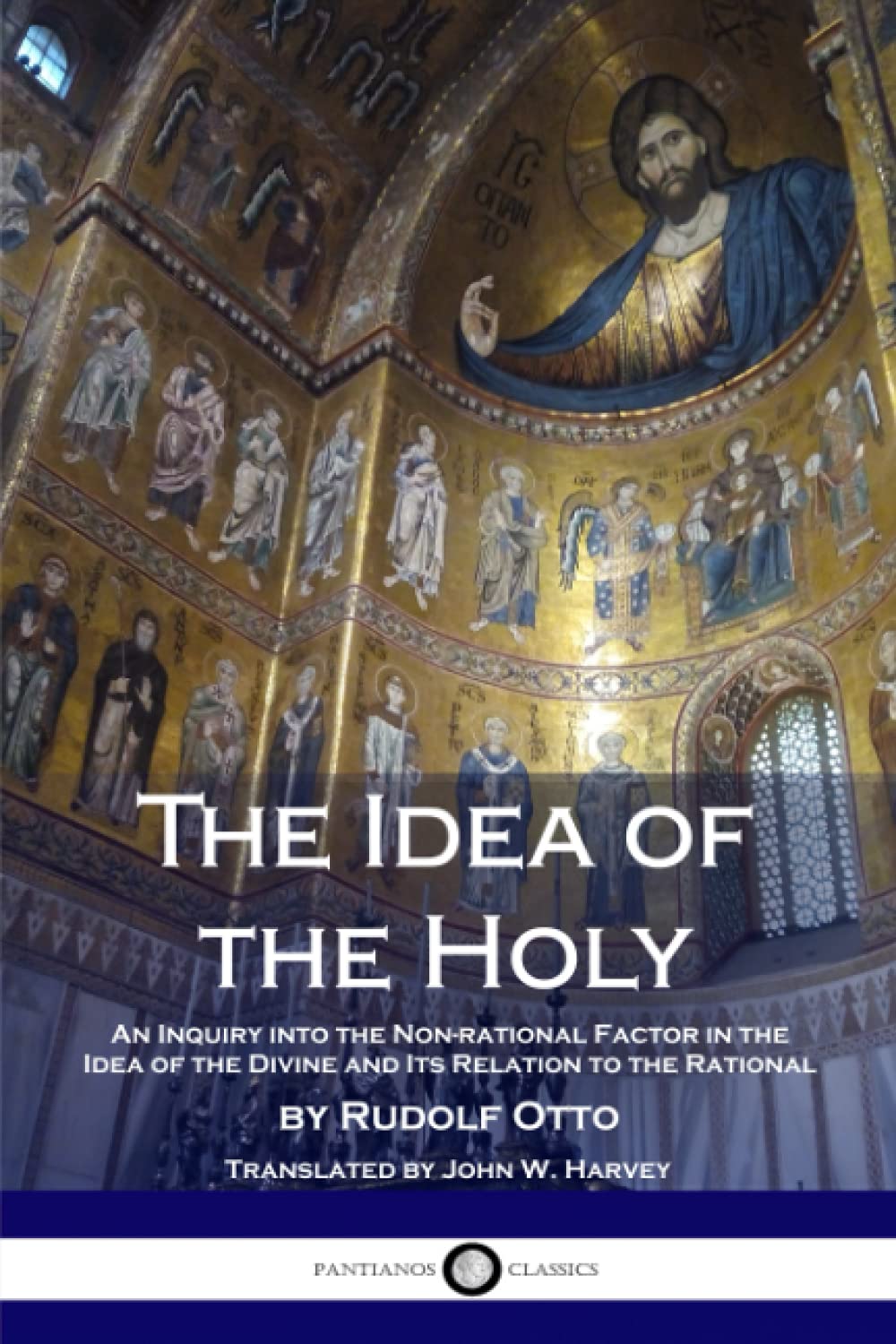
Title
The Idea Of The Holy: An Inquiry Into The Nonrational Factor In The Idea Of The Divine And Its Relation To The Rational
Sold by Ergodebooks, an authorized reseller.
Returns accepted within 30 days | support@ergodebooks.com
Shipping Information
- Free Standard Shipping — United States only
- Processing Time: 3–5 business days
- Estimated Delivery: 6–10 business days after dispatch
- Double-boxed, fully insured & discreetly packaged
- Tracking number sent via email once dispatched
Returns & Refund
Returns accepted within 30 days of delivery.
Damaged or Defective Item
Free return shipping + replacement or full refund
Wrong Item Received
Free return shipping + replacement or full refund
Change of Mind
Return shipping at customer's expense · 25% restocking fee applies
Payment Option

Rudolf Otto'S Classic The Idea Of The Holy Brims With Deep Theological And Philosophical Insights Into The Theory Of Religion And Spiritual Belief In God.As Both A Theologian And A Philosopher, Otto Was Fascinated By How The Rational And Nonrational Interact And Interplay With Regard To Humanity'S Religious Beliefs. This Investigation Determines That Valid, Nonrational Experiences Are As Poignant In The Development Of Knowledge Yet How Do We Quantify And Apportion Value To Various Rational Arguments For Faith, And The Experiences So Many Believers Have Had Over The Millennia?The Author Delves Into These Arguments, And Valiantly Attempts To Determine How The Divine Interacts With Various Emotions. He Coins The Term 'Numinous' From The Root Word 'Numen', To Denote An Emotional State Of Consciousness Apt To Receive Spiritual Insight. The Many Emotions And Attuning Of The Soul To God Falls Under The Designation, And It Proved To Be One Of The Most Important Ideas Otto Would Ever Advance.The Idea Of The Holy Remains An Important Text For Students Of Both Philosophy And Religion, As Well As Spiritually Inclined Readers. Although Christian Believers Will Profit From Its Concepts And Deep Discussion Of Spiritual Matters, Those Of A Different Faith Or Of None Often Come To Respect The Intricacy And Depth With Which Otto Explains And Qualifies His Theology In Rational And Nonrational Terms.This Edition Contains The Text Of The Original First Translation To English Of 1923 By John W. Harvey, Who Strived To Preserve The Clarity, Concision And Poise Of Otto'S Lessons. Since The Book Was Originally Published In German In 1918, It Has Been Translated Into Over Twenty Different Languages.
⚠️ WARNING (California Proposition 65):
This product may contain chemicals known to the State of California to cause cancer, birth defects, or other reproductive harm.
For more information, please visit www.P65Warnings.ca.gov.
- Q: What is the size of the book 'The Idea of the Holy'? A: The book measures six inches in length, zero point thirty-nine inches in width, and nine point zero two inches in height. It's compact enough for easy handling and reading.
- Q: How many pages does 'The Idea of the Holy' have? A: This book contains one hundred sixty-six pages. It offers a comprehensive exploration of the non-rational aspects of religious belief.
- Q: What type of binding does this book have? A: The book features a paperback binding. This makes it lightweight and portable, ideal for readers on the go.
- Q: Who is the author of 'The Idea of the Holy'? A: The author is Rudolf Otto, a noted theologian and philosopher. His insights into spirituality and religion have influenced many.
- Q: Is this book suitable for students of philosophy? A: Yes, this book is highly suitable for students of philosophy. It delves into theological and philosophical themes relevant to both fields.
- Q: What themes are covered in 'The Idea of the Holy'? A: The book explores themes of rational versus non-rational religious experiences. It focuses on how these experiences shape belief in the divine.
- Q: How can I benefit from reading this book? A: Readers can gain deep insights into the interplay of rationality and spirituality. It's valuable for both believers and those exploring religious concepts.
- Q: Is 'The Idea of the Holy' appropriate for readers of different faiths? A: Yes, the book is appropriate for readers of different faiths. It offers a respectful examination of spirituality that resonates beyond Christianity.
- Q: What is the main argument of 'The Idea of the Holy'? A: The main argument is that non-rational experiences are vital in understanding faith. Otto emphasizes the emotional aspects of religious experiences.
- Q: How is the book's translation significant? A: This edition retains the clarity of the original translation by John W. Harvey from nineteen twenty-three. It preserves Otto's philosophical intent.
- Q: What makes this book a classic in theology? A: Its deep exploration of the divine and the non-rational has made it a classic. It remains a pivotal text in the study of religion.
- Q: What can I expect in terms of writing style? A: Expect an academic yet accessible writing style. Otto's prose balances complex ideas with clarity, making it engaging for various readers.
- Q: Is 'The Idea of the Holy' a good gift for spiritual seekers? A: Yes, it makes an excellent gift for spiritual seekers. Its insights can provoke thoughtful discussions about faith and belief.
- Q: Can I read this book if I have no background in theology? A: Yes, you can read this book without a background in theology. Otto explains concepts in a way that is approachable for general readers.
- Q: What is the significance of the term 'numinous' in the book? A: The term 'numinous' is significant as it denotes a profound emotional state receptive to spiritual insight. Otto uses it to describe key religious experiences.