
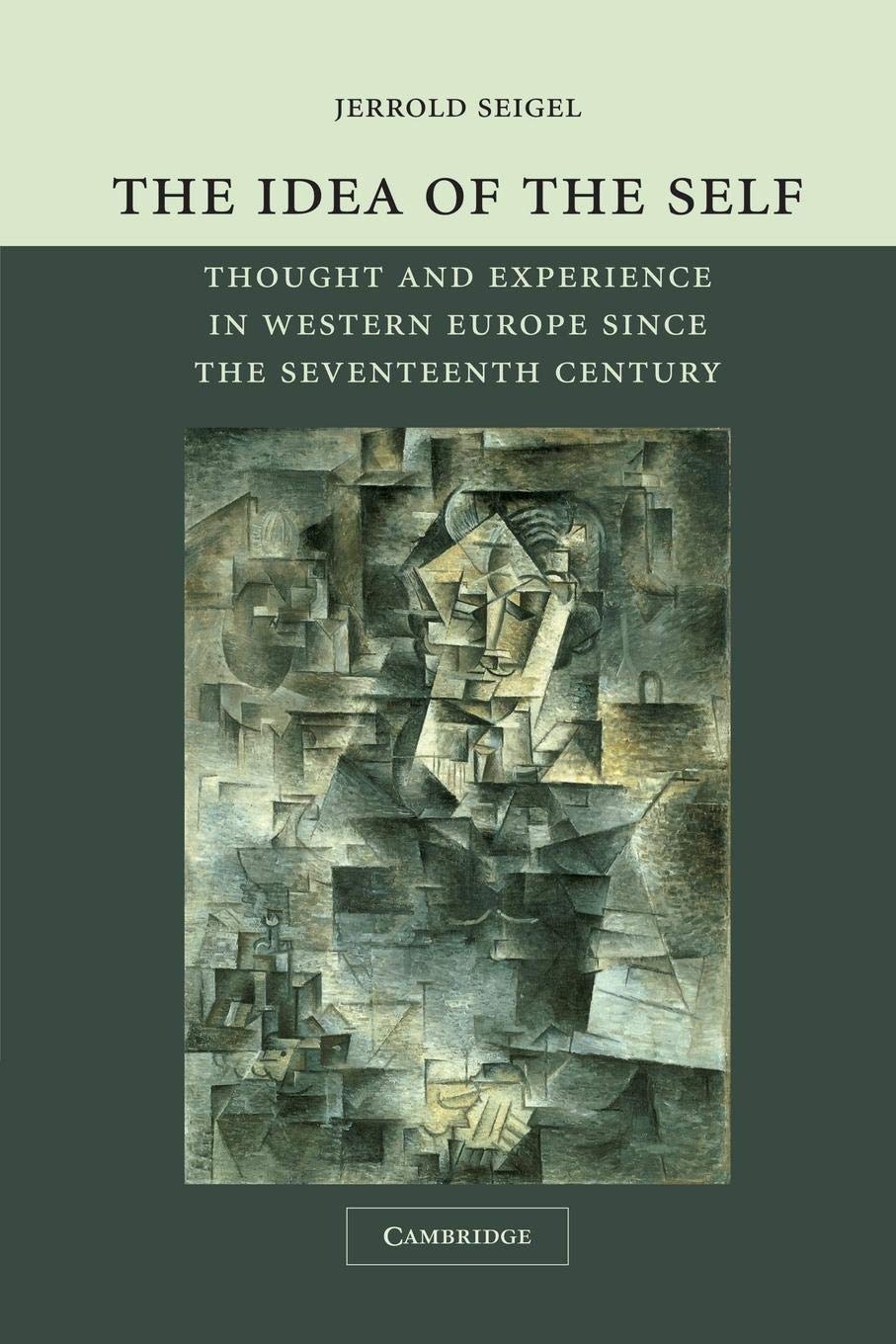
Title
The Idea Of The Self: Thought And Experience In Western Europe Since The Seventeenth Century,New
Sold by Ergodebooks, an authorized reseller.
Returns accepted within 30 days | support@ergodebooks.com
Shipping Information
- Free Standard Shipping — United States only
- Processing Time: 3–5 business days
- Estimated Delivery: 6–10 business days after dispatch
- Double-boxed, fully insured & discreetly packaged
- Tracking number sent via email once dispatched
Returns & Refund
Returns accepted within 30 days of delivery.
Damaged or Defective Item
Free return shipping + replacement or full refund
Wrong Item Received
Free return shipping + replacement or full refund
Change of Mind
Return shipping at customer's expense · 25% restocking fee applies
Payment Option

What Is The Self? The Question Has Preoccupied People In Many Times And Places, But Nowhere More Than In The Modern West, Where It Has Spawned Debates That Still Resound Today. Jerrold Seigel Combines Theoretical And Contextual Approaches To Explore The Ways Key Figures Have Understood Whether And How Far Individuals Can Achieve Coherence And Consistency In The Face Of Inner Tensions And External Pressures. Clarifying That Recent 'Postmodernist' Accounts Belong Firmly To The Tradition Of Western Thinking They Have Sought To Supercede, Seigel Provides A Persuasive Alternative To Claims That The Modern Self Is Typically Egocentric Or Disengaged. Both A Fulbright Fellow And A National Endowment For The Humanities Fellow, Jerrold Seigel Is Currently William R. Keenan Professor Of History At Nyu. His Previous Books Include The Private Worlds Of Marcel Duchamp (University Of California Press, 1995) And Bohemian Paris: Culture, Politics And The Boundaries Of Bourgeois Life (Viking Penguin, 1986).
⚠️ WARNING (California Proposition 65):
This product may contain chemicals known to the State of California to cause cancer, birth defects, or other reproductive harm.
For more information, please visit www.P65Warnings.ca.gov.
- Q: What is the page count of the book? A: This book has seven hundred thirty-four pages. It provides an in-depth exploration of the self in Western Europe.
- Q: What is the binding type of this book? A: The binding type is paperback. This makes it lightweight and convenient for reading.
- Q: What are the dimensions of the book? A: The book measures six inches in length, one point six six inches in width, and nine point zero two inches in height.
- Q: How should I read this book? A: You can read this book at your own pace. It's suitable for anyone interested in philosophy and Western thought.
- Q: Is this book suitable for beginners? A: Yes, this book is suitable for beginners. It presents complex ideas in an accessible manner.
- Q: What kind of themes does this book cover? A: This book covers themes of identity, coherence, and the individual in the context of Western philosophy.
- Q: How do I keep this book in good condition? A: Store the book in a cool, dry place and avoid direct sunlight to maintain its condition.
- Q: Can I lend this book to others? A: Yes, you can lend this book. Just ensure it is returned in good condition.
- Q: What is the best way to clean the book? A: Wipe the cover gently with a dry cloth. Avoid using water or cleaners that could damage the pages.
- Q: Is there a warranty on this book? A: No, books typically do not come with a warranty. However, check with the retailer for return policies.
- Q: What if the book arrives damaged? A: Contact the seller immediately for assistance with returns or exchanges if it arrives damaged.
- Q: What is the author's background? A: The author, Jerrold Seigel, is a noted historian and a Fulbright Fellow. He has written extensively on culture and identity.
- Q: Is this book appropriate for young adults? A: Yes, this book can be appropriate for young adults interested in philosophical discussions.
- Q: Are there any similar books I should consider? A: If you like this book, you might also enjoy 'The Private Worlds of Marcel Duchamp' by the same author.
- Q: What kind of audience is this book intended for? A: This book is intended for readers interested in philosophy, history, and cultural studies.