
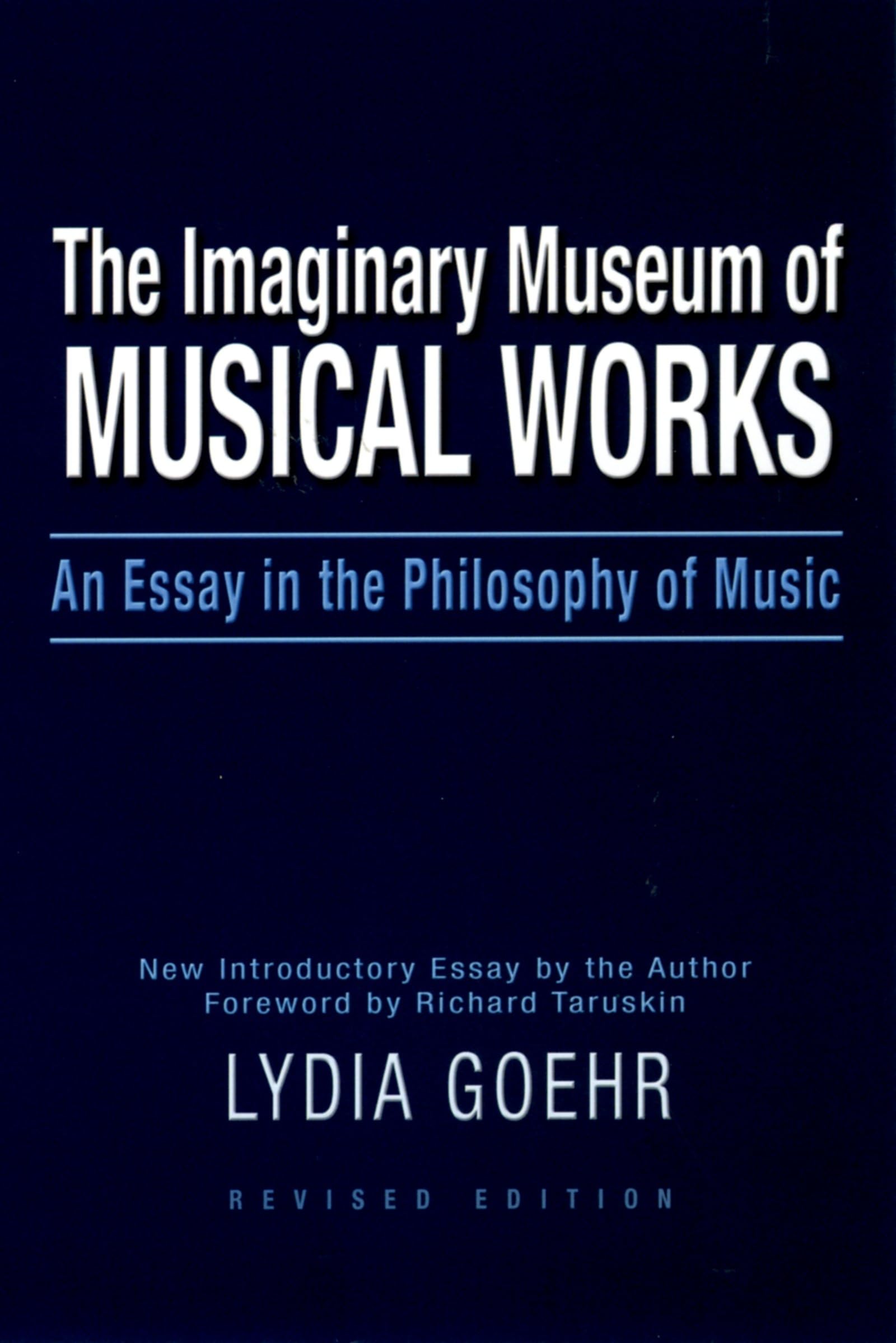
Title
The Imaginary Museum of Musical Works: An Essay in the Philosophy of Music,Used
Sold by Ergodebooks, an authorized reseller.
Returns accepted within 30 days | support@ergodebooks.com
Shipping Information
- Free Standard Shipping — United States only
- Processing Time: 3–5 business days
- Estimated Delivery: 6–10 business days after dispatch
- Double-boxed, fully insured & discreetly packaged
- Tracking number sent via email once dispatched
Returns & Refund
Returns accepted within 30 days of delivery.
Damaged or Defective Item
Free return shipping + replacement or full refund
Wrong Item Received
Free return shipping + replacement or full refund
Change of Mind
Return shipping at customer's expense · 25% restocking fee applies
Payment Option

What is involved in the composition, performance, and reception of classical music? What are we doing when we listen to this music seriously? Why when playing a Beethoven sonata do performers begin with the first note indicated in the score; why don't they feel free to improvise around the sonata's central theme? Why, finally, does it go against tradition for an audience at a concert of classical music to tap its feet? Bound up in these questions is the overriding question of what it means philosophically, musically, and historically for musicians to speak about music in terms of 'works'.In this book, Lydia Goehr describes how the concept of a musical work fully crystallized around 1800, and subsequently defined the norms, expectations, and behavioral patterns that have come to characterize classical musical practice. The description is set in the context of a more general philosophical account of the rise and fall of concepts and ideals, and of their normative functions; at the same time, debates amongst conductors, earlymusic performers, and avantgardists are addressed.The Imaginary Museum of Musical Works is a seminal work of scholarship, and has appeared in an astonishing variety of contexts and disciplines from musicological and philosophical since its initial publication. This second edition features a new Introductory Essay by the author, discussing the genesis of her groundbreaking thesis, how her subsequent work has followed and developed similar themes, and how criticisms along the way have informed not only her own work but the 'Imaginary Museum' concept more generally as it spread across disciplinary lines. A provocative foreword by Richard Taruskin contextualizes Goehr's argument and points to its continuing centrality to the field.
⚠️ WARNING (California Proposition 65):
This product may contain chemicals known to the State of California to cause cancer, birth defects, or other reproductive harm.
For more information, please visit www.P65Warnings.ca.gov.