If you have any questions, you are always welcome to contact us. We'll get back to you as soon as possible, withing 24 hours on weekdays.
Customer service
All questions about your order, return and delivery must be sent to our customer service team by e-mail at yourstore@yourdomain.com
Sale & Press
If you are interested in selling our products, need more information about our brand or wish to make a collaboration, please contact us at press@yourdomain.com
Help
If you have any questions, you are always welcome to contact us. We'll get back to you as soon as possible, withing 24 hours on weekdays.
Customer service
All questions about your order, return and delivery must be sent to our customer service team by e-mail at yourstore@yourdomain.com
Sale & Press
If you are interested in selling our products, need more information about our brand or wish to make a collaboration, please contact us at press@yourdomain.com
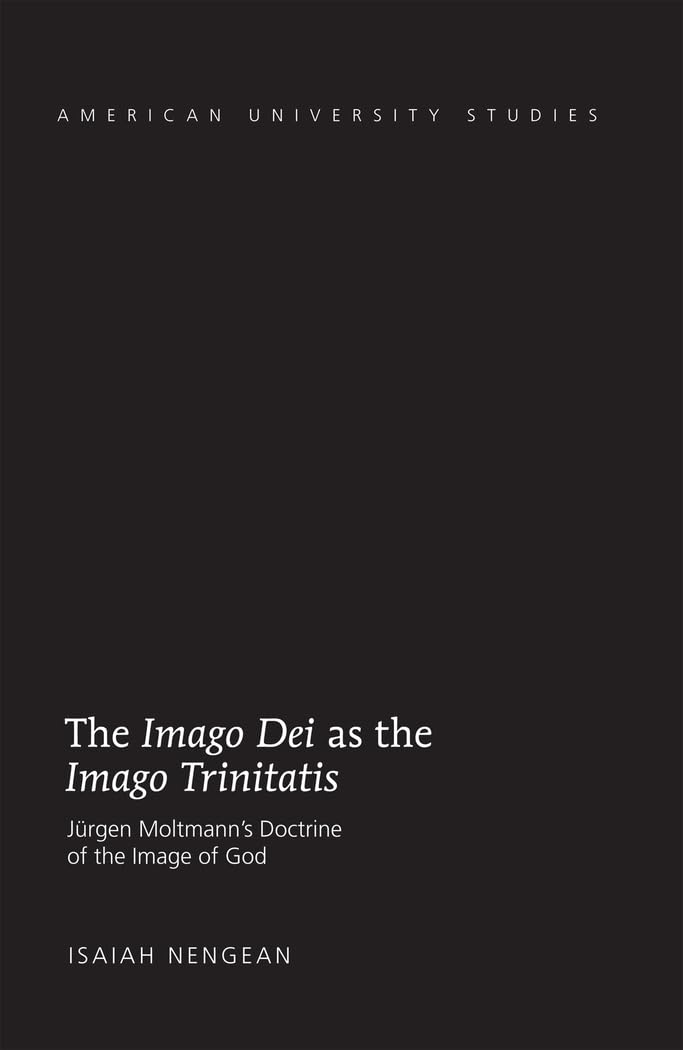
Jrgen Moltmanns Doctrine of the Image of God examines the doctrine of the Image of God in the interpretation of contemporary theologian Jrgen Moltmann. A Reformed theologian from Germany, Moltmann espouses the doctrine in a way that creates a blurring of the Creatorcreation distinction. This work identifies the problem with Moltmanns formulation of the doctrine of the image of God as stemming from Moltmanns rejection of classical theism or monotheism. He replaces it with the notion of transcendental immanence, together with Trinitarian pantheism, accentuated by means of Hegelian dialectics in alignment with Eastern Orthodox perspectives of the Trinity. Moltmann, therefore, makes the Trinity the foundation of all theologies, and, accordingly, understands the Imago Dei as the Imago Trinitatis. As a result, Moltmann blurs the Creatorcreation distinction.According to the Scriptures however, the Image of God denotes elements of similarity between the divine and human beings. The Image of God is first allocated in an individual and by extension includes the entire global community. In addition, the biblical idea of Christ as the true image, the soteriological understanding of believers as beings in union with Christ, and the theological idea of covenant all express similar thoughts. Within this outlook, human beings reflect the divine without the divine needing to be joined to human beings.
⚠️ WARNING (California Proposition 65):
This product may contain chemicals known to the State of California to cause cancer,
birth defects, or other reproductive harm.
For MAP (Minimum Advertised Price) violations and Intellectual Property (IP) or Trademark concerns, please contact:
support@ergodebooks.com
⚠️ California Proposition 65 Warning: Some products sold on this website may expose you to chemicals known to the State of California to cause cancer, birth defects, or other reproductive harm. For more information, visit www.P65Warnings.ca.gov.