If you have any questions, you are always welcome to contact us. We'll get back to you as soon as possible, withing 24 hours on weekdays.
Customer service
All questions about your order, return and delivery must be sent to our customer service team by e-mail at yourstore@yourdomain.com
Sale & Press
If you are interested in selling our products, need more information about our brand or wish to make a collaboration, please contact us at press@yourdomain.com
Help
If you have any questions, you are always welcome to contact us. We'll get back to you as soon as possible, withing 24 hours on weekdays.
Customer service
All questions about your order, return and delivery must be sent to our customer service team by e-mail at yourstore@yourdomain.com
Sale & Press
If you are interested in selling our products, need more information about our brand or wish to make a collaboration, please contact us at press@yourdomain.com
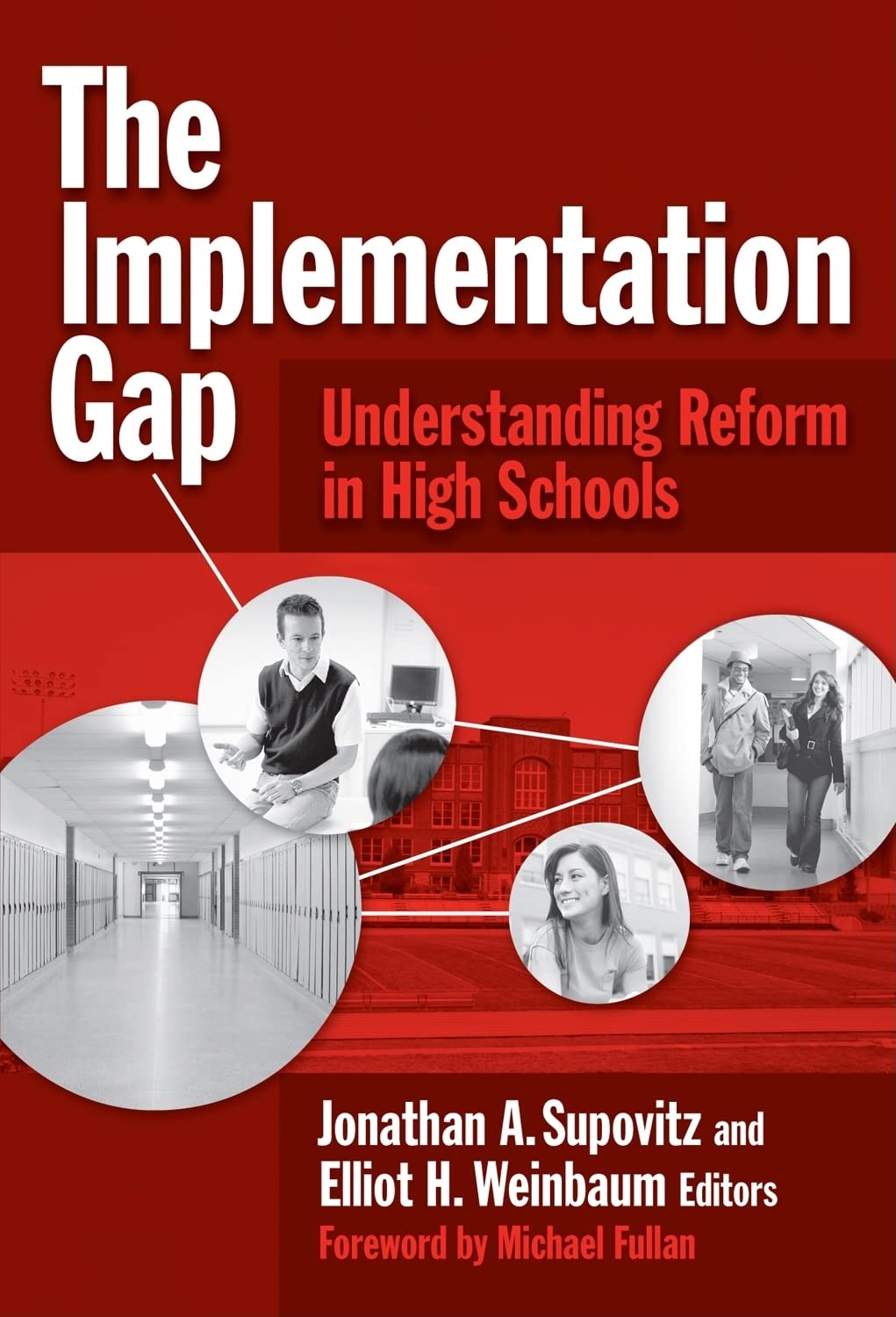
Students of educational improvement have long puzzled over why some school reform ideas blossom while others wither away. Based on an indepth investigation by the Consortium for Policy Research in Education (CPRE), this volume looks at what actually happens when externally designed reforms enter into school environments. How and in what ways do reforms change schools even as schools alter the intent of reforms? What motivates school faculty responses and program designer reactions? This book sheds new light on these important questions by focusing on high schools, the sites of the greatest challenges in current school improvement efforts. From a variety of perspectives, the contributors present: A compelling story about high schools that are using a variety of school improvement programs: High Schools That Work, First Things First, RampUp to Literacy, the Penn Literacy Network, and SchoolNet. Data from a diverse sample of schools, ranging from urban to rural, high performing to low performing, racially homogeneous to ethnically diverse. Specific chapters on the impact of program design, the influence of teacher communication patterns, the imprint of both formal and informal leadership, and the role of the central office. A new look at the ways in which reform efforts are repeatedly adjusted as they work their way through high schools.
⚠️ WARNING (California Proposition 65):
This product may contain chemicals known to the State of California to cause cancer,
birth defects, or other reproductive harm.
For MAP (Minimum Advertised Price) violations and Intellectual Property (IP) or Trademark concerns, please contact:
support@ergodebooks.com
⚠️ California Proposition 65 Warning: Some products sold on this website may expose you to chemicals known to the State of California to cause cancer, birth defects, or other reproductive harm. For more information, visit www.P65Warnings.ca.gov.