
Title
The Implicated Subject: Beyond Victims and Perpetrators (Cultural Memory in the Present),Used
Sold by Ergodebooks, an authorized reseller.
Returns accepted within 30 days | support@ergodebooks.com
Shipping Information
- Free Standard Shipping — United States only
- Processing Time: 3–5 business days
- Estimated Delivery: 6–10 business days after dispatch
- Double-boxed, fully insured & discreetly packaged
- Tracking number sent via email once dispatched
Returns & Refund
Returns accepted within 30 days of delivery.
Damaged or Defective Item
Free return shipping + replacement or full refund
Wrong Item Received
Free return shipping + replacement or full refund
Change of Mind
Return shipping at customer's expense · 25% restocking fee applies
Payment Option

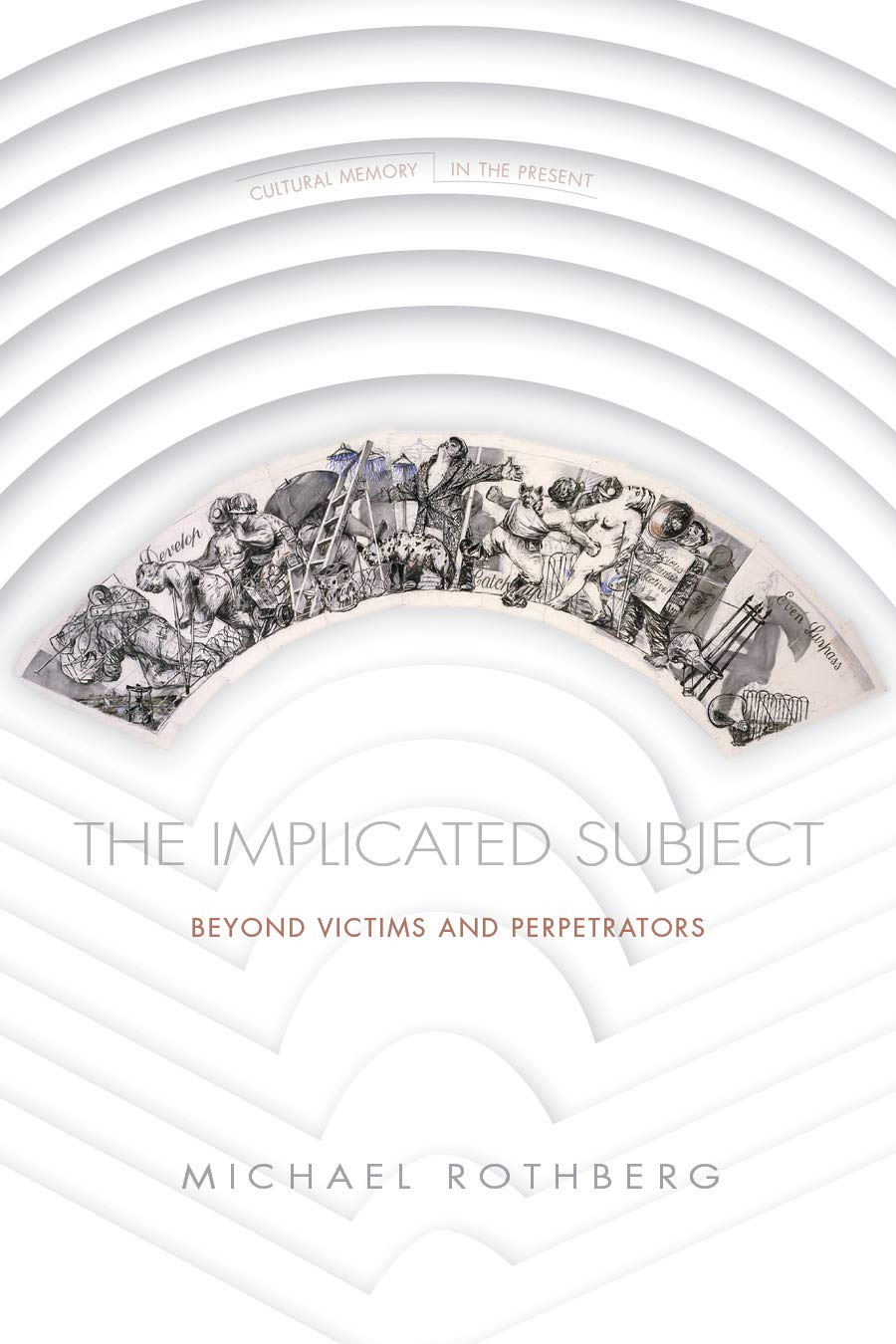
When it comes to historical violence and contemporary inequality, none of us are completely innocent. We may not be direct agents of harm, but we may still contribute to, inhabit, or benefit from regimes of domination that we neither set up nor control. Arguing that the familiar categories of victim, perpetrator, and bystander do not adequately account for our connection to injustices past and present, Michael Rothberg offers a new theory of political responsibility through the figure of the implicated subject. The Implicated Subject builds on the comparative, transnational framework of Rothberg's influential work on memory to engage in reflection and analysis of cultural texts, archives, and activist movements from such contested zones as transitional South Africa, contemporary Israel/Palestine, postHolocaust Europe, and a transatlantic realm marked by the afterlives of slavery. As these diverse sites of inquiry indicate, the processes and histories illuminated by implicated subjectivity are legion in our interconnected world. An array of globally prominent artists, writers, and thinkersfrom William Kentridge, Hito Steyerl, and Jamaica Kincaid, to Hannah Arendt, Primo Levi, Judith Butler, and the Combahee River Collectivespeak to this interconnection and show how confronting our own implication in difficult histories can lead to new forms of internationalism and longdistance solidarity.
⚠️ WARNING (California Proposition 65):
This product may contain chemicals known to the State of California to cause cancer, birth defects, or other reproductive harm.
For more information, please visit www.P65Warnings.ca.gov.
- Q: What is the main theme of 'The Implicated Subject'? A: The main theme of 'The Implicated Subject' revolves around the concept of political responsibility, specifically through the lens of the 'implicated subject.' It explores how individuals, though not direct agents of harm, may still contribute to or benefit from systems of injustice and domination.
- Q: Who is the author of 'The Implicated Subject'? A: The author of 'The Implicated Subject' is Michael Rothberg, a scholar known for his work on memory studies and cultural analysis.
- Q: What type of binding does this book have? A: This book is available in paperback binding, making it a flexible option for readers.
- Q: How many pages are in 'The Implicated Subject'? A: 'The Implicated Subject' contains 288 pages, providing an in-depth exploration of its themes and arguments.
- Q: When was 'The Implicated Subject' published? A: 'The Implicated Subject' was published on August 6, 2019.
- Q: What are some key topics covered in the book? A: Key topics in the book include historical violence, contemporary inequality, and the roles of victim, perpetrator, and bystander in relation to injustices.
- Q: Is there any notable criticism of the book? A: While there may be various interpretations, the book has been praised for its innovative approach to understanding political responsibility rather than facing significant criticism.
- Q: Can this book be useful for students of social justice? A: Yes, 'The Implicated Subject' can be highly beneficial for students of social justice, as it offers critical insights into the complexities of collective responsibility and historical injustices.
- Q: What is the significance of the 'implicated subject' in the book? A: The 'implicated subject' is significant as it challenges traditional notions of guilt and innocence, encouraging readers to reflect on their own roles within systems of power and injustice.
- Q: Does the book include examples from specific historical contexts? A: Yes, the book includes examples from various historical contexts, such as transitional South Africa, contemporary Israel/Palestine, and post-Holocaust Europe, to illustrate its arguments.