
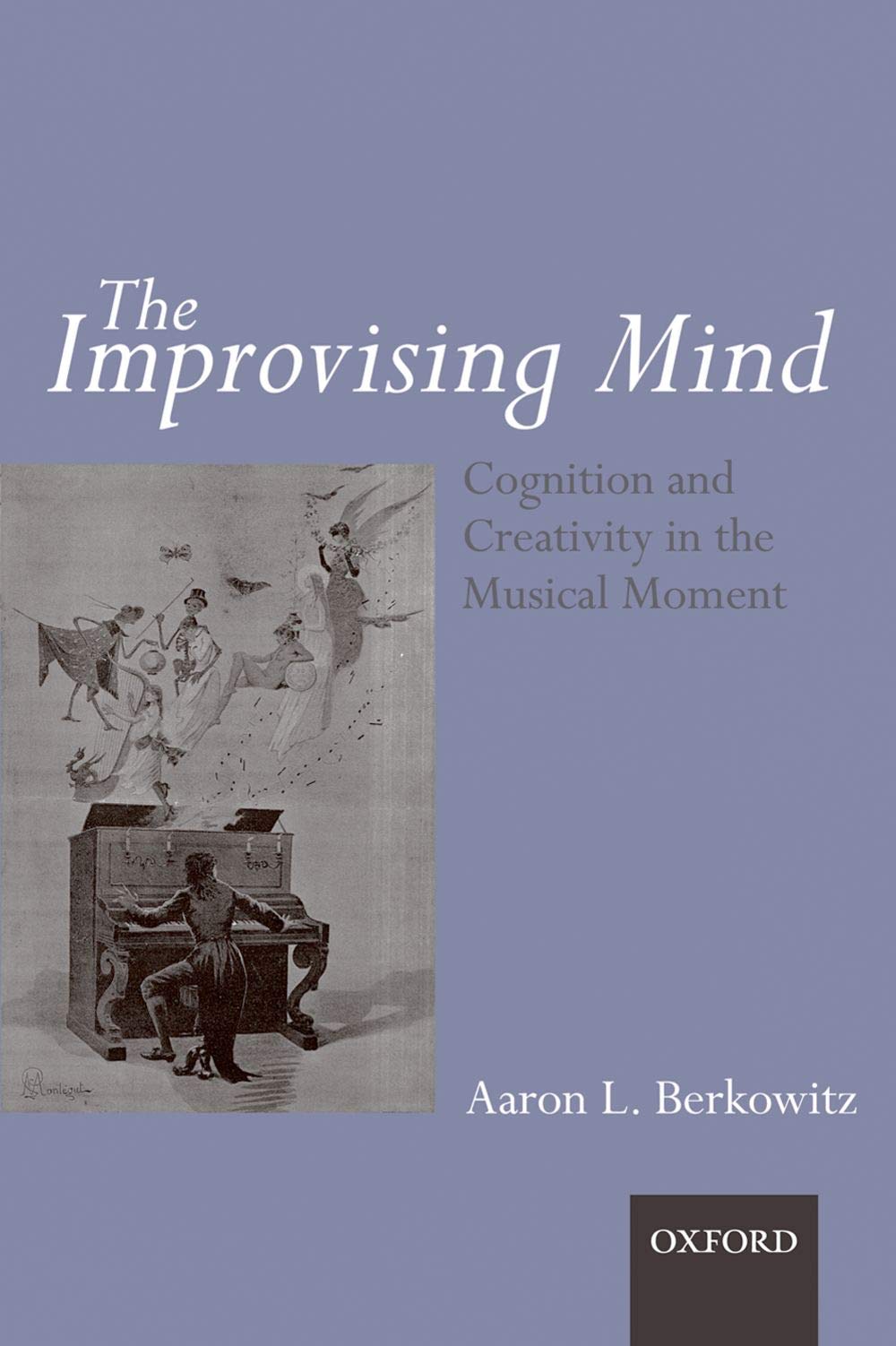
Title
The improvising mind: Cognition and creativity in the musical moment,Used
Sold by Ergodebooks, an authorized reseller.
Returns accepted within 30 days | support@ergodebooks.com
Shipping Information
- Free Standard Shipping — United States only
- Processing Time: 3–5 business days
- Estimated Delivery: 6–10 business days after dispatch
- Double-boxed, fully insured & discreetly packaged
- Tracking number sent via email once dispatched
Returns & Refund
Returns accepted within 30 days of delivery.
Damaged or Defective Item
Free return shipping + replacement or full refund
Wrong Item Received
Free return shipping + replacement or full refund
Change of Mind
Return shipping at customer's expense · 25% restocking fee applies
Payment Option

The ability to improvise represents one of the highest levels of musical achievement. An improviser must master a musical language to such a degree as to be able to spontaneously invent stylistically idiomatic compositions on the spot. This feat is one of the pinnacles of human creativity, and yet its cognitive basis is poorly understood. What musical knowledge is required for improvisation? How does a musician learn to improvise? What are the neural correlates of improvised performance?In The Improvising Mind, these questions are explored through an interdisciplinary approach that draws on cognitive neuroscience, study of historical pedagogical treatises on improvisation, interviews with improvisers, and musical analysis of improvised performances. Findings from these treatises and interviews are discussed from the perspective of cognitive psychological theories of learning, memory, and expertise. Musical improvisation has often been compared to 'speaking a musical language.' While past research has focussed on comparisons of music and language perception, few have dealt with this comparison in the performance domain. In this book, learning to improvise is compared with language acquisition, and improvised performance is compared with spontaneous speech from both theoretical and neurobiological perspectives.Tackling a topic that has hitherto received little attention, The Improvising Mind will be a valuable addition to the literature in music cognition. This is a book that will make fascinating reading for musicologists, music theorists, cognitive neuroscientists and psychologists, musicians, music educators, and anyone with an interest in creativity.
⚠️ WARNING (California Proposition 65):
This product may contain chemicals known to the State of California to cause cancer, birth defects, or other reproductive harm.
For more information, please visit www.P65Warnings.ca.gov.