
Title
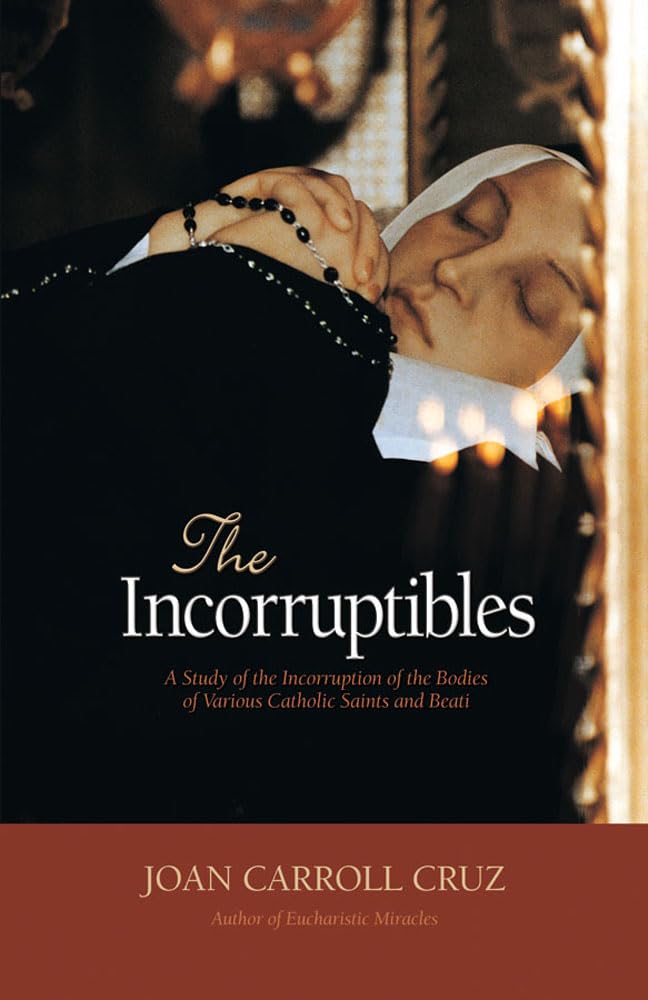
The Incorruptibles: A Study Of The Incorruption Of The Bodies Of Various Catholic Saints And Beati,New
Sold by Ergodebooks, an authorized reseller.
Returns accepted within 30 days | support@ergodebooks.com
Shipping Information
- Free Standard Shipping — United States only
- Processing Time: 3–5 business days
- Estimated Delivery: 6–10 business days after dispatch
- Double-boxed, fully insured & discreetly packaged
- Tracking number sent via email once dispatched
Returns & Refund
Returns accepted within 30 days of delivery.
Damaged or Defective Item
Free return shipping + replacement or full refund
Wrong Item Received
Free return shipping + replacement or full refund
Change of Mind
Return shipping at customer's expense · 25% restocking fee applies
Payment Option

Continuously Popular Since It First Appeared In 1977, Theincorruptibles Remains The Acknowledged Classic On The Bodies Of Saints That Did Not Undergo Decomposition After Death. Many Remained Fresh And Flexible For Years, Or Even Centuries. After Explaining Both Natural And Artificial Mummification, The Author Shows That The Incorruption Of The Saints' Bodies Fits Neither Category But Rather Constitutes A Much Greater Phenomenon That Is Unexplained By Modern Science To This Day. The Author Presents 102 Canonized Saints, Beati, And Venerables, Summarizing Their Lives, The Discovery Of Their Incorruption, And Investigations By Church And Medical Authorities.The Incorruptible Bodies Of Saints Are A Consoling Sign Of Christ S Victory Over Death, A Confirmation Of The Dogma Of The Resurrection Of The Body, A Sign That The Saints Are Still With Us In The Mystical Body Of Christ, And Proof Of The Truth Of The Catholic Faithfor Only In The Catholic Church Do We Find This Phenomenon. Impr. 342 Pgs 33 Illus, Pb.
⚠️ WARNING (California Proposition 65):
This product may contain chemicals known to the State of California to cause cancer, birth defects, or other reproductive harm.
For more information, please visit www.P65Warnings.ca.gov.
- Q: How many pages does 'The Incorruptibles' have? A: This book has three hundred forty-two pages. It provides an in-depth look into the incorruption of various saints.
- Q: What is the binding type of this book? A: The binding type is paperback. This makes it lightweight and easy to handle for reading.
- Q: What are the dimensions of 'The Incorruptibles'? A: The dimensions are five point five one inches in length, zero point seven one inches in width, and eight point five inches in height.
- Q: Who is the author of 'The Incorruptibles'? A: The author is Joan Carroll Cruz. She is known for her extensive research on the subject of incorrupt saints.
- Q: What is the publication date of this book? A: The book was first published in nineteen seventy-seven. It has remained popular and relevant since its initial release.
- Q: What themes are covered in 'The Incorruptibles'? A: The book covers themes of sainthood, incorruption, and Catholic faith. It explores how these bodies serve as signs of Christ’s victory over death.
- Q: How should I read 'The Incorruptibles' to understand its themes? A: You can read it as a spiritual study or for historical insights. It's suitable for anyone interested in Catholicism and the lives of saints.
- Q: Is 'The Incorruptibles' suitable for children? A: Yes, it is suitable for older children and teenagers. However, parental guidance is recommended due to its religious themes.
- Q: What type of audience would appreciate this book? A: This book is ideal for readers interested in religious studies, history, and Catholic traditions. It appeals to both scholars and casual readers.
- Q: How should I care for my copy of 'The Incorruptibles'? A: Store the book in a dry place away from direct sunlight. To clean, use a soft, dry cloth to avoid damaging the cover.
- Q: Can I find this book in libraries? A: Yes, 'The Incorruptibles' is often available in libraries. You can check your local library's catalog or request an interlibrary loan.
- Q: What should I do if my copy of 'The Incorruptibles' arrives damaged? A: If your copy arrives damaged, you should contact the seller for a return or exchange. Most sellers have policies for such situations.
- Q: Is there a warranty on this book? A: No, books typically do not come with warranties. However, check with the retailer for their return policy.
- Q: How does 'The Incorruptibles' compare to other religious books? A: This book is unique in its focus on incorrupt saints, unlike many religious texts that cover broader themes. It provides specific case studies.
- Q: What makes 'The Incorruptibles' a classic? A: It is considered a classic due to its thorough research and enduring popularity since nineteen seventy-seven in Catholic literature.