If you have any questions, you are always welcome to contact us. We'll get back to you as soon as possible, withing 24 hours on weekdays.
Customer service
All questions about your order, return and delivery must be sent to our customer service team by e-mail at yourstore@yourdomain.com
Sale & Press
If you are interested in selling our products, need more information about our brand or wish to make a collaboration, please contact us at press@yourdomain.com
Help
If you have any questions, you are always welcome to contact us. We'll get back to you as soon as possible, withing 24 hours on weekdays.
Customer service
All questions about your order, return and delivery must be sent to our customer service team by e-mail at yourstore@yourdomain.com
Sale & Press
If you are interested in selling our products, need more information about our brand or wish to make a collaboration, please contact us at press@yourdomain.com
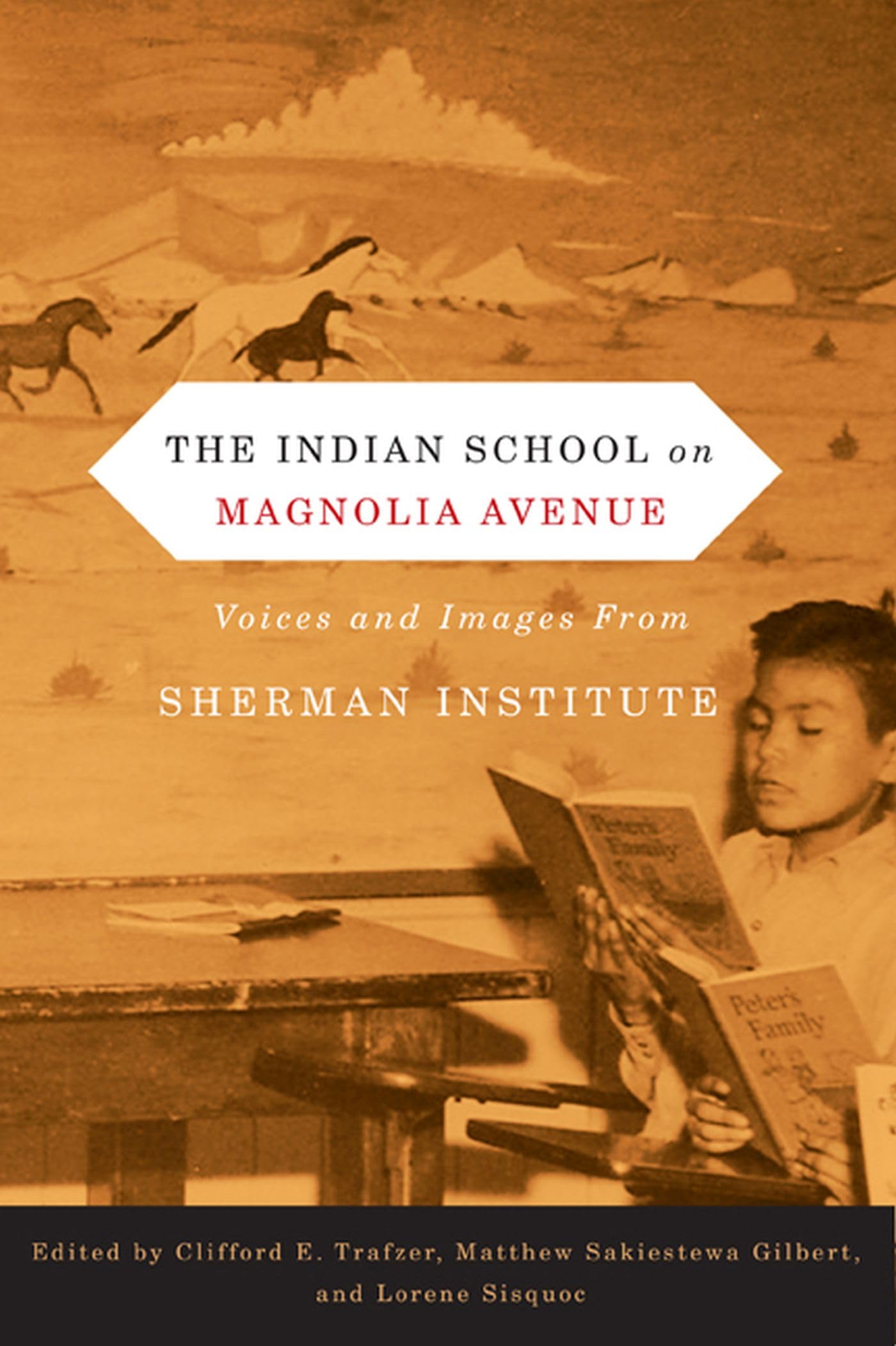
The first collection of writings and images focused on an offreservation Indian boarding school, The Indian School on Magnolia Avenue shares the fascinating story of this flagship institution, featuring the voices of American Indian students.In 1902, the federal government opened Sherman Institute in Riverside, California, to transform American Indian students into productive farmers, carpenters, homemakers, nurses, cooks, and seamstresses. Indian students helped build the school and worked daily at Sherman; teachers provided vocational education and placed them in employment through the Outing Program.Contributors to The Indian School on Magnolia Avenue have drawn on documents held at the Sherman Indian Museum to explore topics such as the building of Sherman, the schools Mission architecture, the nursing program, the Special FiveYear Navajo Program, the Sherman cemetery, and a photo essay depicting life at the school.Despite the fact that Indian boarding schoolswith their agenda of cultural genocide prevented students from speaking their languages, singing their songs, and practicing their religions, most students learned to read, write, and speak English, and most survived to benefit themselves and contribute to the wellbeing of Indian people.Scholars and general readers in the fields of Native American studies, history, education, public policy, and historical photography will findThe Indian School on Magnolia Avenue an indispensable volume.
⚠️ WARNING (California Proposition 65):
This product may contain chemicals known to the State of California to cause cancer,
birth defects, or other reproductive harm.
For MAP (Minimum Advertised Price) violations and Intellectual Property (IP) or Trademark concerns, please contact:
support@ergodebooks.com
⚠️ California Proposition 65 Warning: Some products sold on this website may expose you to chemicals known to the State of California to cause cancer, birth defects, or other reproductive harm. For more information, visit www.P65Warnings.ca.gov.