If you have any questions, you are always welcome to contact us. We'll get back to you as soon as possible, withing 24 hours on weekdays.
Customer service
All questions about your order, return and delivery must be sent to our customer service team by e-mail at yourstore@yourdomain.com
Sale & Press
If you are interested in selling our products, need more information about our brand or wish to make a collaboration, please contact us at press@yourdomain.com
Help
If you have any questions, you are always welcome to contact us. We'll get back to you as soon as possible, withing 24 hours on weekdays.
Customer service
All questions about your order, return and delivery must be sent to our customer service team by e-mail at yourstore@yourdomain.com
Sale & Press
If you are interested in selling our products, need more information about our brand or wish to make a collaboration, please contact us at press@yourdomain.com
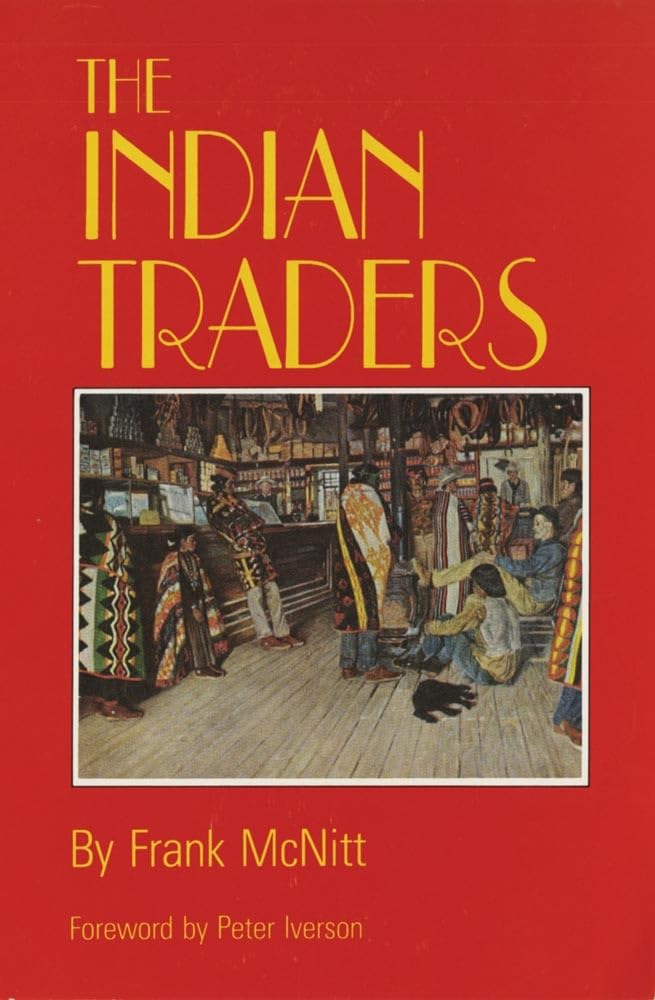
We have no concept of Indian traders to match our nearly universal picture of the American cowboy, the cavalryman of Indianfighting days, or the pioneer settler who followed in their wake, wrote Frank McNitt. In The Indian Traders men like Lorenzo Hubbell of Ganado Trading Post and Thomas Keam, hidden in his canyon, are put into perspective, no longer merely shadowy figures moving through the history of the West.In the Southwest, traders like John D. Lee, Thomas Keam, and old Dan DuBois, moving far ahead of the homesteaders, realized their effectiveness as an influence for the Indians' good. While Indian agents often served their own interestsfinancial, religious, or politicaltraders knew that if Indians did not achieve a greater degree of prosperity, traders could never succeed. Whether it was Keam rescuing the Navahos from Agent William F. M. Arnys exploitation and offering his buildings for a Hopi school, Frank Noel mediating their differences with the government, or John B. Moore publicizing and improving Navaho weaving, traders have helped better the lot of Indian artists.From the Bents and St. Vrain to modern vendors selling jewelry and groceries to tourists, the traders of New Mexico and Arizona have been the bridge between cultures. Based on interviews, letters, and unpublished documents, The Indian Traders helps complete the history of the Southwest.
⚠️ WARNING (California Proposition 65):
This product may contain chemicals known to the State of California to cause cancer,
birth defects, or other reproductive harm.
For MAP (Minimum Advertised Price) violations and Intellectual Property (IP) or Trademark concerns, please contact:
support@ergodebooks.com
⚠️ California Proposition 65 Warning: Some products sold on this website may expose you to chemicals known to the State of California to cause cancer, birth defects, or other reproductive harm. For more information, visit www.P65Warnings.ca.gov.