If you have any questions, you are always welcome to contact us. We'll get back to you as soon as possible, withing 24 hours on weekdays.
Customer service
All questions about your order, return and delivery must be sent to our customer service team by e-mail at yourstore@yourdomain.com
Sale & Press
If you are interested in selling our products, need more information about our brand or wish to make a collaboration, please contact us at press@yourdomain.com
Help
If you have any questions, you are always welcome to contact us. We'll get back to you as soon as possible, withing 24 hours on weekdays.
Customer service
All questions about your order, return and delivery must be sent to our customer service team by e-mail at yourstore@yourdomain.com
Sale & Press
If you are interested in selling our products, need more information about our brand or wish to make a collaboration, please contact us at press@yourdomain.com
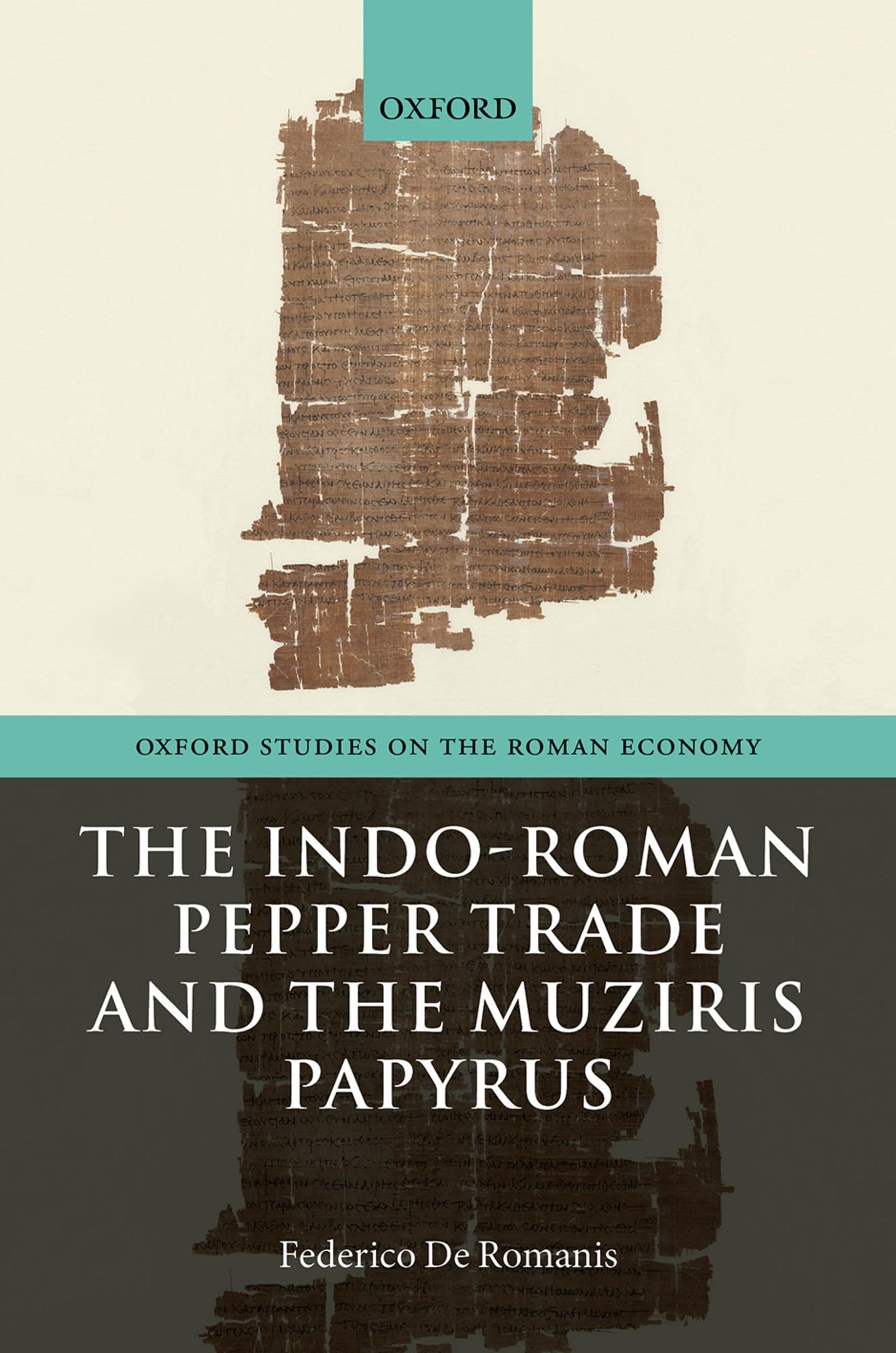
This volume presents a systematic and fresh interpretation of a midsecondcentury AD papyrus the socalled Muziris papyrus which preserves on its two sides fragments of a unique pair of documents: on one side, a loan agreement to finance a commercial enterprise to South India and, on the other, an assessment of the fiscal value of a South Indian cargo imported on a ship named the Hermapollon. The two texts, whose informative potential has long been underexploited, clarify several aspects of the early Roman Empire's trade with South India, including transport logistics, financial and legal elements in the loan agreement funding the commercial enterprise, the trade goods included in the South Indian cargo, and the technicalities of calculating and collecting Roman customs duties on the Indian imports. This study also considers imperial fiscal policy as it related to the South Indian trade, the overall evolution of Rome's trade relations with South India, the structure and organization of South Indian trade stakeholders, and the role played by private taxcollectors. The indepth analysis sheds new light on this important sector of the Roman economy during the first two centuries AD in two innovative ways: through a balanced consideration of South Indian sources and data, and by drawing comparisons with the pepper trade from late antiquity, the Middle Ages, and early modernity, resulting in a longue dure perspective on the western trade in South Indian pepper.
⚠️ WARNING (California Proposition 65):
This product may contain chemicals known to the State of California to cause cancer,
birth defects, or other reproductive harm.
For MAP (Minimum Advertised Price) violations and Intellectual Property (IP) or Trademark concerns, please contact:
support@ergodebooks.com
⚠️ California Proposition 65 Warning: Some products sold on this website may expose you to chemicals known to the State of California to cause cancer, birth defects, or other reproductive harm. For more information, visit www.P65Warnings.ca.gov.