
Title
The Informal Sector in Francophone Africa: Firm Size, Productivity, and Institutions (Africa Development Forum),Used
Sold by Ergodebooks, an authorized reseller.
Returns accepted within 30 days | support@ergodebooks.com
Shipping Information
- Free Standard Shipping — United States only
- Processing Time: 3–5 business days
- Estimated Delivery: 6–10 business days after dispatch
- Double-boxed, fully insured & discreetly packaged
- Tracking number sent via email once dispatched
Returns & Refund
Returns accepted within 30 days of delivery.
Damaged or Defective Item
Free return shipping + replacement or full refund
Wrong Item Received
Free return shipping + replacement or full refund
Change of Mind
Return shipping at customer's expense · 25% restocking fee applies
Payment Option

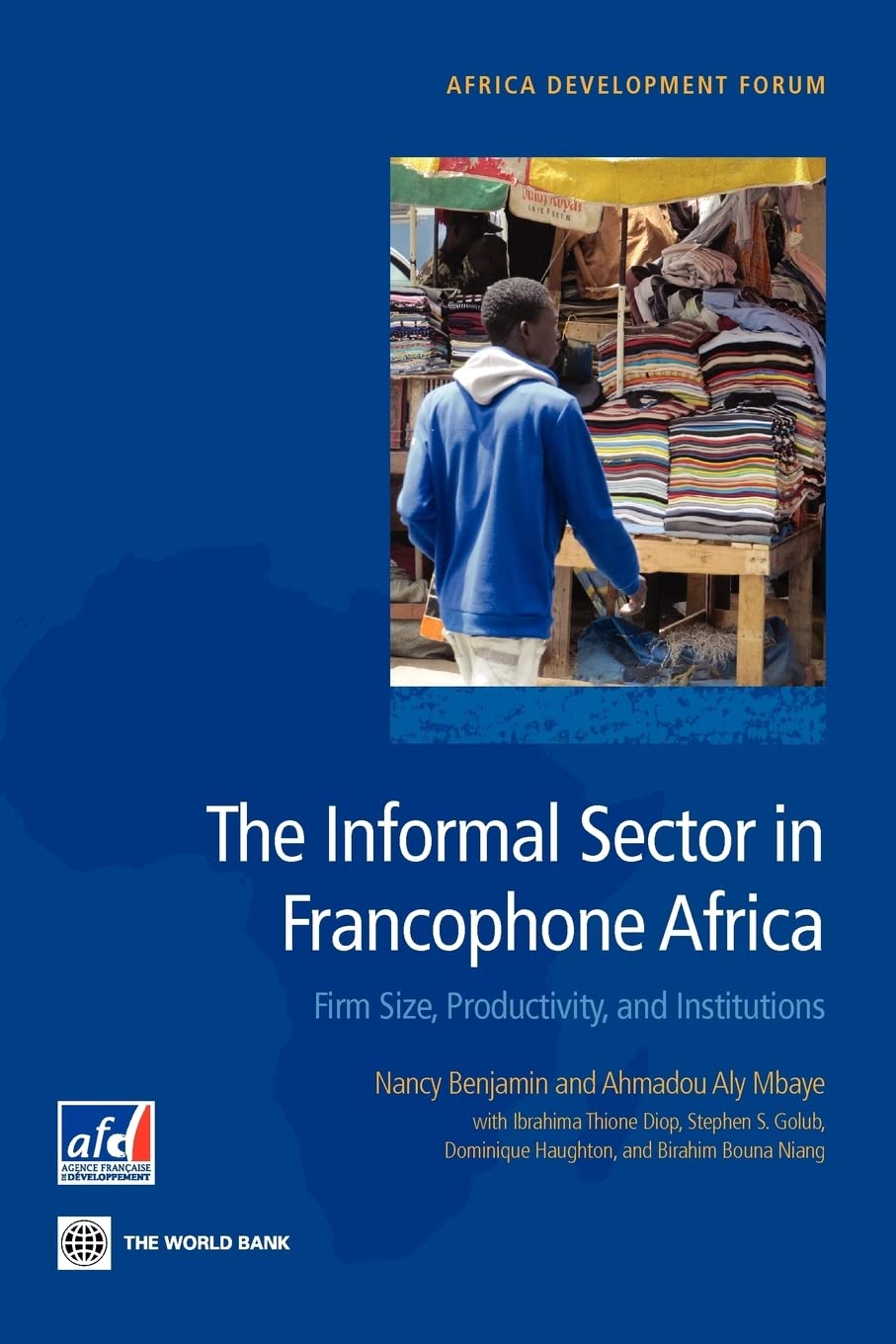
The informal sector in West Africa has some distinctive characteristics. Informality usually connotes small and unorganized producers operating on the fringes of the formal economy. In West African countries, however, the normal situation is to some extent reversed: a dynamic informal sector dominates the stagnant formal economy. Moreover, in these countries, small operators coexist with very large and politically wellconnected informal enterprises and wellorganized networks. Notwithstanding its importance, there have been relatively few systematic studies of this dual feature of the informal sector in West Africa, and consequently too little is known about it. One of our hypotheses is that determinants and appropriate policy responses are likely to differ between large and small informal operations. This volume focuses on the urban informal sector in three capital cities: Dakar (Senegal), Cotonou (Benin) and Ouagadougou (Burkina Faso). These three countries have important differences and as a group, are quite representative of francophone West Africa and to a lesser extent West Africa as a whole. The authors use a mix of quantitative and qualitative approaches with data obtained from our new Bank surveys of 900 firms in the three cities, interviews with knowledgeable stakeholders and participants, and all available secondary data. For the surveys, the authors designed their sampling strategy to include three distinctive categories of firms: formal, small informal, and large informal. In addition, they developed a comprehensive definition of informality to reflect its complexity and heterogeneneity. The definition (Chapter 1) covers six components of informality, whereas previous definitions are generally limited to a binary classification based on one or two indicators. The results for West Africa corroborate many findings from earlier studies, particularly for small informal firms. In addition, the authors break new ground by shedding light on the large informal sector and the influence of institutional and sociocultural factors in shaping the informal sector.
⚠️ WARNING (California Proposition 65):
This product may contain chemicals known to the State of California to cause cancer, birth defects, or other reproductive harm.
For more information, please visit www.P65Warnings.ca.gov.