
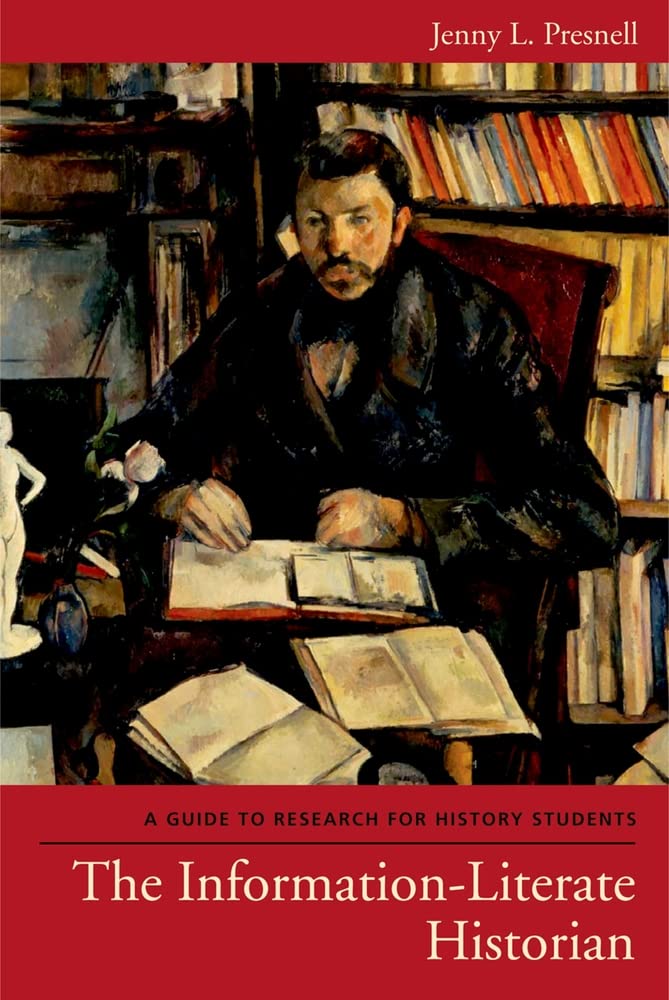
Title
The InformationLiterate Historian: A Guide to Research for History Students,New
Sold by Ergodebooks, an authorized reseller.
Returns accepted within 30 days | support@ergodebooks.com
Shipping Information
- Free Standard Shipping — United States only
- Processing Time: 3–5 business days
- Estimated Delivery: 6–10 business days after dispatch
- Double-boxed, fully insured & discreetly packaged
- Tracking number sent via email once dispatched
Returns & Refund
Returns accepted within 30 days of delivery.
Damaged or Defective Item
Free return shipping + replacement or full refund
Wrong Item Received
Free return shipping + replacement or full refund
Change of Mind
Return shipping at customer's expense · 25% restocking fee applies
Payment Option

In the past, historians could rely on their basic understanding of bibliographic tools to do effective research, as resources were primarily available in print, on microform, or at a library. Today, the information explosion resulting from access to the Internet has complicated traditional research methods by heightening expectations and raising new questions about retrieving, using, and presenting information.The InformationLiterate Historian is the only book specifically designed to teach today's history student how to most successfully select and use sourcesprimary, secondary, and electronicto carry out and present their research. The book discusses:* questions to ask before, during, and after the research process, as well as questions to ask about sources and their authors* search strategies that can be used in both electronic and print indexes* the various types of sources that are appropriate for specific research questions* how to find and use books, journals, and primary sources quickly and efficiently, and how to select the best ones for a particular topic* the ways in which historians practice their craft and the nature of historical discourse and narrative* methods for finding, using, and evaluating such media as images, speeches, and maps* guidelines for presenting historical research in different formats, including papers, oral presentations, and websitesWritten by a college librarian, The InformationLiterate Historian is an indispensable reference for historians, students, and other readers doing history research.
⚠️ WARNING (California Proposition 65):
This product may contain chemicals known to the State of California to cause cancer, birth defects, or other reproductive harm.
For more information, please visit www.P65Warnings.ca.gov.
- Q: What is the main focus of 'The Information-Literate Historian'? A: The book focuses on teaching history students how to effectively select and use various sources for research, including primary, secondary, and electronic materials.
- Q: Who is the author of 'The Information-Literate Historian'? A: The book is authored by Jenny L. Presnell, who is a college librarian with expertise in research methods.
- Q: What type of binding does this book have? A: The book is available in paperback binding, making it a convenient choice for students and researchers.
- Q: How many pages does 'The Information-Literate Historian' contain? A: The book contains a total of 256 pages, providing comprehensive guidance on research methods.
- Q: Is 'The Information-Literate Historian' suitable for beginners in historical research? A: Yes, the book is specifically designed for history students, including beginners, to help them navigate the complexities of modern research.
- Q: What topics are covered in the book? A: The book covers various topics such as research questions, search strategies, types of sources, and guidelines for presenting historical research.
- Q: When was 'The Information-Literate Historian' published? A: The book was published on August 31, 2006.
- Q: Is this book a first edition? A: Yes, this is the first edition of 'The Information-Literate Historian'.
- Q: What category does this book fall under? A: The book falls under the category of Historiography, focusing on research methods in history.
- Q: Can this book help with evaluating different types of media in research? A: Yes, it includes methods for finding, using, and evaluating various media such as images, speeches, and maps.