If you have any questions, you are always welcome to contact us. We'll get back to you as soon as possible, withing 24 hours on weekdays.
Customer service
All questions about your order, return and delivery must be sent to our customer service team by e-mail at yourstore@yourdomain.com
Sale & Press
If you are interested in selling our products, need more information about our brand or wish to make a collaboration, please contact us at press@yourdomain.com
Help
If you have any questions, you are always welcome to contact us. We'll get back to you as soon as possible, withing 24 hours on weekdays.
Customer service
All questions about your order, return and delivery must be sent to our customer service team by e-mail at yourstore@yourdomain.com
Sale & Press
If you are interested in selling our products, need more information about our brand or wish to make a collaboration, please contact us at press@yourdomain.com
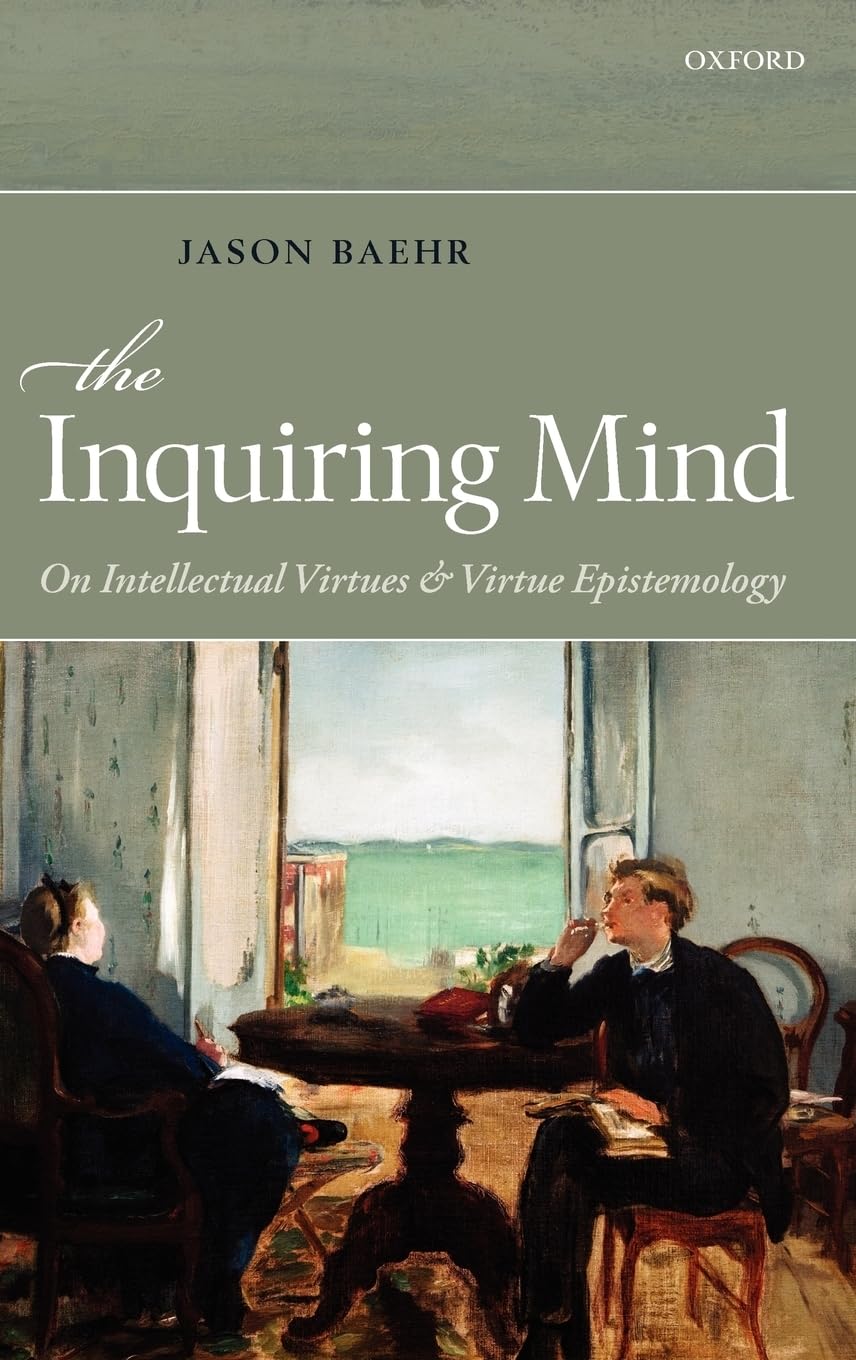
The Inquiring Mind is a new contribution to 'responsibilist' or characterbased virtueepistemologyan approach to epistemology in which intellectual character traits like openmindedness, fairmindedness, inquisitiveness, and intellectual courage, rigor, and generosity are given a central and fundamental role. Jason Baehr provides an accessible introduction to virtue epistemology and intellectual virtues, and establishes two main goals. The first is to shed light on the nature and structure of intellectual virtues and their role in the cognitive economy. To this end, he examines the difference between intellectual virtues and intellectual faculties, talents, temperaments, and skills, develops a 'personal worth' account of the nature of an intellectual virtue, contrasts this account with several others, and provides analyses of two individual virtues: namely, openmindedness and intellectual courage. The second main goal is to account for the role that reflection on intellectual character virtues should play within epistemology at large. Here Baehr defends three main claims. The first is that the concept of intellectual virtue does not merit a central or fundamental role within traditional epistemology. The second is that it does, nonetheless, merit a secondary or background role in this context. The third is that intellectual character virtues and their role in intellectual life can form the basis of an approach to epistemology that is distinct from but complementary to traditional epistemology. Finally, Baehr examines the relation between intellectual and moral virtues.
⚠️ WARNING (California Proposition 65):
This product may contain chemicals known to the State of California to cause cancer,
birth defects, or other reproductive harm.
For MAP (Minimum Advertised Price) violations and Intellectual Property (IP) or Trademark concerns, please contact:
support@ergodebooks.com
⚠️ California Proposition 65 Warning: Some products sold on this website may expose you to chemicals known to the State of California to cause cancer, birth defects, or other reproductive harm. For more information, visit www.P65Warnings.ca.gov.