
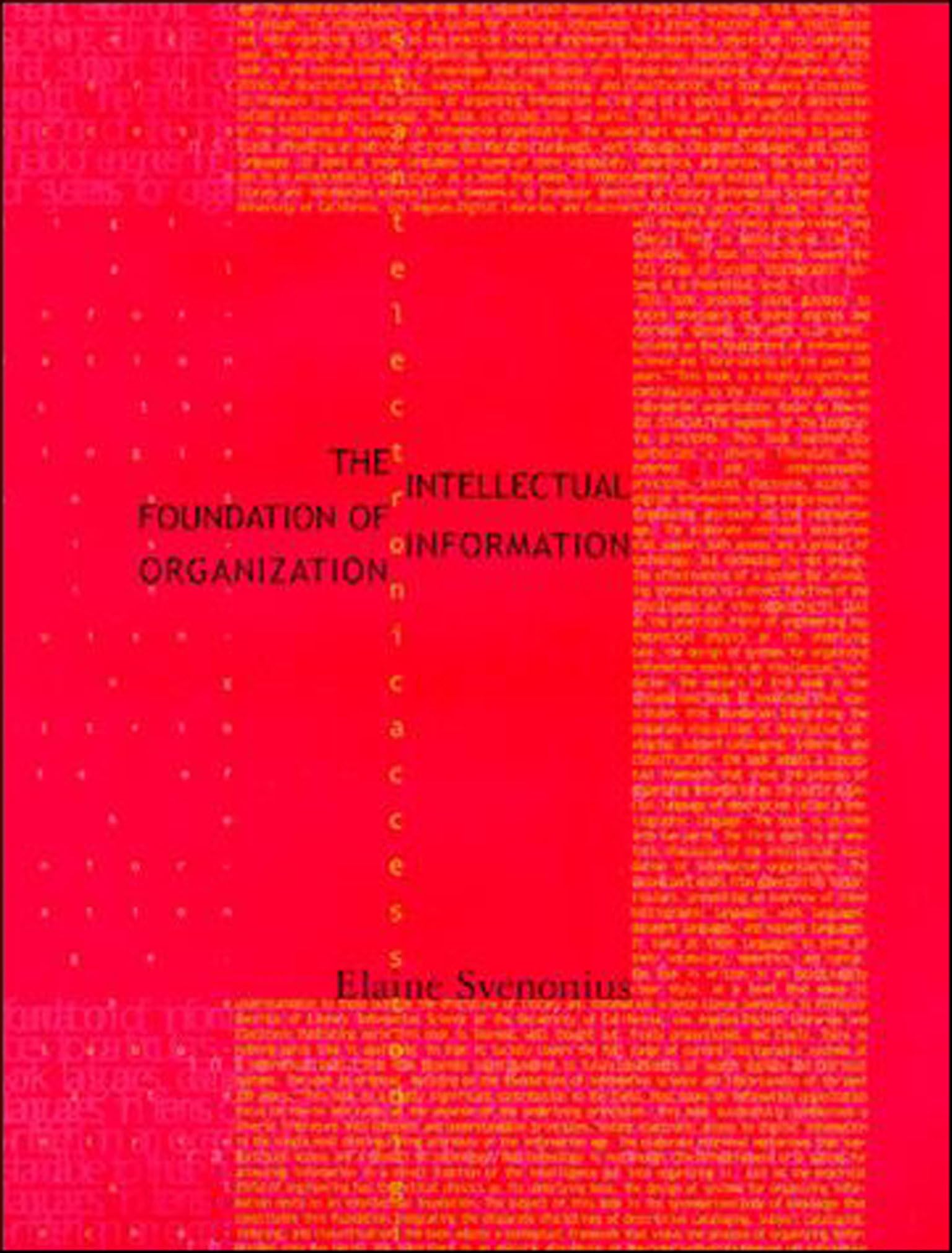
Title
The Intellectual Foundation Of Information Organization (Digital Libraries And Electronic Publishing),Used
Sold by Ergodebooks, an authorized reseller.
Returns accepted within 30 days | support@ergodebooks.com
Shipping Information
- Free Standard Shipping — United States only
- Processing Time: 3–5 business days
- Estimated Delivery: 6–10 business days after dispatch
- Double-boxed, fully insured & discreetly packaged
- Tracking number sent via email once dispatched
Returns & Refund
Returns accepted within 30 days of delivery.
Damaged or Defective Item
Free return shipping + replacement or full refund
Wrong Item Received
Free return shipping + replacement or full refund
Change of Mind
Return shipping at customer's expense · 25% restocking fee applies
Payment Option

Integrating The Disparate Disciplines Of Descriptive Cataloging, Subject Cataloging, Indexing, And Classification, The Book Adopts A Conceptual Framework That Views The Process Of Organizing Information As The Use Of A Special Language Of Description Called A Bibliographic Language.Instant Electronic Access To Digital Information Is The Single Most Distinguishing Attribute Of The Information Age. The Elaborate Retrieval Mechanisms That Support Such Access Are A Product Of Technology. But Technology Is Not Enough. The Effectiveness Of A System For Accessing Information Is A Direct Function Of The Intelligence Put Into Organizing It. Just As The Practical Field Of Engineering Has Theoretical Physics As Its Underlying Base, The Design Of Systems For Organizing Information Rests On An Intellectual Foundation. The Subject Of This Book Is The Systematized Body Of Knowledge That Constitutes This Foundation.Integrating The Disparate Disciplines Of Descriptive Cataloging, Subject Cataloging, Indexing, And Classification, The Book Adopts A Conceptual Framework That Views The Process Of Organizing Information As The Use Of A Special Language Of Description Called A Bibliographic Language. The Book Is Divided Into Two Parts. The First Part Is An Analytic Discussion Of The Intellectual Foundation Of Information Organization. The Second Part Moves From Generalities To Particulars, Presenting An Overview Of Three Bibliographic Languages: Work Languages, Document Languages, And Subject Languages. It Looks At These Languages In Terms Of Their Vocabulary, Semantics, And Syntax.The Book Is Written In An Exceptionally Clear Style, At A Level That Makes It Understandable To Those Outside The Discipline Of Library And Information Science.
⚠️ WARNING (California Proposition 65):
This product may contain chemicals known to the State of California to cause cancer, birth defects, or other reproductive harm.
For more information, please visit www.P65Warnings.ca.gov.
- Q: How many pages does the book have? A: This book has two hundred seventy-four pages. It provides a comprehensive exploration of information organization concepts.
- Q: What are the dimensions of the book? A: The book measures six inches in length, zero point seventy-one inches in width, and nine point zero two inches in height. These dimensions make it convenient for reading and storage.
- Q: What type of binding does this book have? A: This book is available in paperback binding. This makes it more flexible and lightweight for easy handling.
- Q: Who is the author of this book? A: The author of this book is Elaine Svenonius. She is known for her expertise in library and information science.
- Q: What is the primary focus of the book? A: The primary focus of the book is the intellectual foundation of information organization. It discusses cataloging, indexing, and classification.
- Q: Is this book suitable for beginners in library science? A: Yes, this book is suitable for beginners. It is written in an exceptionally clear style, making complex concepts understandable.
- Q: How does this book organize its content? A: The book is divided into two parts. The first part discusses the intellectual foundation, while the second focuses on different bibliographic languages.
- Q: Can I read this book if I have no background in information science? A: Yes, you can read this book without a background in information science. It is designed to be accessible to a general audience.
- Q: What is the best way to care for this book? A: To care for this book, keep it in a dry place and avoid exposure to direct sunlight. This will help preserve its condition.
- Q: Is this book safe for children? A: Yes, this book is considered safe for children. However, it is more suitable for older students or adults interested in library science.
- Q: How should I store this book? A: Store this book upright on a shelf to maintain its shape. Avoid stacking heavy items on top to prevent damage.
- Q: What if the book arrives damaged? A: If the book arrives damaged, you can return it for a replacement or refund. Check the return policy for specific instructions.
- Q: Is this book suitable for advanced readers? A: Yes, this book is also suitable for advanced readers. It offers in-depth discussions that can enhance knowledge in the field.
- Q: Can I share this book with others? A: Yes, you can share this book with others. It is a great resource for study groups or discussions.
- Q: Are there any specific topics covered in the book? A: Yes, the book covers topics such as descriptive cataloging, subject cataloging, indexing, and bibliographic languages.
- Q: What makes this book unique? A: This book is unique due to its integration of multiple disciplines and its clear presentation of complex information organization concepts.