
Title
The Interface Effect,New
Sold by Ergodebooks, an authorized reseller.
Returns accepted within 30 days | support@ergodebooks.com
Shipping Information
- Free Standard Shipping — United States only
- Processing Time: 3–5 business days
- Estimated Delivery: 6–10 business days after dispatch
- Double-boxed, fully insured & discreetly packaged
- Tracking number sent via email once dispatched
Returns & Refund
Returns accepted within 30 days of delivery.
Damaged or Defective Item
Free return shipping + replacement or full refund
Wrong Item Received
Free return shipping + replacement or full refund
Change of Mind
Return shipping at customer's expense · 25% restocking fee applies
Payment Option

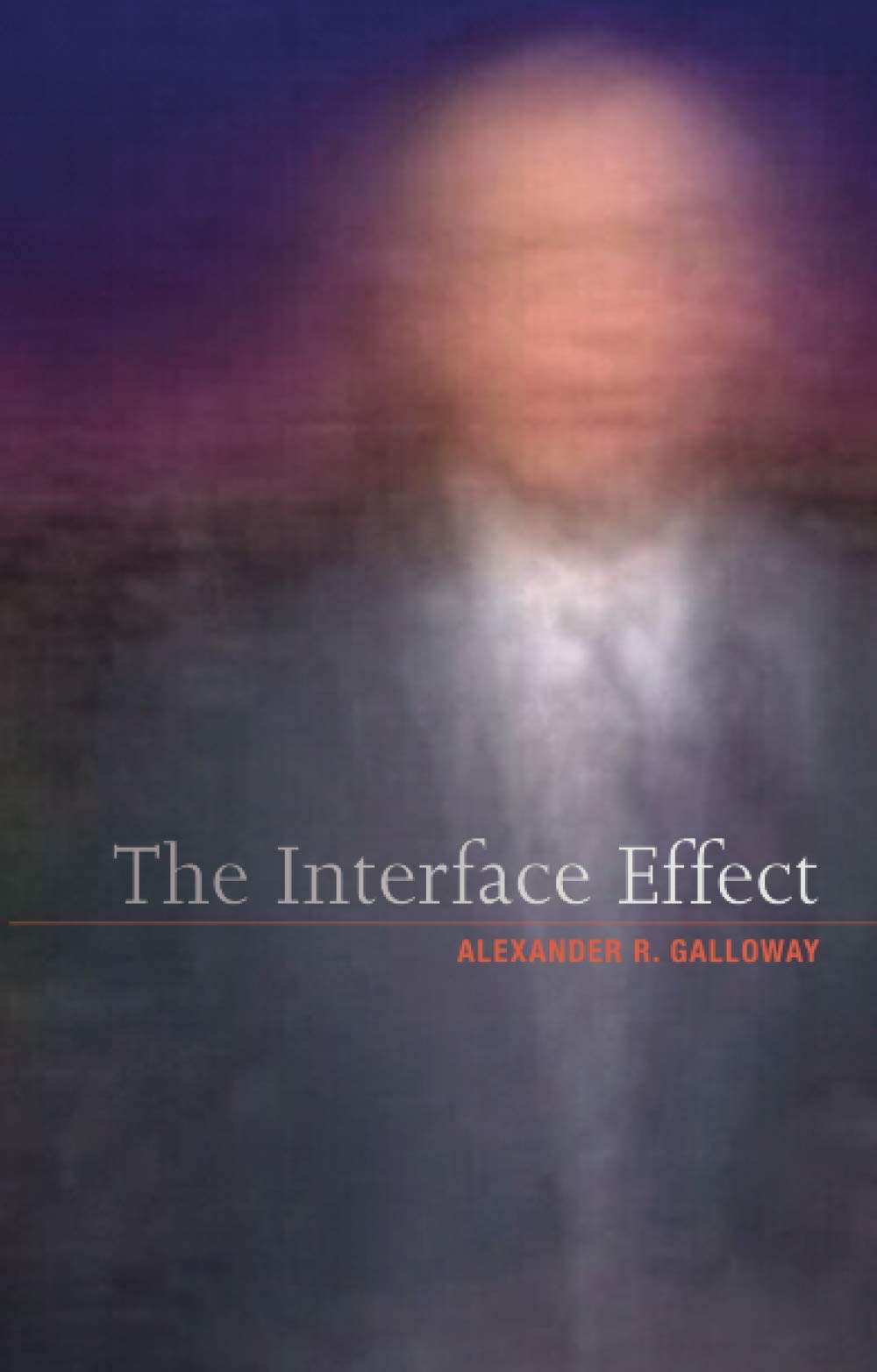
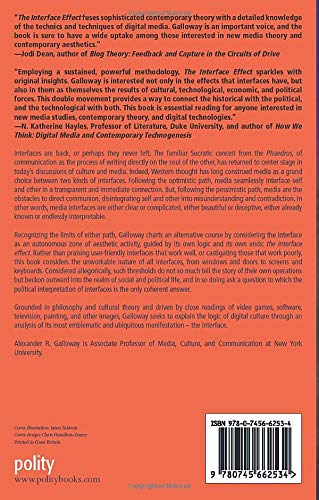
Interfaces are back, or perhaps they never left. The familiar Socratic conceit from the Phaedrus, of communication as the process of writing directly on the soul of the other, has returned to center stage in today's discussions of culture and media. Indeed Western thought has long construed media as a grand choice between two kinds of interfaces. Following the optimistic path, media seamlessly interface self and other in a transparent and immediate connection. But, following the pessimistic path, media are the obstacles to direct communion, disintegrating self and other into misunderstanding and contradiction. In other words, media interfaces are either clear or complicated, either beautiful or deceptive, either already known or endlessly interpretable.Recognizing the limits of either path, Galloway charts an alternative course by considering the interface as an autonomous zone of aesthetic activity, guided by its own logic and its own ends: the interface effect. Rather than praising userfriendly interfaces that work well, or castigating those that work poorly, this book considers the unworkable nature of all interfaces, from windows and doors to screens and keyboards. Considered allegorically, such thresholds do not so much tell the story of their own operations but beckon outward into the realm of social and political life, and in so doing ask a question to which the political interpretation of interfaces is the only coherent answer.Grounded in philosophy and cultural theory and driven by close readings of video games, software, television, painting, and other images, Galloway seeks to explain the logic of digital culture through an analysis of its most emblematic and ubiquitous manifestation the interface.
⚠️ WARNING (California Proposition 65):
This product may contain chemicals known to the State of California to cause cancer, birth defects, or other reproductive harm.
For more information, please visit www.P65Warnings.ca.gov.
- Q: What is 'The Interface Effect' about? A: 'The Interface Effect' by Alexander R. Galloway explores the role of interfaces in culture and media, examining how they shape communication and understanding between individuals.
- Q: Who is the author of 'The Interface Effect'? A: The author of 'The Interface Effect' is Alexander R. Galloway, a prominent scholar in philosophy and cultural theory.
- Q: What topics are covered in 'The Interface Effect'? A: 'The Interface Effect' covers topics such as digital culture, media interfaces, aesthetics, and their implications in social and political contexts.
- Q: How many pages does 'The Interface Effect' have? A: 'The Interface Effect' contains 200 pages.
- Q: What is the binding type of this book? A: 'The Interface Effect' is available in paperback binding.
- Q: When was 'The Interface Effect' published? A: 'The Interface Effect' was published on October 8, 2012.
- Q: Is 'The Interface Effect' a new book? A: Yes, 'The Interface Effect' is listed as a new book.
- Q: What edition of 'The Interface Effect' is available? A: The available edition of 'The Interface Effect' is the first edition.
- Q: What are the main themes discussed in 'The Interface Effect'? A: 'The Interface Effect' discusses themes such as the dichotomy of media interfaces, the aesthetics of communication, and the impact of technology on human interactions.
- Q: Can 'The Interface Effect' be beneficial for understanding digital culture? A: Yes, 'The Interface Effect' provides valuable insights into digital culture through its analysis of interfaces, making it beneficial for readers interested in the subject.