
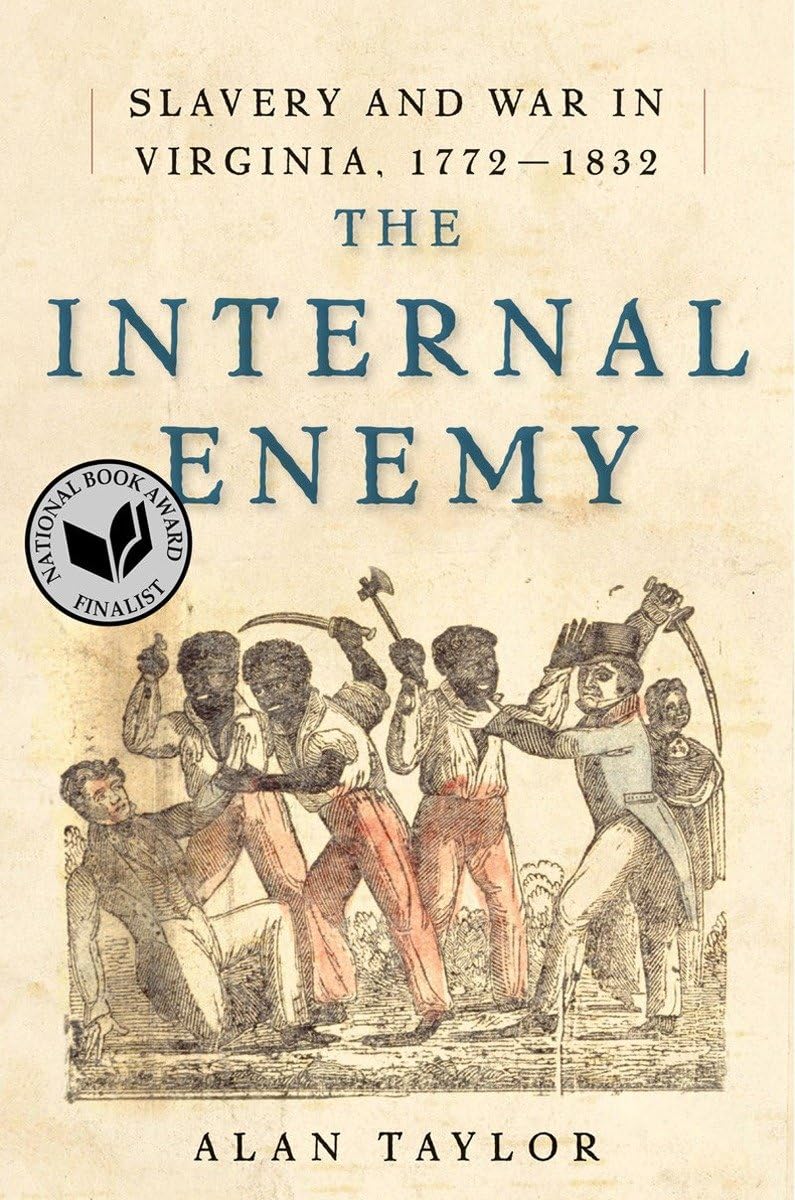
Title
The Internal Enemy: Slavery And War In Virginia, 17721832
Sold by Ergodebooks, an authorized reseller.
Returns accepted within 30 days | support@ergodebooks.com
Shipping Information
- Free Standard Shipping — United States only
- Processing Time: 3–5 business days
- Estimated Delivery: 6–10 business days after dispatch
- Double-boxed, fully insured & discreetly packaged
- Tracking number sent via email once dispatched
Returns & Refund
Returns accepted within 30 days of delivery.
Damaged or Defective Item
Free return shipping + replacement or full refund
Wrong Item Received
Free return shipping + replacement or full refund
Change of Mind
Return shipping at customer's expense · 25% restocking fee applies
Payment Option

Winner Of The 2014 Pulitzer Prize For Historythis Searing Story Of Slavery And Freedom In The Chesapeake By A Pulitzer Prizewinning Historian Reveals The Pivot In The Nations Path Between The Founding And Civil War. Frederick Douglass Recalled That Slaves Living Along Chesapeake Bay Longingly Viewed Sailing Ships As Freedoms Swiftwinged Angels. In 1813 Those Angels Appeared In The Bay As British Warships Coming To Punish The Americans For Declaring War On The Empire. Over Many Nights, Hundreds Of Slaves Paddled Out To The Warships Seeking Protection For Their Families From The Ravages Of Slavery. The Runaways Pressured The British Admirals Into Becoming Liberators. As Guides, Pilots, Sailors, And Marines, The Former Slaves Used Their Intimate Knowledge Of The Countryside To Transform The War. They Enabled The British To Escalate Their Onshore Attacks And To Capture And Burn Washington, D.C. Tidewater Masters Had Long Dreaded Their Slaves As An Internal Enemy. By Mobilizing That Enemy, The War Ignited The Deepest Fears Of Chesapeake Slaveholders. It Also Alienated Virginians From A National Government That Had Neglected Their Defense. Instead They Turned South, Their Interests Aligning More And More With Their Section. In 1820 Thomas Jefferson Observed Of Sectionalism: Like A Firebell In The Night [It] Awakened And Filled Me With Terror. I Considered It At Once The Knell Of The Union. The Notes Of Alarm In Jefferson'S Comment Speak Of The Fear Aroused By The Recent Crisis Over Slavery In His Home State. His Vision Of A Cataclysm To Come Proved Prescient. Jefferson'S Startling Observation Registered A Turn In The Nations Course, A Pivot From The National Purpose Of The Founding Toward The Threat Of Disunion. Drawn From New Sources, Alan Taylor'S Riveting Narrative Recreates The Events That Inspired Black Virginians, Haunted Slaveholders, And Set The Nation On A New And Dangerous Course. 35 Illustrations; 4 Maps
⚠️ WARNING (California Proposition 65):
This product may contain chemicals known to the State of California to cause cancer, birth defects, or other reproductive harm.
For more information, please visit www.P65Warnings.ca.gov.
- Q: What is the page count of this book? A: This book has six hundred twenty-four pages. It provides an in-depth exploration of slavery and war in Virginia.
- Q: What are the dimensions of the book? A: The book measures six point six one inches in length, one point eight nine inches in width, and nine point six one inches in height.
- Q: What type of binding does this book have? A: The book features a hardcover binding. This durable format ensures longevity and protection for the pages.
- Q: Who is the author of this book? A: The author is Alan Taylor. He is a Pulitzer Prize-winning historian known for his work on American history.
- Q: What historical themes does the book cover? A: The book covers themes of slavery, war, and sectionalism in Virginia. It examines the impact of these issues on the nation's path.
- Q: What is the reading level of this book? A: The book is suitable for adults and advanced readers. It delves into complex historical narratives and themes.
- Q: How do I care for this hardcover book? A: To keep this book in good condition, store it upright and avoid exposure to moisture. Clean the cover gently with a dry cloth.
- Q: Is this book suitable for educational purposes? A: Yes, this book is suitable for educational purposes. It provides valuable insights into American history and is often used in academic settings.
- Q: Can this book be read by high school students? A: Yes, high school students can read this book. It is appropriate for advanced students interested in history.
- Q: What if the book arrives damaged? A: If the book arrives damaged, you should contact the seller for a return or exchange. Most retailers have policies in place for such issues.
- Q: Is this book part of a series? A: No, this book is a standalone title. It focuses specifically on the historical context of slavery and war in Virginia.
- Q: What makes this book a Pulitzer Prize winner? A: This book won the Pulitzer Prize for History due to its thorough research and compelling narrative. It presents a significant historical analysis.
- Q: Does this book include illustrations? A: Yes, the book includes thirty-five illustrations and four maps. These visuals enhance the reader's understanding of the historical context.
- Q: What is the main argument of the book? A: The main argument of the book is that the war transformed the dynamics of slavery in Virginia. It highlights the role of enslaved people in shaping history.
- Q: Is this book suitable for casual readers? A: Yes, casual readers interested in history may enjoy this book. Its narrative style makes complex topics accessible.