
Title
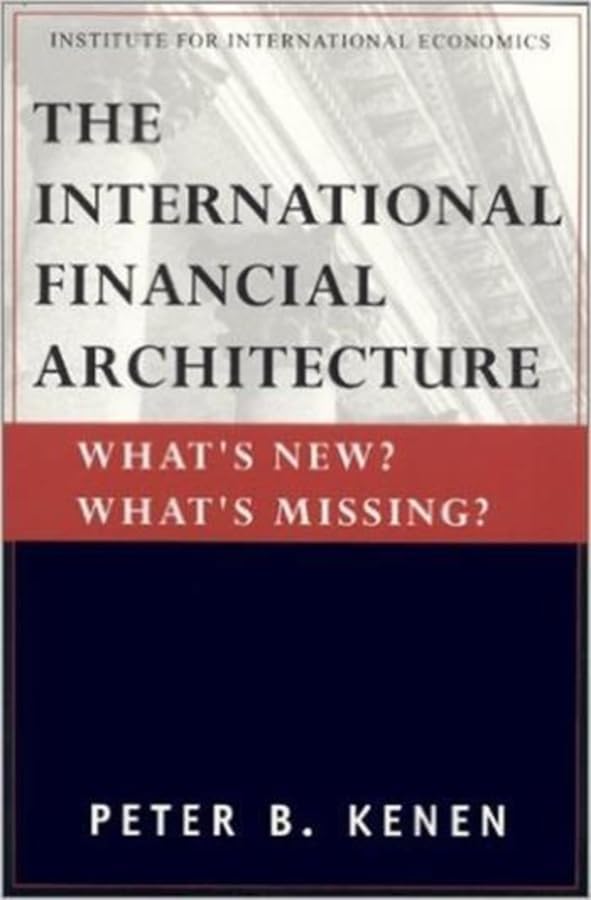
The International Financial Architecture: What's New? What's Missing? (Policy Analysis in International Economics Ser),Used
Sold by Ergodebooks, an authorized reseller.
Returns accepted within 30 days | support@ergodebooks.com
Shipping Information
- Free Standard Shipping — United States only
- Processing Time: 3–5 business days
- Estimated Delivery: 6–10 business days after dispatch
- Double-boxed, fully insured & discreetly packaged
- Tracking number sent via email once dispatched
Returns & Refund
Returns accepted within 30 days of delivery.
Damaged or Defective Item
Free return shipping + replacement or full refund
Wrong Item Received
Free return shipping + replacement or full refund
Change of Mind
Return shipping at customer's expense · 25% restocking fee applies
Payment Option

Shortly after the Mexican crisis of 199495, the major industrial countries undertook to strengthen the international financial architecture. They sought to reduce the risk of future crises by increasing the availability of information about economic conditions in emergingmarket countries and strengthening the financial systems of those countries. They sought better ways to manage future crises, including ways to involve privatesector creditors in crisis management.In this book, Peter B. Kenen reviews the reform effort and assesses the results. He shows how the effort was influenced by the Asian, Russian, and Brazilian crises. He compares the results of the effort with the more radical recommendations of outside experts and of the Meltzer Report, and examines the implications of the reform effort for the role of the International Monetary Fund (IMF). Kenen finds that there have been useful innovations but calls for bolder efforts aimed at five objectives: (1) increasing the usefulness of IMF surveillance by focusing it sharply on the sustainability of national policies, exchange rates, and debt profiles; (2) narrowing the scope of IMF conditionality by ceasing to treat acute crises as opportunities to achieve fundamental reforms; (3) providing incentives to foster financial reform in emergingmarket countries and, in the interim, encouraging them to limit shortterm foreign borrowing by their banks and corporations; (4) using the IMF's resources more effectively by making less money available but disbursing it more rapidly; and (5) enlisting the private sector in crisis management by introducing rollover clauses into shortterm debt contracts and collectiveaction clauses into longterm debt contracts.
⚠️ WARNING (California Proposition 65):
This product may contain chemicals known to the State of California to cause cancer, birth defects, or other reproductive harm.
For more information, please visit www.P65Warnings.ca.gov.