
Title
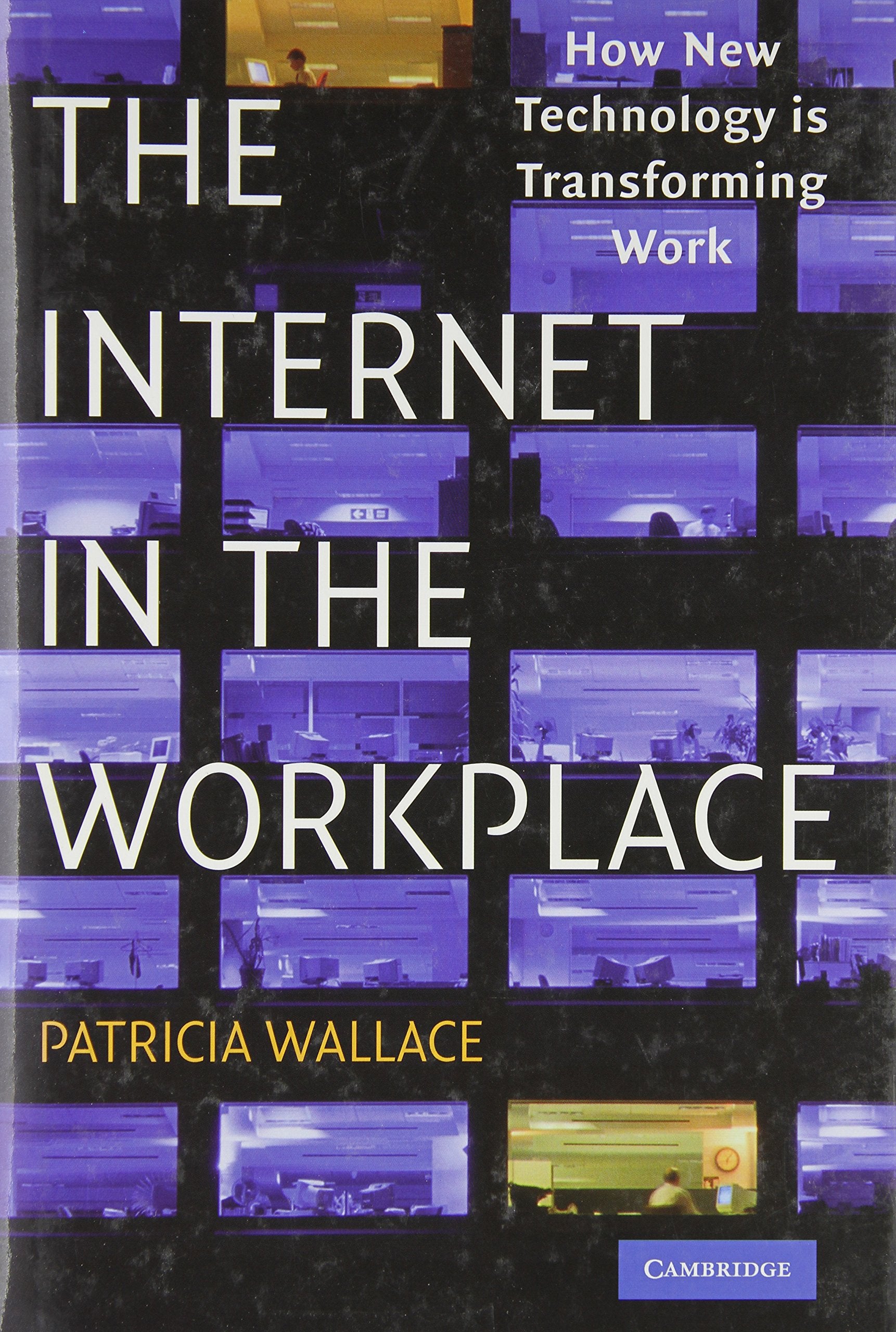
The Internet in the Workplace: How New Technology Is Transforming Work,New
Sold by Ergodebooks, an authorized reseller.
Returns accepted within 30 days | support@ergodebooks.com
Shipping Information
- Free Standard Shipping — United States only
- Processing Time: 3–5 business days
- Estimated Delivery: 6–10 business days after dispatch
- Double-boxed, fully insured & discreetly packaged
- Tracking number sent via email once dispatched
Returns & Refund
Returns accepted within 30 days of delivery.
Damaged or Defective Item
Free return shipping + replacement or full refund
Wrong Item Received
Free return shipping + replacement or full refund
Change of Mind
Return shipping at customer's expense · 25% restocking fee applies
Payment Option

The Internet, and all the netcentric innovations that emerge from it, have transformed the workplace and our working lives in a very short time. The net added a window to the world on worker's desks, and made 24 by 7 connectivity to the workplace a realityblurring the line between work and time off. It triggered new styles of teamwork, new leadership challenges, new modes of communicating, new job roles and employeremployee relationships, and new, alarmingly effective tools for workplace surveillance. The capabilties offered by netcentric technologies might seem to eliminate completely the need for a physical workplace, but the workplace remains, partly because the virtual, and in fact, the physical appearance of a typical office looks about the same. Nevertheless, the psychological characteristics of the workplace have changed considerably. Workers, from the mail room clerk to the CEO, are learning new skillsto employ on the net's power but avoid the egregious blunders that the net so dramatically amplifies. In The Internet in the Workplace, Patricia Wallace demonstrates how netcentric technologies touch every kind of workplace, and explores the challenges and dilemmas they create. Patricia Wallace is Director, Information Technology and Distance Programs at the Center for Talented Youth, Johns Hopkins University. Wallace's background and career span the disciplines of information technology, psychology, education, and business. Her recent book, The Psychology of the Internet (Cambridge, 1999) has been translated into nine languages. Wallace's work has been featured often in the media, including MSNBC, CNN, ABC News, the BBC, NPR, USA Today, and the Washington Post.
⚠️ WARNING (California Proposition 65):
This product may contain chemicals known to the State of California to cause cancer, birth defects, or other reproductive harm.
For more information, please visit www.P65Warnings.ca.gov.