If you have any questions, you are always welcome to contact us. We'll get back to you as soon as possible, withing 24 hours on weekdays.
Customer service
All questions about your order, return and delivery must be sent to our customer service team by e-mail at yourstore@yourdomain.com
Sale & Press
If you are interested in selling our products, need more information about our brand or wish to make a collaboration, please contact us at press@yourdomain.com
Help
If you have any questions, you are always welcome to contact us. We'll get back to you as soon as possible, withing 24 hours on weekdays.
Customer service
All questions about your order, return and delivery must be sent to our customer service team by e-mail at yourstore@yourdomain.com
Sale & Press
If you are interested in selling our products, need more information about our brand or wish to make a collaboration, please contact us at press@yourdomain.com
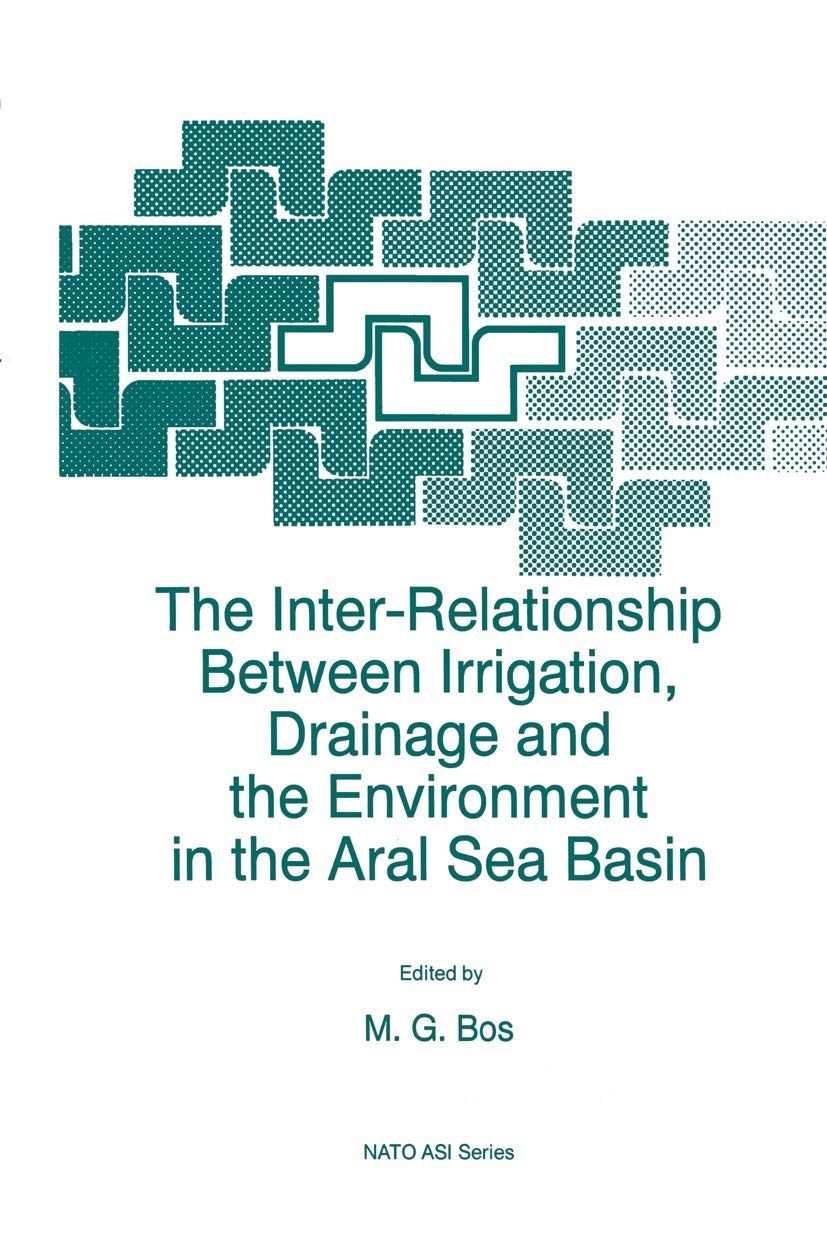
The irrigated area in the Aral Sea basin totals about 7. 5 million hectare. Part of the water supplied to this area is consumed by the irrigated crop; the remainder of the supplied water drains to the groundwater basin, to downstream depressions, or back to the rivers. During its use, however, this drained part of the water accumulates salts and chemicals. The disposal of this polluted water causes a variety of (environmental) problems. If the percentage consumed water of the total water supply to an irrigated area (the socalled overall consumed ratio) can be increased, less water needs to be drained. This alleviates part of the related (environmental) problems. Further, if the overall consumed ratio for the above 7. 5 million hectare is improved, less water needs to be diverted from the rivers. Hence, more water can flow towards the Aral Sea. As mentioned above, part of the nonconsumed irrigation water drains to the groundwater basin. Commonly, the natural discharge capacity of this basin is insufficient to handle this imported water. As a result, the groundwater table rises towards the land surface causing waterlogging. In (semi)arid zones this waterlogging triggers a soil salinity problem resulting to a significant reduction in crop yields. The artificial increase of the discharge capacity, and lowering of the groundwater table, solves the soil salinity problem.
⚠️ WARNING (California Proposition 65):
This product may contain chemicals known to the State of California to cause cancer,
birth defects, or other reproductive harm.
For MAP (Minimum Advertised Price) violations and Intellectual Property (IP) or Trademark concerns, please contact:
support@ergodebooks.com
⚠️ California Proposition 65 Warning: Some products sold on this website may expose you to chemicals known to the State of California to cause cancer, birth defects, or other reproductive harm. For more information, visit www.P65Warnings.ca.gov.