
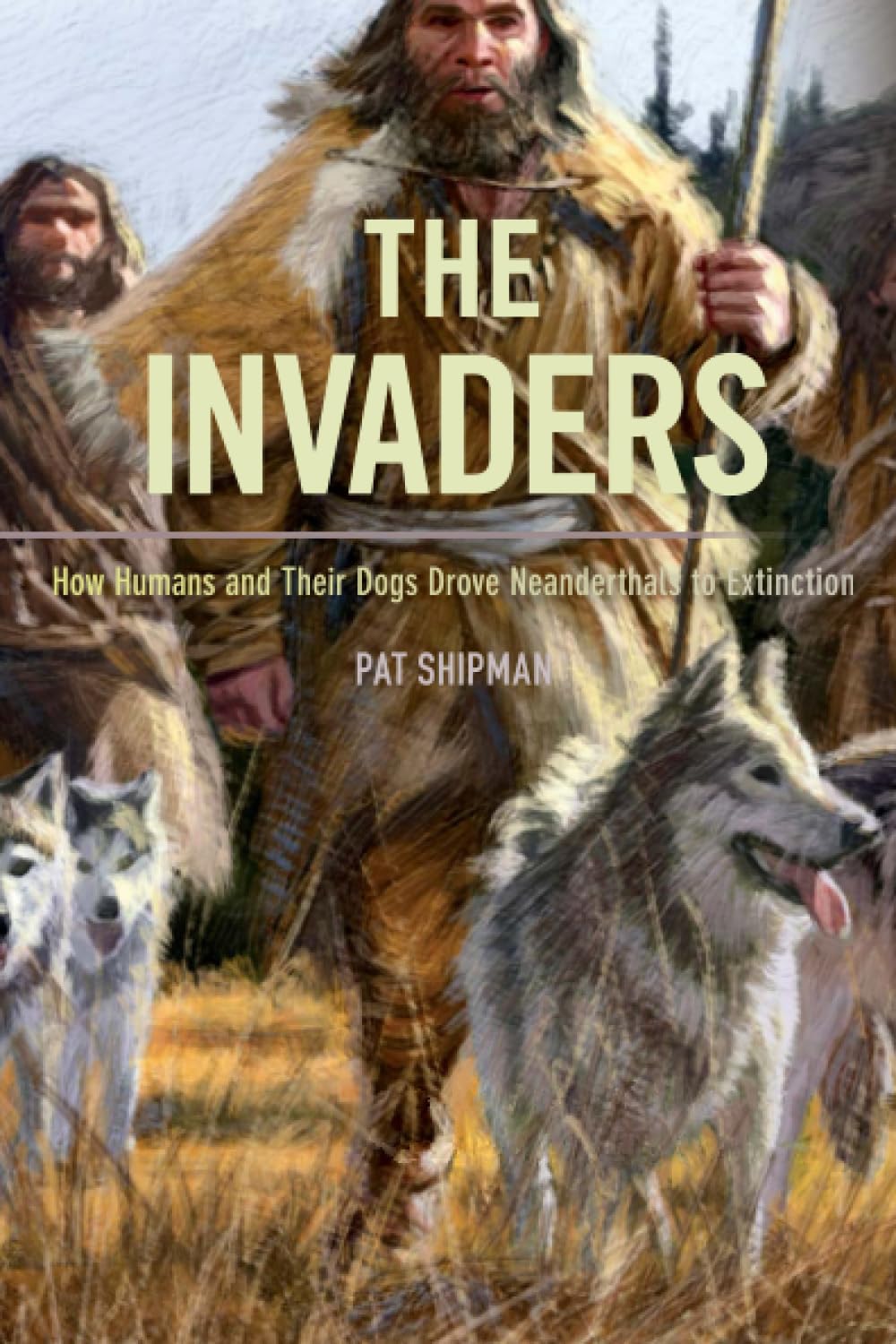
Title
The Invaders: How Humans And Their Dogs Drove Neanderthals To Extinction
Sold by Ergodebooks, an authorized reseller.
Returns accepted within 30 days | support@ergodebooks.com
Shipping Information
- Free Standard Shipping — United States only
- Processing Time: 3–5 business days
- Estimated Delivery: 6–10 business days after dispatch
- Double-boxed, fully insured & discreetly packaged
- Tracking number sent via email once dispatched
Returns & Refund
Returns accepted within 30 days of delivery.
Damaged or Defective Item
Free return shipping + replacement or full refund
Wrong Item Received
Free return shipping + replacement or full refund
Change of Mind
Return shipping at customer's expense · 25% restocking fee applies
Payment Option

A Times Higher Education Book Of The Weekapproximately 200,000 Years Ago, As Modern Humans Began To Radiate Out From Their Evolutionary Birthplace In Africa, Neanderthals Were Already Thriving In Europedescendants Of A Much Earlier Migration Of The African Genus Homo. But When Modern Humans Eventually Made Their Way To Europe 45,000 Years Ago, Neanderthals Suddenly Vanished. Ever Since The First Neanderthal Bones Were Identified In 1856, Scientists Have Been Vexed By The Question, Why Did Modern Humans Survive While Their Closest Known Relatives Went Extinct?Shipman Admits That Scientists Have Yet To Find Genetic Evidence That Would Prove Her Theory. Time Will Tell If Shes Right. For Now, Read This Book For An Engagingly Comprehensive Overview Of The Rapidly Evolving Understanding Of Our Own Origins.Toby Lester, Wall Street Journalare Humans The Ultimate Invasive Species? So Contends Anthropologist Pat Shipmanand Neanderthals, She Opines, Were Among Our First Victims. The Relationship Between Homo Sapiens And Homo Neanderthalensis Is Laid Out Cleanly, Along With Genetic And Other Evidence. Shipman Posits Provocatively That The Deciding Factor In The Triumph Of Our Ancestors Was The Domestication Of Wolves.Daniel Cressey, Nature
⚠️ WARNING (California Proposition 65):
This product may contain chemicals known to the State of California to cause cancer, birth defects, or other reproductive harm.
For more information, please visit www.P65Warnings.ca.gov.
- Q: How many pages does the book have? A: The book has two hundred eighty-eight pages. It offers an in-depth exploration of human and Neanderthal history.
- Q: What is the binding type of the book? A: The book is paperback. This makes it lightweight and easy to handle for reading.
- Q: What are the dimensions of this book? A: The book measures five point five one inches in length, zero point seventy-two inches in width, and eight point twenty-seven inches in height.
- Q: Who is the author of the book? A: The author is Pat Shipman. She provides a compelling narrative about human origins and extinction of Neanderthals.
- Q: What category does this book fall under? A: This book is categorized under Dogs. It discusses the role of domesticated wolves in human history.
- Q: Is this book suitable for all ages? A: Yes, the book is suitable for a general audience. However, it may contain complex themes best understood by adults and older teens.
- Q: How should I read this book? A: You can read this book at your own pace. It's designed for anyone interested in anthropology and human history.
- Q: Can I use this book for educational purposes? A: Yes, this book is great for educational use. It provides valuable insights for students and enthusiasts of anthropology.
- Q: Is there an age recommendation for this book? A: This book is recommended for readers aged sixteen and up. It deals with advanced concepts in human evolution.
- Q: How do I keep this book in good condition? A: To keep the book in good condition, store it in a dry place and avoid exposure to direct sunlight. Handle it gently to prevent wear.
- Q: Can I lend this book to someone else? A: Yes, you can lend this book to others. Just ensure they handle it carefully to maintain its condition.
- Q: Is this book safe for children? A: While the book is not explicitly unsafe, its complex themes may not be suitable for younger children.
- Q: What if the book arrives damaged? A: If the book arrives damaged, you should contact the seller for a replacement or refund. Most retailers have return policies in place.
- Q: Does this book have any illustrations or photos? A: No, the book does not contain illustrations or photos. It focuses primarily on text to convey its message.
- Q: Can I find this book in libraries? A: Yes, this book is likely available in libraries. It is a recognized title in the field of anthropology.
- Q: Is this book a good gift for dog lovers? A: Yes, this book makes a thoughtful gift for dog lovers. It explores the historical relationship between humans and dogs.