
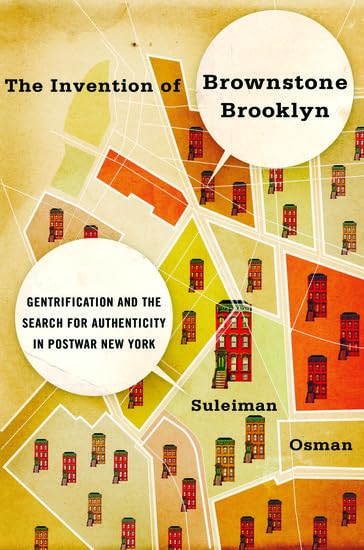
Title

The Invention Of Brownstone Brooklyn: Gentrification And The Search For Authenticity In Postwar New York,Used
Sold by Ergodebooks, an authorized reseller.
Returns accepted within 30 days | support@ergodebooks.com
Shipping Information
- Free Standard Shipping — United States only
- Processing Time: 3–5 business days
- Estimated Delivery: 6–10 business days after dispatch
- Double-boxed, fully insured & discreetly packaged
- Tracking number sent via email once dispatched
Returns & Refund
Returns accepted within 30 days of delivery.
Damaged or Defective Item
Free return shipping + replacement or full refund
Wrong Item Received
Free return shipping + replacement or full refund
Change of Mind
Return shipping at customer's expense · 25% restocking fee applies
Payment Option

Considered One Of The City'S Most Notorious Industrial Slums In The 1940S And 1950S, Brownstone Brooklyn By The 1980S Had Become A Postindustrial Landscape Of Hip Bars, Yoga Studios, And Beautifully Renovated, Wildly Expensive Townhouses. In The Invention Of Brownstone Brooklyn, Suleiman Osman Offers A Groundbreaking History Of This Unexpected Transformation. Challenging The Conventional Wisdom That New York City'S Renaissance Started In The 1990S, Osman Locates The Origins Of Gentrification In Brooklyn In The Cultural Upheavals Of The 1960S And 1970S. Gentrification Began As A Grassroots Movement Led By Young And Idealistic White College Graduates Searching For 'Authenticity' And Life Outside The Burgeoning Suburbs. Where Postwar City Leaders Championed Slum Clearance And Modern Architecture, 'Brownstoners' (As They Called Themselves) Fought For A New Romantic Urban Ideal That Celebrated Historic Buildings, Industrial Lofts And Traditional Ethnic Neighborhoods As A Refuge From An Increasingly Technocratic Society. Osman Examines The Emergence Of A 'Slowgrowth' Progressive Coalition As Brownstoners Joined With Poorer Residents To Battle City Planners And Local Machine Politicians. But As Brownstoners Migrated Into Poorer Areas, Race And Class Tensions Emerged, And By The 1980S, As Newspapers Parodied Yuppies And Antigentrification Activists Marched Through Increasingly Expensive Neighborhoods, Brownstoners Debated Whether Their Search For Authenticity Had Been A Success Or Failure.
⚠️ WARNING (California Proposition 65):
This product may contain chemicals known to the State of California to cause cancer, birth defects, or other reproductive harm.
For more information, please visit www.P65Warnings.ca.gov.
- Q: How many pages are in this book? A: This book contains three hundred sixty pages. It offers an in-depth analysis of gentrification in Brownstone Brooklyn.
- Q: What are the dimensions of the book? A: The book measures nine point four one inches in length, one point three inches in width, and six point four two inches in height. This size makes it easy to handle and read.
- Q: What type of binding does this book have? A: This book is bound in hardcover. Hardcover bindings provide durability and a professional look, ideal for long-term use.
- Q: Who is the author of this book? A: The author of this book is Suleiman Osman. He offers a unique perspective on the history of gentrification in Brooklyn.
- Q: What is the genre of this book? A: This book falls under the State and Local genre. It explores historical and sociological themes relevant to urban development.
- Q: Is this book suitable for all ages? A: Yes, this book is suitable for adult readers and those interested in urban studies. It addresses complex social issues that may not be appropriate for younger audiences.
- Q: What topics does this book cover? A: The book covers topics such as gentrification, urban transformation, and cultural shifts in postwar Brooklyn. It provides a thorough analysis of these phenomena.
- Q: How can I use this book for research? A: You can use this book as a resource for understanding gentrification's impact on urban areas. It's beneficial for academic studies related to sociology and urban planning.
- Q: Is this book a good fit for someone studying urban development? A: Yes, this book is an excellent fit for students and professionals studying urban development. It offers critical insights and historical context.
- Q: How do I keep this book in good condition? A: To keep this book in good condition, store it upright on a shelf away from direct sunlight. Avoid placing heavy items on top of it.
- Q: Is there any special care needed for hardcover books? A: No special care is needed, but it's advisable to handle it gently to avoid bending the cover or pages. Regular dusting will also help maintain its appearance.
- Q: What should I do if my book arrives damaged? A: If your book arrives damaged, contact the seller immediately for a return or exchange. Most sellers have policies in place for such situations.
- Q: Can I return this book if I don’t like it? A: Yes, you can return this book if you are unsatisfied with it. Check the seller's return policy for specific guidelines and timeframes.
- Q: How can I find more books like this one? A: To find more books like this one, browse the State and Local category on book retail sites or consult academic databases related to urban studies.
- Q: What if I have difficulty understanding the content? A: If you have difficulty understanding the content, consider discussing it in a book club or seeking supplementary resources that explain urban gentrification.
- Q: Is there a warranty for this book? A: Books typically do not come with a warranty. However, you can often return them if they are defective or damaged upon arrival.