
Title
The Invention Of Capitalism: Classical Political Economy And The Secret History Of Primitive Accumulation,Used
Sold by Ergodebooks, an authorized reseller.
Returns accepted within 30 days | support@ergodebooks.com
Shipping Information
- Free Standard Shipping — United States only
- Processing Time: 3–5 business days
- Estimated Delivery: 6–10 business days after dispatch
- Double-boxed, fully insured & discreetly packaged
- Tracking number sent via email once dispatched
Returns & Refund
Returns accepted within 30 days of delivery.
Damaged or Defective Item
Free return shipping + replacement or full refund
Wrong Item Received
Free return shipping + replacement or full refund
Change of Mind
Return shipping at customer's expense · 25% restocking fee applies
Payment Option

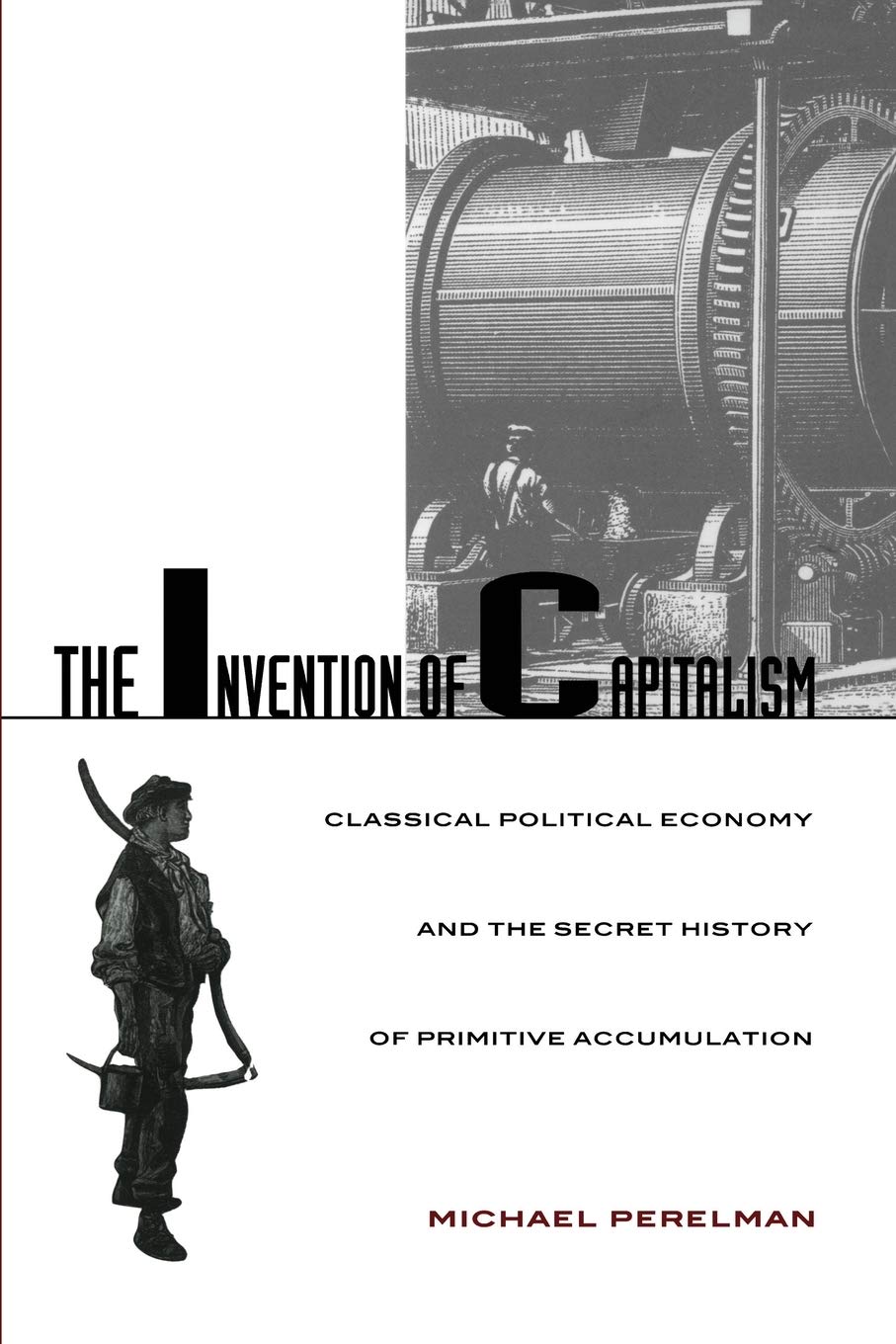
The originators of classical political economyAdam Smith, David Ricardo, James Steuart, and otherscreated a discourse that explained the logic, the origin, and, in many respects, the essential rightness of capitalism. But, in the great texts of that discourse, these writers downplayed a crucial requirement for capitalisms creation: For it to succeed, peasants would have to abandon their selfsufficient lifestyle and go to work for wages in a factory. Why would they willingly do this?Clearly, they did not go willingly. As Michael Perelman shows, they were forced into the factories with the active support of the same economists who were making theoretical claims for capitalism as a selfcorrecting mechanism that thrived without needing government intervention. Directly contradicting the laissezfaire principles they claimed to espouse, these men advocated government policies that deprived the peasantry of the means for selfprovision in order to coerce these small farmers into wage labor. To show how Adam Smith and the other classical economists appear to have deliberately obscured the nature of the control of labor and how policies attacking the economic independence of the rural peasantry were essentially conceived to foster primitive accumulation, Perelman examines diaries, letters, and the more practical writings of the classical economists. He argues that these private and practical writings reveal the real intentions and goals of classical political economyto separate a rural peasantry from their access to land.This rereading of the history of classical political economy sheds important light on the rise of capitalism to its present state of world dominance. Historians of political economy and Marxist thought will find that this book broadens their understanding of how capitalism took hold in the industrial age.
⚠️ WARNING (California Proposition 65):
This product may contain chemicals known to the State of California to cause cancer, birth defects, or other reproductive harm.
For more information, please visit www.P65Warnings.ca.gov.