
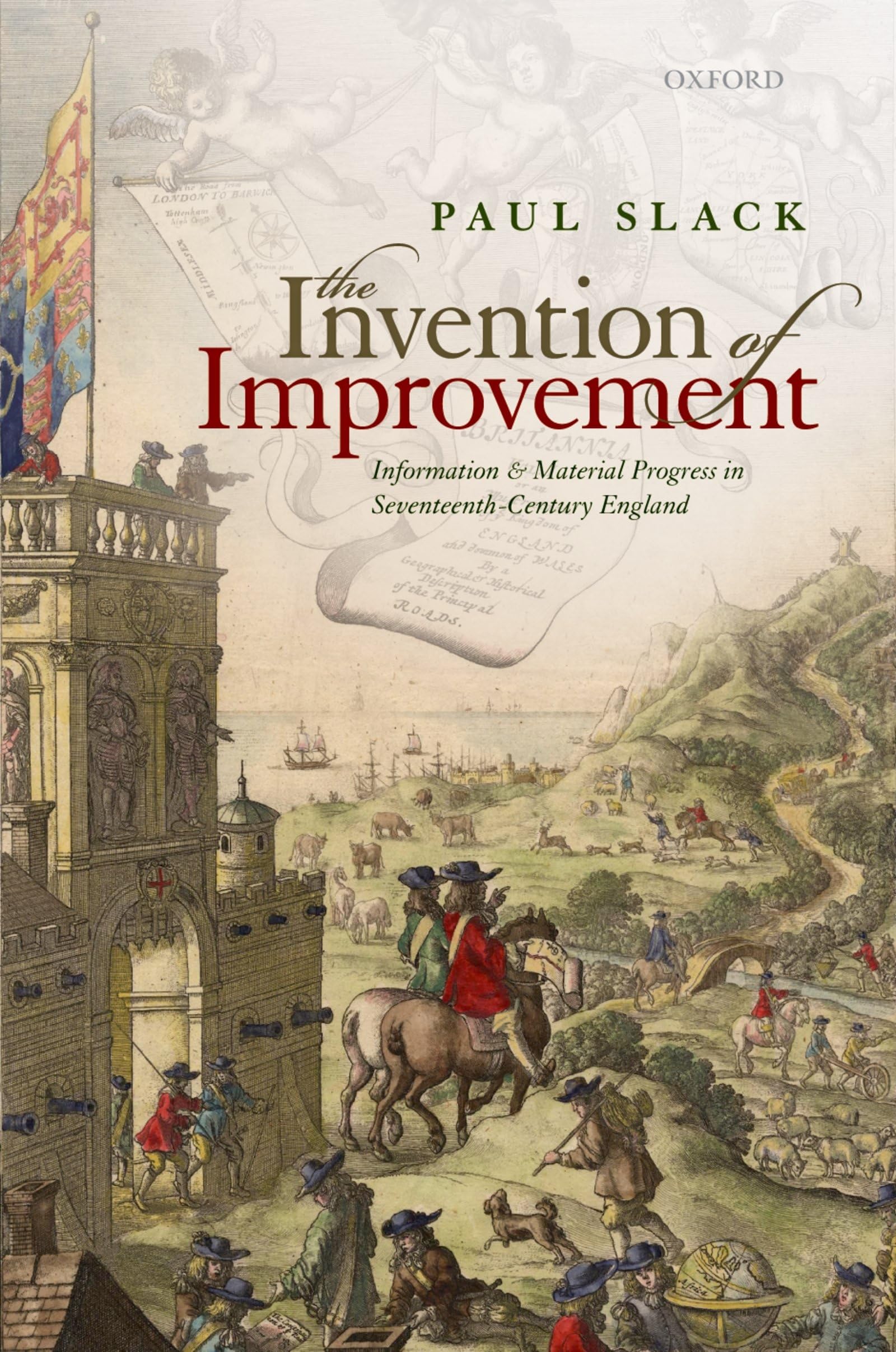
Title
The Invention of Improvement: Information and Material Progress in SeventeenthCentury England,Used
Sold by Ergodebooks, an authorized reseller.
Returns accepted within 30 days | support@ergodebooks.com
Shipping Information
- Free Standard Shipping — United States only
- Processing Time: 3–5 business days
- Estimated Delivery: 6–10 business days after dispatch
- Double-boxed, fully insured & discreetly packaged
- Tracking number sent via email once dispatched
Returns & Refund
Returns accepted within 30 days of delivery.
Damaged or Defective Item
Free return shipping + replacement or full refund
Wrong Item Received
Free return shipping + replacement or full refund
Change of Mind
Return shipping at customer's expense · 25% restocking fee applies
Payment Option

Improvement was a new concept in seventeenthcentury England; only then did it become usual for people to think that the most effective way to change things for the better was not a revolution or a return to the past, but the persistent application of human ingenuity to the challenge of increasing the country's wealth and general wellbeing. Improvements in agriculture and industry, commerce and social welfare, would bring infinite prosperity and happiness. The word improvement was itself a recent coinage. It was useful as a slogan summarising all these goals, and since it had no equivalent in other languages, it gave the English a distinctive culture of improvement that they took with them to Ireland and Scotland, and to their possessions overseas. It made them different from everyone else.The Invention of Improvement explains how this culture of improvement came about. Paul Slack explores the political and economic circumstances which allowed notions of improvement to take root, and the changes in habits of mind which improvement accelerated. It encouraged innovation, industriousness, and the acquisition of consumer goods which delivered comfort and pleasure. There was a new appreciation of material progress as a process that could be measured, and its impact was publicised by the circulation of information about it. It had made the country richer and many of its citizens more prosperous, if not always happier. Drawing on a rich variety of contemporary literature, The Invention of Improvement situates improvement at the centre of momentous changes in how people thought and behaved, how they conceived of their environment and their collective prospects, and how they cooperated in order to change them.
⚠️ WARNING (California Proposition 65):
This product may contain chemicals known to the State of California to cause cancer, birth defects, or other reproductive harm.
For more information, please visit www.P65Warnings.ca.gov.