
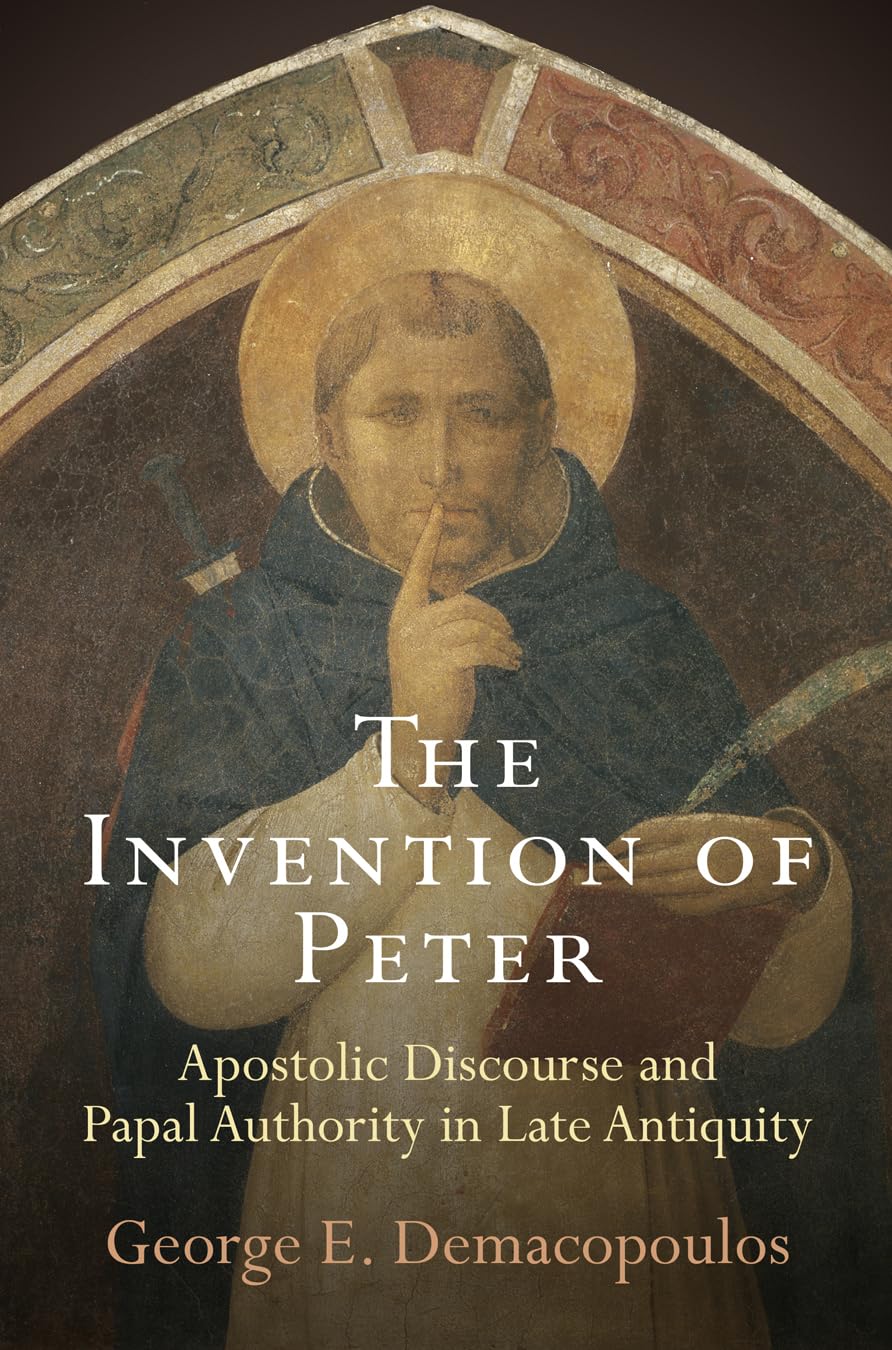
Title
The Invention Of Peter: Apostolic Discourse And Papal Authority In Late Antiquity (Divinations: Rereading Late Ancient Religion),New
Sold by Ergodebooks, an authorized reseller.
Returns accepted within 30 days | support@ergodebooks.com
Shipping Information
- Free Standard Shipping — United States only
- Processing Time: 3–5 business days
- Estimated Delivery: 6–10 business days after dispatch
- Double-boxed, fully insured & discreetly packaged
- Tracking number sent via email once dispatched
Returns & Refund
Returns accepted within 30 days of delivery.
Damaged or Defective Item
Free return shipping + replacement or full refund
Wrong Item Received
Free return shipping + replacement or full refund
Change of Mind
Return shipping at customer's expense · 25% restocking fee applies
Payment Option

On the first anniversary of his election to the papacy, Leo the Great stood before the assembly of bishops convening in Rome and forcefully asserted his privileged position as the heir of Peter the Apostle. This declaration marked the beginning of a powerful tradition: the Bishop of Rome would henceforth leverage the cult of St. Peter, and the popular association of St. Peter with the city itself, to his advantage. In The Invention of Peter, George E. Demacopoulos examines this Petrine discourse, revealing how the link between the historic Peter and the Roman Church strengthened, shifted, and evolved during the papacies of two of the most creative and dynamic popes of late antiquity, ultimately shaping medieval Christianity as we now know it.By emphasizing the ways in which this rhetoric of apostolic privilege was employed, extended, transformed, or resisted between the reigns of Leo the Great and Gregory the Great, Demacopoulos offers an alternate account of papal history that challenges the dominant narrative of an inevitable and unbroken rise in papal power from late antiquity through the Middle Ages. He unpacks escalating claims to ecclesiastical authority, demonstrating how this rhetoric, which almost always invokes a link to St. Peter, does not necessarily represent actual power or prestige but instead reflects moments of papal anxiety and weakness. Through its nuanced examination of an array of episcopal activitydiplomatic, pastoral, political, and administrativeThe Invention of Peter offers a new perspective on the emergence of papal authority and illuminates the influence that Petrine discourse exerted on the survival and exceptional status of the Bishop of Rome.
⚠️ WARNING (California Proposition 65):
This product may contain chemicals known to the State of California to cause cancer, birth defects, or other reproductive harm.
For more information, please visit www.P65Warnings.ca.gov.