If you have any questions, you are always welcome to contact us. We'll get back to you as soon as possible, withing 24 hours on weekdays.
Customer service
All questions about your order, return and delivery must be sent to our customer service team by e-mail at yourstore@yourdomain.com
Sale & Press
If you are interested in selling our products, need more information about our brand or wish to make a collaboration, please contact us at press@yourdomain.com
Help
If you have any questions, you are always welcome to contact us. We'll get back to you as soon as possible, withing 24 hours on weekdays.
Customer service
All questions about your order, return and delivery must be sent to our customer service team by e-mail at yourstore@yourdomain.com
Sale & Press
If you are interested in selling our products, need more information about our brand or wish to make a collaboration, please contact us at press@yourdomain.com
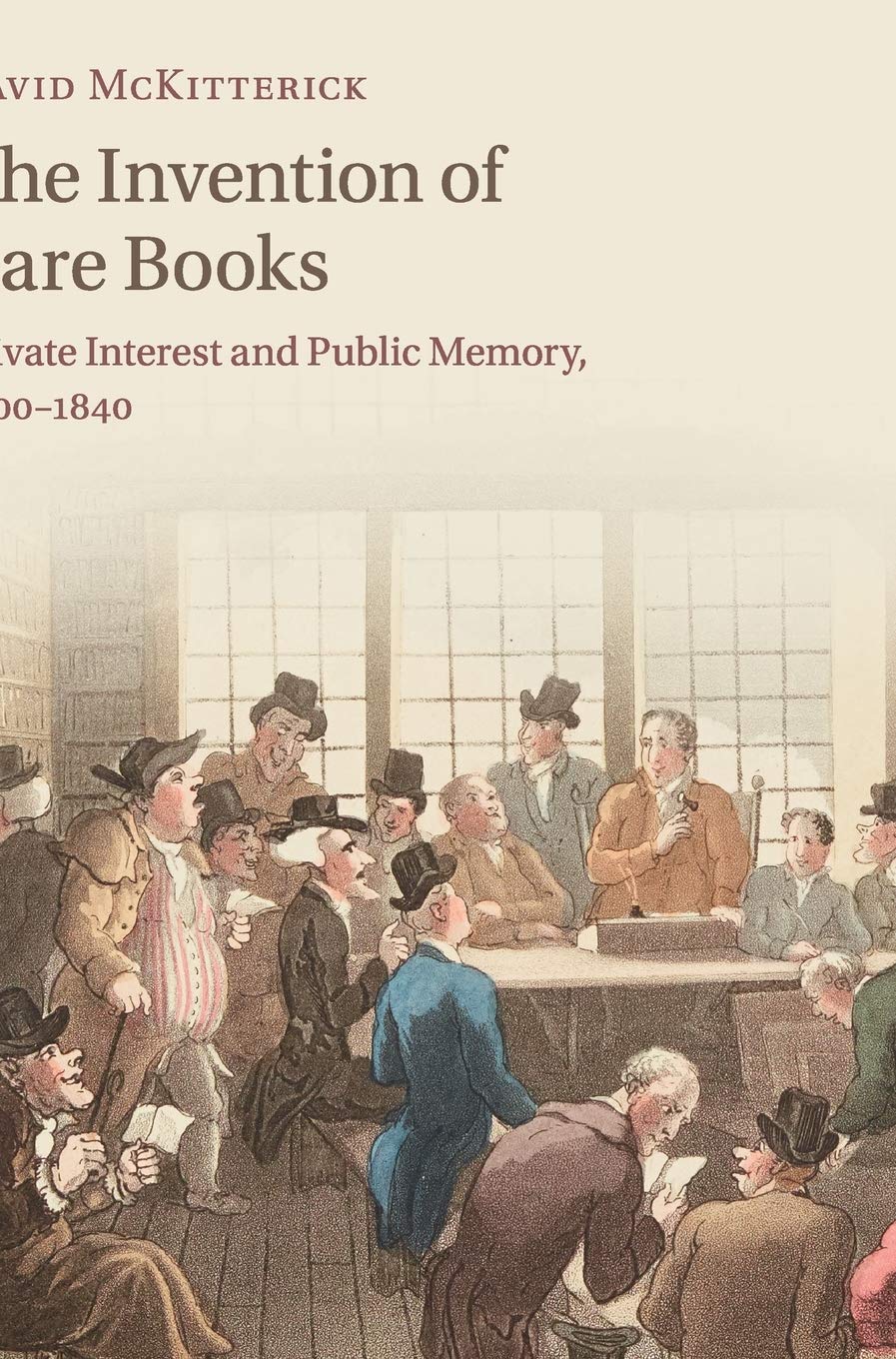
When does a book that is merely old become a rarity and an object of desire? David McKitterick examines, for the first time, the development of the idea of rare books, and why they matter. Studying examples from across Europe, he explores how this idea took shape in the sixteenth and seventeenth centuries, and how collectors, the book trade and libraries gradually came together to identify canons that often remain the same today. In a world that many people found to be oversupplied with books, the invention of rare books was a process of selection. As books are one of the principal means of memory, this process also created particular kinds of remembering. Taking a European perspective, McKitterick looks at these interests as they developed from being matters of largely private concern and curiosity, to the larger public and national responsibilities of the first half of the nineteenth century.
⚠️ WARNING (California Proposition 65):
This product may contain chemicals known to the State of California to cause cancer,
birth defects, or other reproductive harm.
For MAP (Minimum Advertised Price) violations and Intellectual Property (IP) or Trademark concerns, please contact:
support@ergodebooks.com
⚠️ California Proposition 65 Warning: Some products sold on this website may expose you to chemicals known to the State of California to cause cancer, birth defects, or other reproductive harm. For more information, visit www.P65Warnings.ca.gov.