
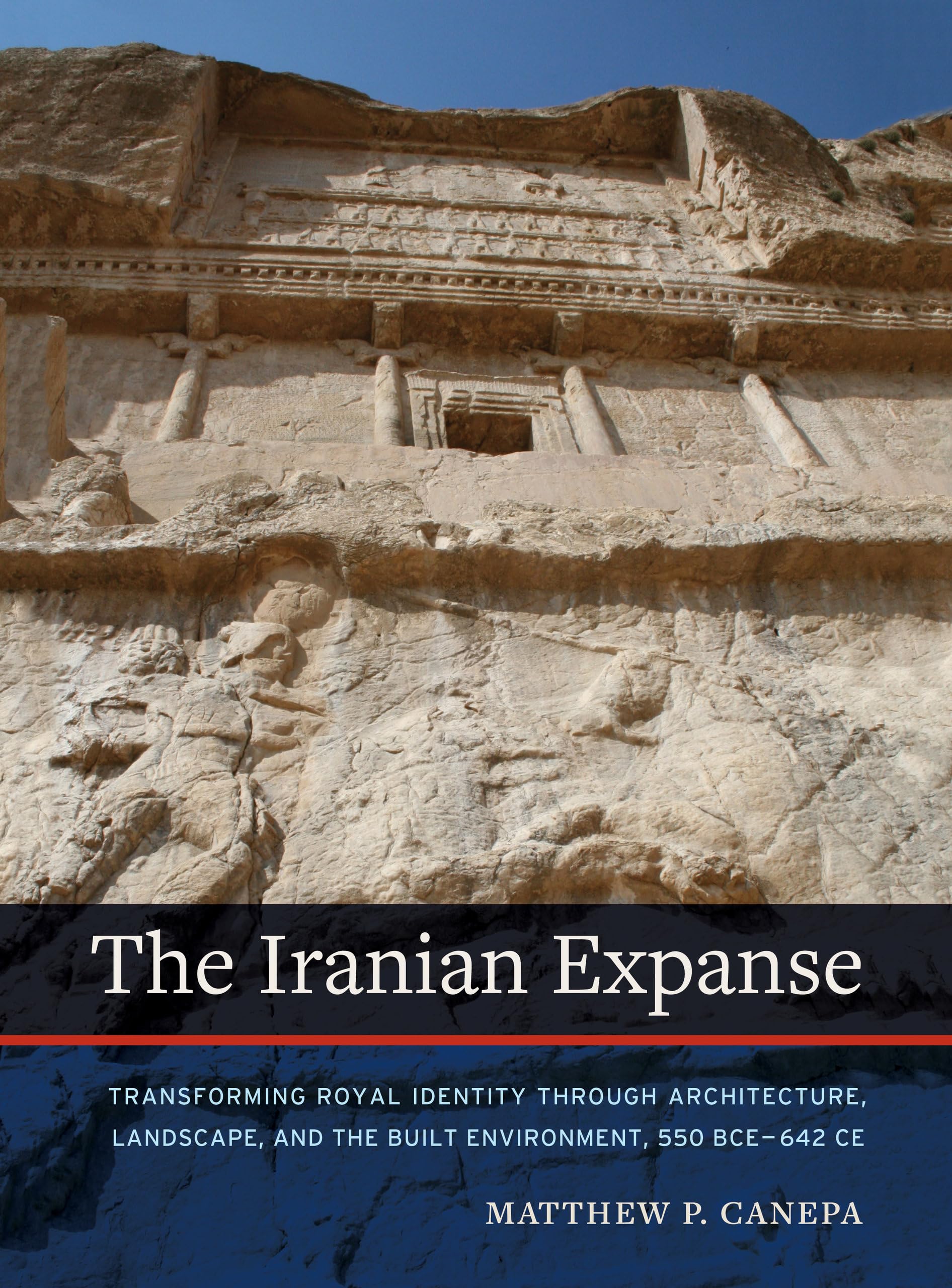
Title
The Iranian Expanse: Transforming Royal Identity through Architecture, Landscape, and the Built Environment, 550 BCE642 CE,Used
Sold by Ergodebooks, an authorized reseller.
Returns accepted within 30 days | support@ergodebooks.com
Shipping Information
- Free Standard Shipping — United States only
- Processing Time: 3–5 business days
- Estimated Delivery: 6–10 business days after dispatch
- Double-boxed, fully insured & discreetly packaged
- Tracking number sent via email once dispatched
Returns & Refund
Returns accepted within 30 days of delivery.
Damaged or Defective Item
Free return shipping + replacement or full refund
Wrong Item Received
Free return shipping + replacement or full refund
Change of Mind
Return shipping at customer's expense · 25% restocking fee applies
Payment Option

The Iranian Expanse explores how kings in Persia and the ancient Iranian world utilized the built and natural environment to form and contest Iranian cultural memory, royal identity, and sacred cosmologies. Investigating over a thousand years of history, from the Achaemenid period to the arrival of Islam, The Iranian Expanse argues that Iranian identities were built and shaped not by royal discourse alone, but by strategic changes to Western Asias cities, sanctuaries, palaces, and landscapes. The Iranian Expanse critically examines the construction of a new Iranian royal identity and empire, which subsumed and subordinated all previous traditions, including those of Mesopotamia, Egypt, and Anatolia. It then delves into the startling innovations that emerged after Alexander under the Seleucids, Arsacids, Kushans, Sasanians, and the PersoMacedonian dynasties of Anatolia and the Caucasus, a previously understudied and misunderstood period. Matthew P. Canepa elucidates the many ruptures and renovations that produced a new royal culture that deeply influenced not only early Islam, but also the wider Persianate world of the IlKhans, Safavids, Timurids, Ottomans, and Mughals.
⚠️ WARNING (California Proposition 65):
This product may contain chemicals known to the State of California to cause cancer, birth defects, or other reproductive harm.
For more information, please visit www.P65Warnings.ca.gov.
- Q: What is the page count of 'The Iranian Expanse'? A: This book contains five hundred twelve pages. It provides an in-depth exploration of Persian architecture and culture.
- Q: What are the dimensions of this book? A: The dimensions are eight point five inches in length, one point six one inches in width, and eleven inches in height. This size makes it suitable for easy handling.
- Q: What type of binding does this book have? A: This book is bound in hardcover. The hardcover ensures durability for frequent use and reading.
- Q: Who is the author of 'The Iranian Expanse'? A: The author is Matthew P. Canepa. He focuses on ancient Persian culture and architecture in this work.
- Q: What is the primary focus of 'The Iranian Expanse'? A: The book examines how Persian kings shaped cultural memory and royal identity through architecture. It spans over a thousand years of ancient history.
- Q: Is this book suitable for academic study? A: Yes, it is suitable for academic study. It provides valuable insights into Persian history, architecture, and identity.
- Q: How can I use this book in my research? A: You can use it as a primary source for understanding Persian architecture and cultural identity. It is beneficial for studies in history and architecture.
- Q: Is there a specific reading level for this book? A: The book is suitable for advanced readers, particularly those with an interest in history and architecture. It is ideal for university students and scholars.
- Q: What themes does 'The Iranian Expanse' cover? A: It covers themes of royal identity, cultural memory, and the evolution of architecture in ancient Persia. These themes are examined through historical context.
- Q: How should I store 'The Iranian Expanse' to keep it in good condition? A: Store the book in a cool, dry place away from direct sunlight. This will help preserve the hardcover and pages.
- Q: Are there any specific care instructions for this book? A: Avoid exposing the book to moisture and extreme temperatures. Handle it with clean hands to prevent damage to the pages.
- Q: What if my copy arrives damaged? A: If your copy arrives damaged, contact the retailer for a return or exchange. Most sellers have policies in place for such issues.
- Q: Can I find this book in digital format? A: Yes, it is available in digital formats. Check online retailers for eBook options.
- Q: Is 'The Iranian Expanse' appropriate for casual readers? A: Yes, it can be appropriate for casual readers interested in history. However, some sections may be more academic.
- Q: What sets 'The Iranian Expanse' apart from similar books? A: It uniquely combines architecture with cultural history, offering insights into how built environments shaped identity over centuries.
- Q: Does this book include illustrations or maps? A: Yes, it includes one hundred seventy black and white images and five black and white maps. These visual aids enhance the text's understanding.