
Title
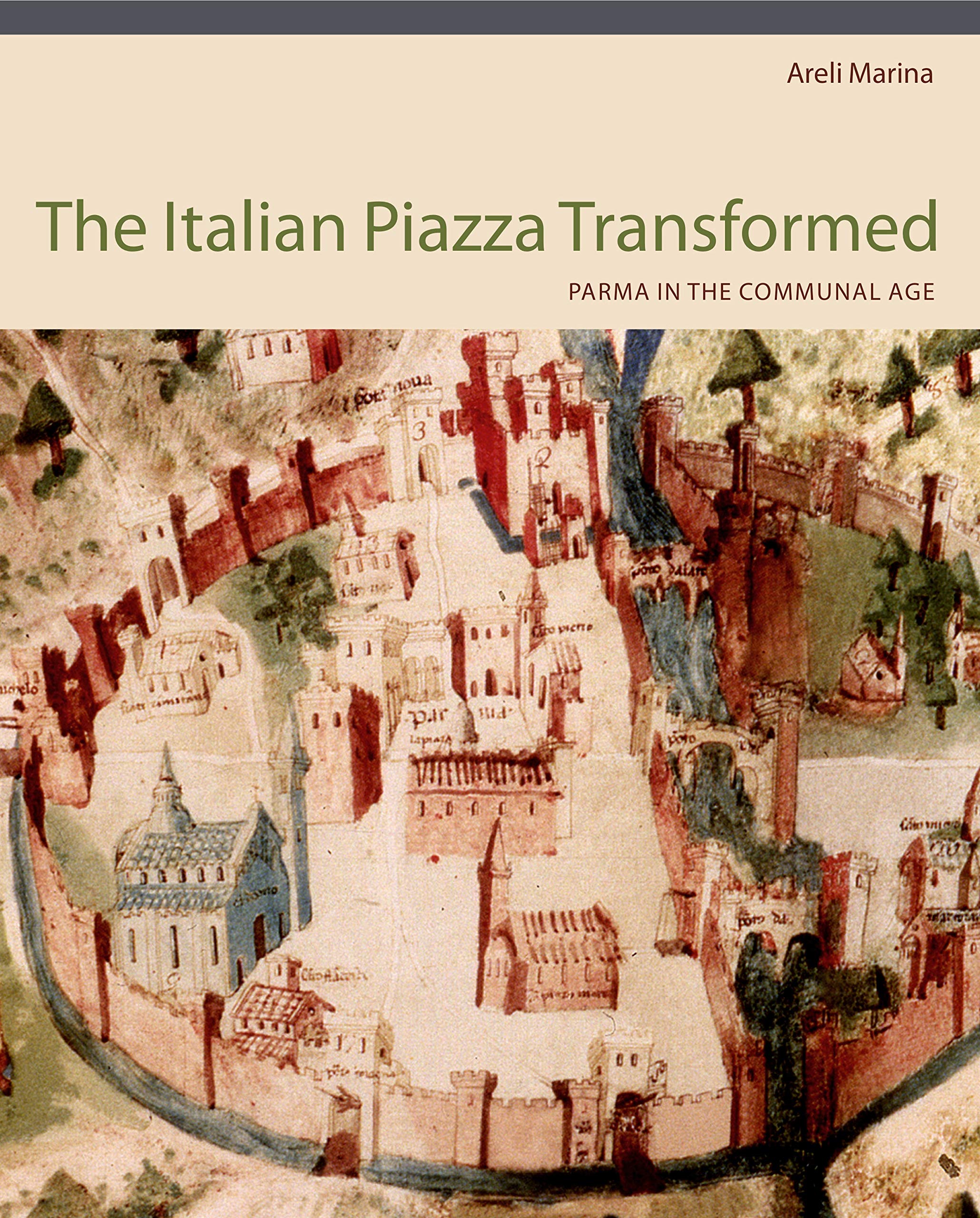
The Italian Piazza Transformed: Parma in the Communal Age,Used
Sold by Ergodebooks, an authorized reseller.
Returns accepted within 30 days | support@ergodebooks.com
Shipping Information
- Free Standard Shipping — United States only
- Processing Time: 3–5 business days
- Estimated Delivery: 6–10 business days after dispatch
- Double-boxed, fully insured & discreetly packaged
- Tracking number sent via email once dispatched
Returns & Refund
Returns accepted within 30 days of delivery.
Damaged or Defective Item
Free return shipping + replacement or full refund
Wrong Item Received
Free return shipping + replacement or full refund
Change of Mind
Return shipping at customer's expense · 25% restocking fee applies
Payment Option

Winner of the 2013 Howard R. Marraro Prize for the best book on Italian history from the American Catholic Historical Association.During the long thirteenth century, the cities of northern Italy engendered a vital and distinctive civic culture despite constant political upheaval. In The Italian Piazza Transformed, Areli Marina examines the radical transformation of Parma's urban center in this tumultuous period by reconstructing the city's two most significant public spaces: its cathedral and communal squares. Treating the space of these piazzas as attentively as the buildings that shape their perimeters, she documents and discusses the evolution of each site from 1196, tracing their construction by opposing political factions within the city's ruling elite. By the early fourteenth century, Parma's patrons and builders had imposed strict geometric order on formerly inchoate sites, achieving a formal coherence attained by few other cities.Moreover, Marina establishes that the piazzas' orderly contours, dramatic open spaces, and monumental buildings were more than grand backdrops to civic ritual. Parma's squares were also agents in the production of the citystate's mechanisms of control. They deployed brick, marble, and mortar according to both ancient Roman and contemporary courtly modes to create a physical embodiment of the modern, syncretic authority of the city's leaders. By weaving together traditional formal and iconographic approaches with newer concepts of the symbolic, social, and political meanings of urban space, Marina reframes the complex relationship between late medieval Italy's civic culture and the carefully crafted piazzas from which it emerged.
⚠️ WARNING (California Proposition 65):
This product may contain chemicals known to the State of California to cause cancer, birth defects, or other reproductive harm.
For more information, please visit www.P65Warnings.ca.gov.