
Title
The Japanese City
Sold by Ergodebooks, an authorized reseller.
Returns accepted within 30 days | support@ergodebooks.com
Shipping Information
- Free Standard Shipping — United States only
- Processing Time: 3–5 business days
- Estimated Delivery: 6–10 business days after dispatch
- Double-boxed, fully insured & discreetly packaged
- Tracking number sent via email once dispatched
Returns & Refund
Returns accepted within 30 days of delivery.
Damaged or Defective Item
Free return shipping + replacement or full refund
Wrong Item Received
Free return shipping + replacement or full refund
Change of Mind
Return shipping at customer's expense · 25% restocking fee applies
Payment Option

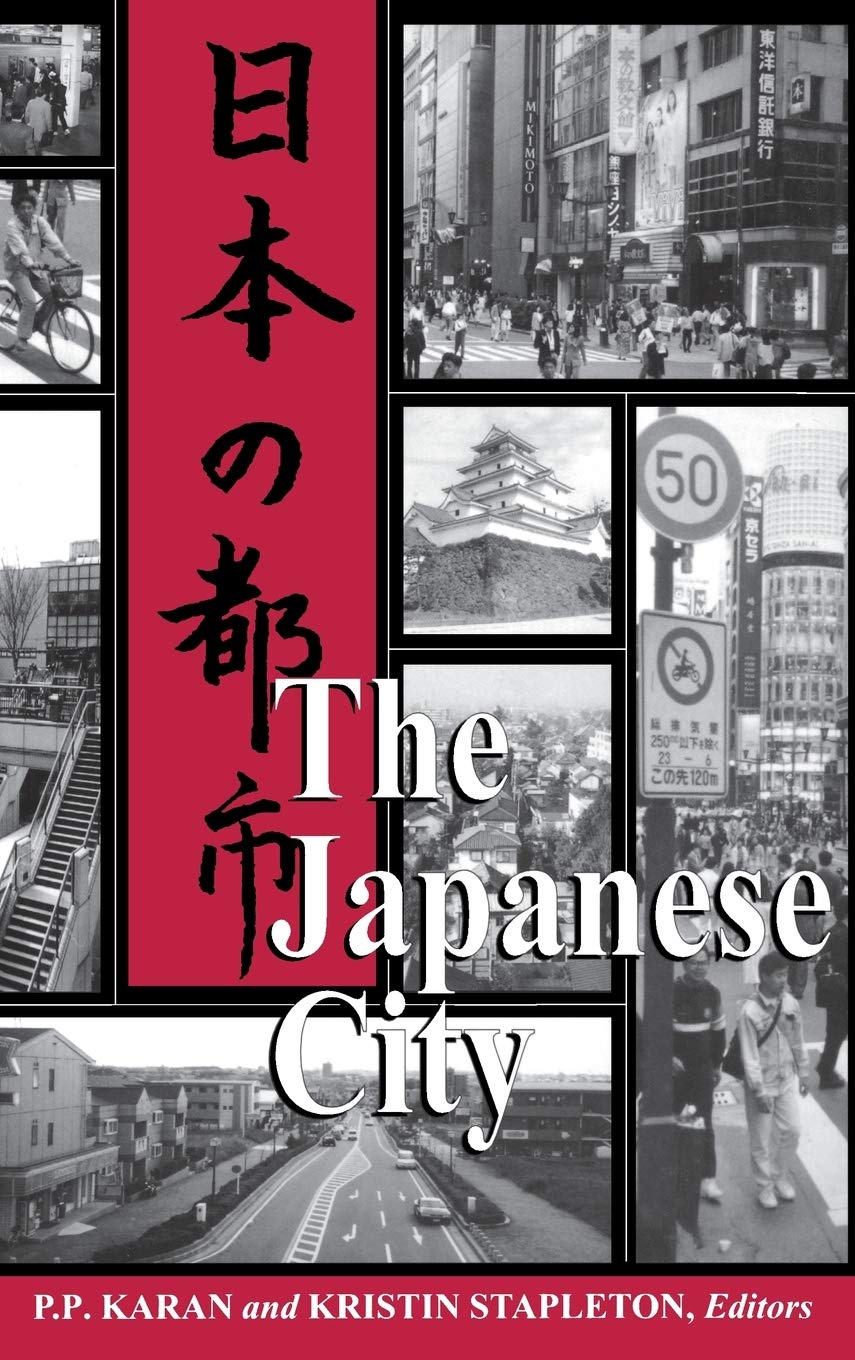
Japan Is One Of The Most Crowded Countries On Earth, With Threefourths Of Its Population Now Living In Cities. Tokyo Is Easily The Most Populous City On The Planet. And Yet, Though Closely Packed, Its Citizens Dwell Together In Relative Peace. In America, Innercity Violenceoften Attributed In Part To Overcrowdingis Frequently Emphasized As One Of The Great Social Problems Of The Day. What Might We Learn From Japan'S Situation That Could Be Applied To Our Own As We Approach The Twentyfirst Century?In This Collection An Interdisciplinary Group Of International Scholars Seek To Understand And Explain The Process And Characteristics Shaping The Modern Japanese City. With Frequent Comparisons To The American City, They Consider Such Topics As Urban Landscapes, The Quality Of Life In The Suburbs, Spatial Mixing Of Social Classes In The City, Land Use Planning And Control, Environmental Pollution, And Images Of The City In Japanese Literature.The Only Book On The Subject, The Japanese City Surveys The Important Literature And Highlights The Current Issues In Urban Studies. The Numerous Photographs, Maps, Tables, And Graphs, Combined With The High Quality Of The Contributions, Offer A Comprehensive Look At The Contemporary Japanese City.Contributors: William Burton, David L. Callies, Roman Cybriwsky, Kuniko Fujita, Theodore J. Gilman, Richard Child Hill, P.P. Karan, Robert Kidder, Cotton Mather, And Kohei Okamoto.
⚠️ WARNING (California Proposition 65):
This product may contain chemicals known to the State of California to cause cancer, birth defects, or other reproductive harm.
For more information, please visit www.P65Warnings.ca.gov.
- Q: What is the binding type of 'The Japanese City'? A: The binding type is hardcover. This durable format ensures longevity and protection for the book's pages.
- Q: How many pages does 'The Japanese City' have? A: The book contains two hundred fifty-six pages. This length provides a comprehensive exploration of urban studies in Japan.
- Q: What are the dimensions of 'The Japanese City'? A: The dimensions are six and a half inches by one inch by nine and a half inches. These measurements make it a manageable size for readers.
- Q: Who is the author of 'The Japanese City'? A: The author is P.P. Karan. He is noted for his expertise in urban and land use planning.
- Q: What is the main subject of 'The Japanese City'? A: The main subject is urban and land use planning in Japan. It examines the characteristics and processes shaping modern Japanese cities.
- Q: Is 'The Japanese City' suitable for academic study? A: Yes, it is suitable for academic study. The book includes contributions from an interdisciplinary group of international scholars.
- Q: How can I use 'The Japanese City' for my research? A: You can use it as a reference for urban studies. The book highlights important literature and current issues in the field.
- Q: Is 'The Japanese City' appropriate for general readers? A: Yes, it's appropriate for general readers. The accessible content can engage those interested in urban issues and Japan.
- Q: What topics are covered in 'The Japanese City'? A: Topics include urban landscapes, quality of life, land use planning, and environmental pollution. Each topic offers insights into Japanese urban life.
- Q: How should I care for 'The Japanese City'? A: Keep it in a dry place away from direct sunlight. This will help preserve the book's condition and prevent fading.
- Q: Can I return 'The Japanese City' if I'm not satisfied? A: Yes, you can return it if you're not satisfied. Check the retailer's return policy for specific terms and conditions.
- Q: What if 'The Japanese City' arrives damaged? A: If it arrives damaged, contact the seller for a replacement or refund. Most retailers have policies for damaged books.
- Q: Is there a warranty for 'The Japanese City'? A: No, there is typically no warranty for books. However, standard return policies apply for unsatisfactory conditions.
- Q: What makes 'The Japanese City' unique compared to other urban studies? A: It uniquely compares Japanese and American cities. This comparative analysis offers insights that are not commonly found in other studies.
- Q: Who are the contributors to 'The Japanese City'? A: Contributors include William Burton, David L. Callies, and Roman Cybriwsky among others. Their diverse expertise enriches the book's content.
- Q: Is 'The Japanese City' considered a primary source for urban studies? A: Yes, it is considered a primary source. It compiles significant research and perspectives on urban planning in Japan.