
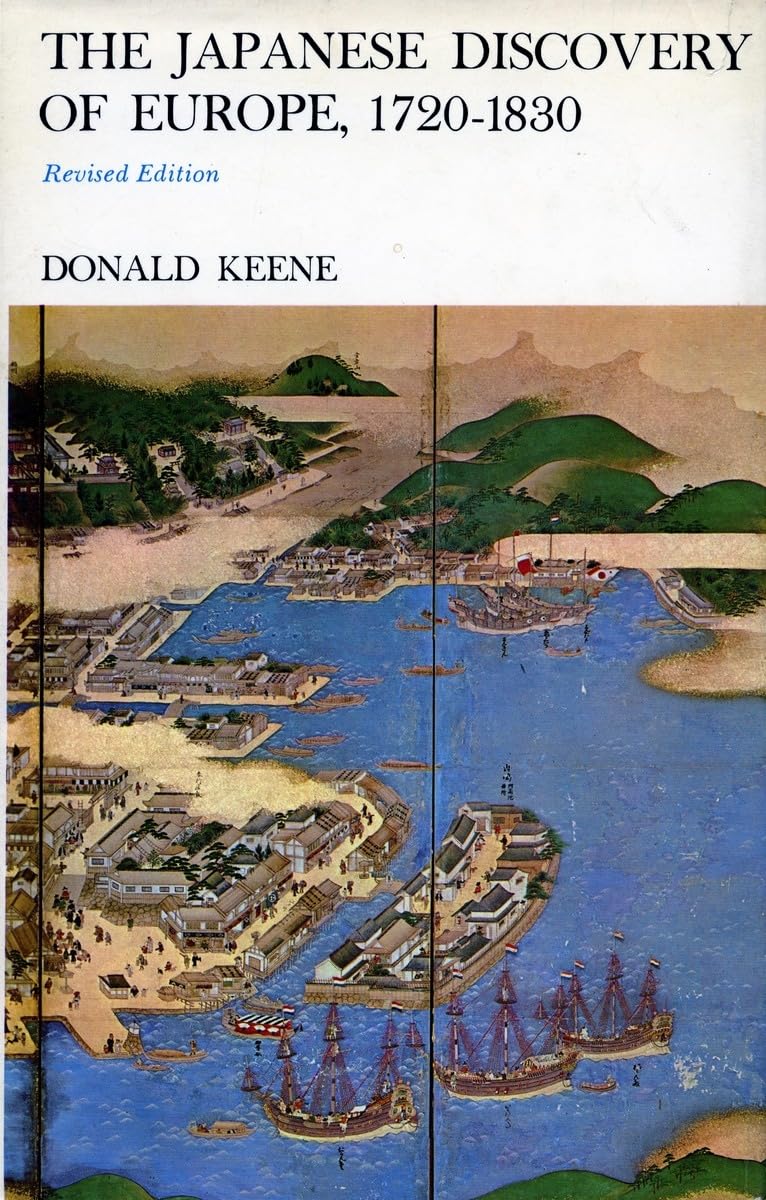
Title
The Japanese Discovery Of Europe, 17201830: Revised Edition,New
Sold by Ergodebooks, an authorized reseller.
Returns accepted within 30 days | support@ergodebooks.com
Shipping Information
- Free Standard Shipping — United States only
- Processing Time: 3–5 business days
- Estimated Delivery: 6–10 business days after dispatch
- Double-boxed, fully insured & discreetly packaged
- Tracking number sent via email once dispatched
Returns & Refund
Returns accepted within 30 days of delivery.
Damaged or Defective Item
Free return shipping + replacement or full refund
Wrong Item Received
Free return shipping + replacement or full refund
Change of Mind
Return shipping at customer's expense · 25% restocking fee applies
Payment Option

This Is An Account Of The Growth And Uses Of Western Learning In Japan From 1720 To 1830. These Are The Dates Of The Beginning Of Official Interest In Western Learning And Of The Expulsion Of Siebold From The Country, The First Stage Of A Crisis That Could Be Resolved Only By The Opening Of The Country Of The West. The Century And More Included By The Two Dates Was A Most Important Period In Japanese History, When Intellectuals, Rebelling At The Isolation Of Their Country, Desperately Sought Knowledge From Abroad. The Amazing Energy And Enthusiasm Of Men Like Honda Toshiaki Made Possible The Spectacular Changes In Japan, Which Are All Too Often Credited To The Arrival Of Commodore Perry.The Author Chose Honda Toshiaki (17441821) As His Central Figure. A Page From Any One Of Honda'S Writings Suffices To Show That With Him One Has Entered A New Age, That Of Modern Japan. One Finds In His Books A New Spirit, Restless, Curious And Receptive. There Is In Him The Wonder At New Discoveries, The Delight In Widening Horizons. Honda Took A Kind Of Pleasure Even In Revealing That Japan, After All, Was Only A Small Island In A Large World. To The Japanese Who Had Thought Of Chinese Civilization As Being Immemorial Antiquity, He Declared That Egypt'S Was Thousands Of Years Older And Far Superior. The World, He Discovered, Was Full Of Wonderful Things, And He Insisted That Japan Take Advantage Of Them. Honda Looked At Japan As He Thought A Westerner Might, And Saw Things That Had To Be Changed, Terrible Drains On The Country'S Moral And Physical Strength. Within Him Sprang The Conviction That Japan Must Become One Of The Great Nations Of The World.
⚠️ WARNING (California Proposition 65):
This product may contain chemicals known to the State of California to cause cancer, birth defects, or other reproductive harm.
For more information, please visit www.P65Warnings.ca.gov.
- Q: What is the page count of this book? A: This book has two hundred seventy-two pages. It provides an in-depth exploration of Western learning's influence in Japan.
- Q: What are the dimensions of this book? A: The book measures five and a half inches in length, zero point six eight inches in width, and eight and a half inches in height.
- Q: What type of binding does this book have? A: This book is bound in paperback. This makes it lightweight and easy to handle.
- Q: Who is the author of this book? A: The author is Donald Keene. He is renowned for his expertise in Japanese literature and culture.
- Q: What is the main theme of this book? A: The main theme revolves around the growth and uses of Western knowledge in Japan during the early nineteenth century.
- Q: How is this book categorized? A: This book is categorized under Japan. It explores significant historical and cultural developments.
- Q: Is this book suitable for beginners in Japanese history? A: Yes, this book is suitable for beginners. It presents complex topics in an accessible manner.
- Q: What kind of reader would enjoy this book? A: Readers interested in Japanese history, cultural exchange, and the impact of Western learning would enjoy this book.
- Q: Can this book be a good resource for academic purposes? A: Yes, this book serves as a valuable academic resource. It offers insights into Japan's historical transformation.
- Q: How do I care for this paperback book? A: To care for this book, store it upright in a cool, dry place. Avoid exposure to direct sunlight to prevent fading.
- Q: Is this book safe for children? A: Yes, this book is safe for older children. It provides educational content about history and culture.
- Q: How should I clean this book if it gets dirty? A: To clean this book, gently wipe the cover with a dry cloth. Avoid using water or cleaning solutions.
- Q: What if the book arrives damaged? A: If the book arrives damaged, contact the seller for a return or replacement. Most sellers have a customer service policy.
- Q: What is the return policy for this book? A: The return policy typically allows returns within thirty days of purchase. Check with your seller for specific guidelines.
- Q: How can I ensure the book stays in good condition? A: To keep the book in good condition, handle it with clean hands and avoid bending the spine.