
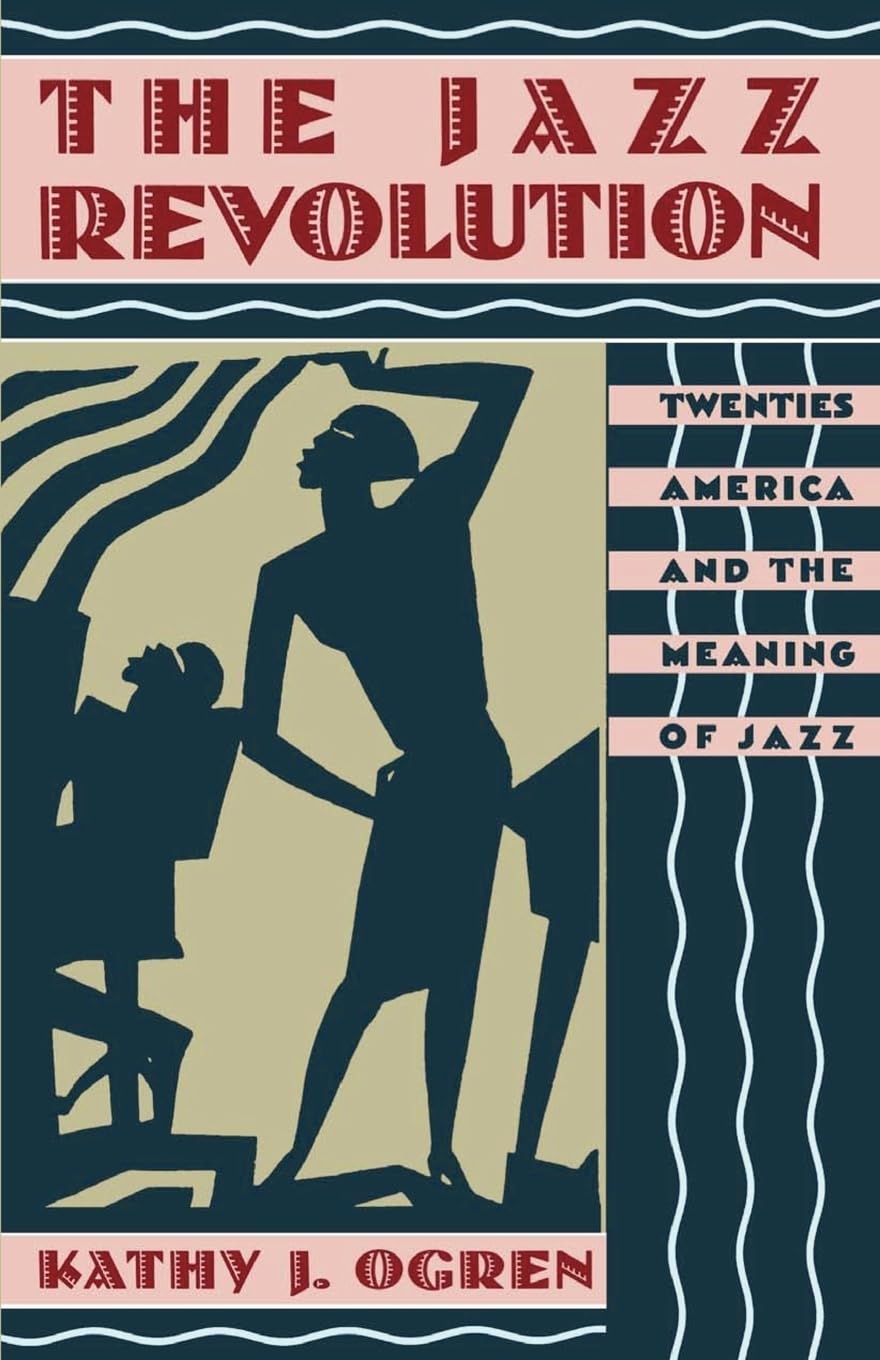
Title
The Jazz Revolution: Twenties America and the Meaning of Jazz,Used
Sold by Ergodebooks, an authorized reseller.
Returns accepted within 30 days | support@ergodebooks.com
Shipping Information
- Free Standard Shipping — United States only
- Processing Time: 3–5 business days
- Estimated Delivery: 6–10 business days after dispatch
- Double-boxed, fully insured & discreetly packaged
- Tracking number sent via email once dispatched
Returns & Refund
Returns accepted within 30 days of delivery.
Damaged or Defective Item
Free return shipping + replacement or full refund
Wrong Item Received
Free return shipping + replacement or full refund
Change of Mind
Return shipping at customer's expense · 25% restocking fee applies
Payment Option

Born of African rhythms, the spiritual 'call and response,' and other American musical traditions, jazz was by the 1920s the dominant influence on this country's popular music. Writers of the Harlem Renaissance (Langston Hughes, Claude McKay, Zora Neale Hurston) and the 'Lost Generation' (Malcolm Cowley, F. Scott Fitzgerald, and Gertrude Stein), along with many other Americans celebrated itboth as an expression of black culture and as a symbol of rebellion against American society. But an equal number railed against it. Whites were shocked by its raw emotion and sexuality, and blacks considered it 'devil's music' and criticized it for casting a negative light on the black community.In this illuminating work, Kathy Ogren places this controversy in the social and cultural context of 1920s America and sheds new light on jazz's impact on the nation as she traces its dissemination from the honkytonks of New Orleans, New York, and Chicago, to the clubs and cabarets of such places as Kansas City and Los Angeles, and further to the airwaves. Ogren argues that certain characteristics of jazz, notably the participatory nature of the music, its unusual rhythms and emphasis, gave it a special resonance for a society undergoing rapid change. Those who resisted the changes criticized the new music; those who accepted them embraced jazz. In the words of conductor Leopold Stowkowski, 'Jazz [had] come to stay because it [was] an expression of the times, of the breathless, energetic, superactive times in which we [were] living, it [was] useless to fight against it.'Numerous other factors contributed to the growth of jazz as a popular music during the 1920s. The closing of the Storyville section of New Orleans in 1917 was a signal to many jazz greats to move north and west in search of new homes for their music. Ogren follows them to such places as Chicago, New York, and San Francisco, and, using the musicians' own words as often as possible, tells of their experiences in the clubs and cabarets. Prohibition, ushered in by the Volstead Act of 1919, sent people out in droves to gangcontrolled speakeasies, many of which provided jazz entertainment. And the 1920s economic boom, which made music readily available through radio and the phonograph record, created an even larger audience for the new music. But Ogren maintains that jazz itself, through its syncopated beat, improvisation, and blue tonalities, spoke to millions.Based on print media, secondary sources, biographies and autobiographies, and making extensive use of oral histories, The Jazz Revolution offers provocative insights into both early jazz and American culture.
⚠️ WARNING (California Proposition 65):
This product may contain chemicals known to the State of California to cause cancer, birth defects, or other reproductive harm.
For more information, please visit www.P65Warnings.ca.gov.
- Q: What is the main theme of 'The Jazz Revolution'? A: 'The Jazz Revolution: Twenties America and the Meaning of Jazz' explores the cultural significance of jazz in 1920s America, highlighting its role as both an expression of black culture and a symbol of rebellion against societal norms.
- Q: Who is the author of 'The Jazz Revolution'? A: The book is authored by Kathy Ogren, who provides insights into the jazz movement and its impact on American culture.
- Q: What type of binding is used for this book? A: 'The Jazz Revolution' is available in paperback binding, making it flexible and easy to handle.
- Q: How many pages does 'The Jazz Revolution' have? A: The book contains 240 pages, providing an in-depth exploration of jazz and its historical context.
- Q: When was 'The Jazz Revolution' published? A: 'The Jazz Revolution' was published on June 4, 1992, and is a revised edition, reflecting updated insights and research.
- Q: What kind of research is 'The Jazz Revolution' based on? A: The book is based on a variety of sources, including print media, secondary sources, biographies, autobiographies, and extensive oral histories.
- Q: Does 'The Jazz Revolution' include personal accounts from musicians? A: Yes, Kathy Ogren incorporates the words and experiences of jazz musicians to provide a personal perspective on their lives and the evolution of jazz.
- Q: What cultural events does the book discuss in relation to jazz? A: 'The Jazz Revolution' discusses significant events such as Prohibition and the closing of Storyville, which influenced the movement of jazz musicians and the popularity of jazz music.
- Q: Is this book suitable for someone new to jazz history? A: Yes, 'The Jazz Revolution' is suitable for readers new to jazz history as it provides a comprehensive overview of the genre's significance and cultural impact.
- Q: What audience would benefit from reading 'The Jazz Revolution'? A: The book is ideal for students, music enthusiasts, and anyone interested in American history, particularly those wanting to understand the cultural dynamics of the 1920s.