
Title
The Journey To Wisdom: Selfeducation In Patristic And Medieval Literature,Used
Sold by Ergodebooks, an authorized reseller.
Returns accepted within 30 days | support@ergodebooks.com
Shipping Information
- Free Standard Shipping — United States only
- Processing Time: 3–5 business days
- Estimated Delivery: 6–10 business days after dispatch
- Double-boxed, fully insured & discreetly packaged
- Tracking number sent via email once dispatched
Returns & Refund
Returns accepted within 30 days of delivery.
Damaged or Defective Item
Free return shipping + replacement or full refund
Wrong Item Received
Free return shipping + replacement or full refund
Change of Mind
Return shipping at customer's expense · 25% restocking fee applies
Payment Option

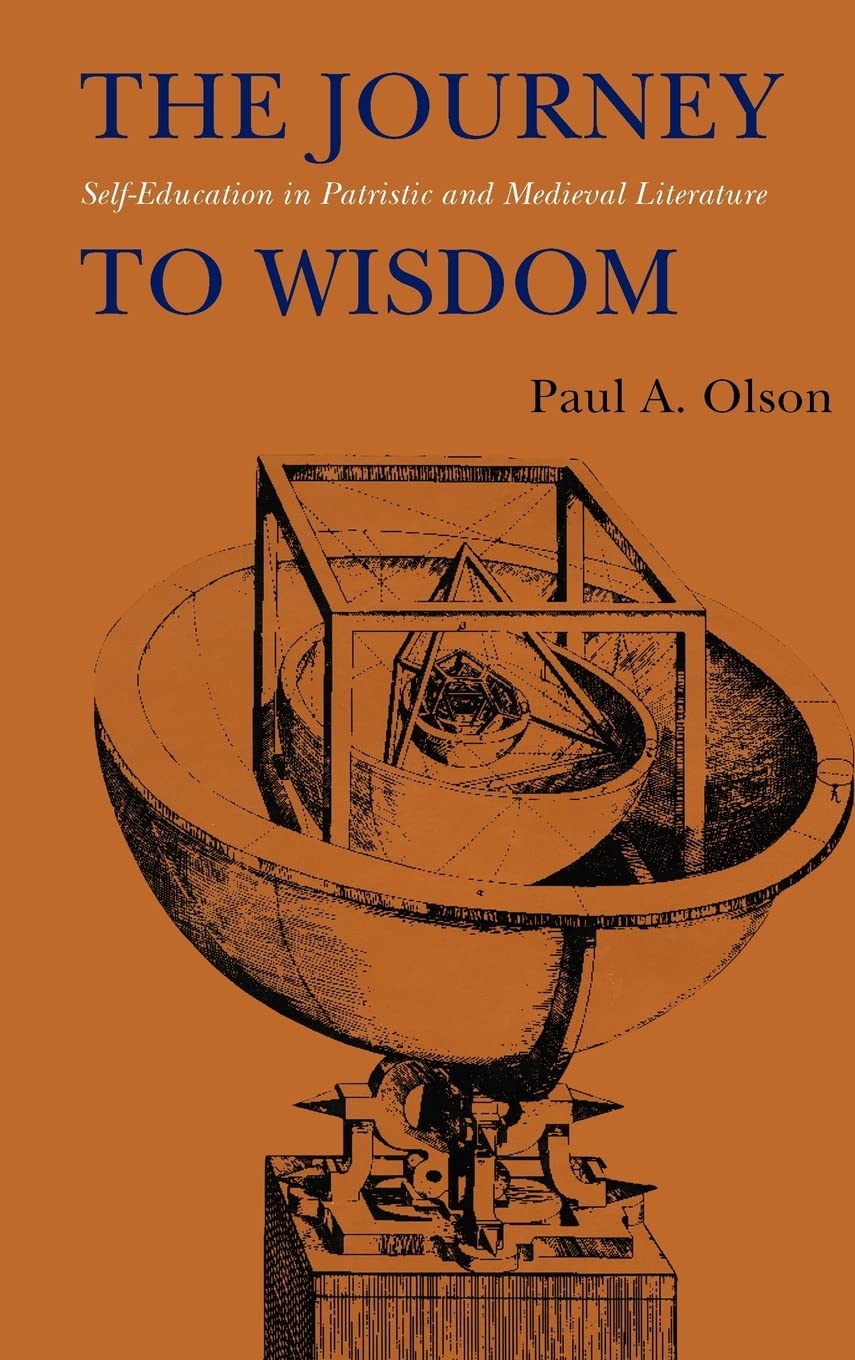
The Journey to Wisdom addresses a broad array of topics in education, the natural world, and medieval intellectual history. The book examines a philosophy of education that originated with the ancient Greeks and that reached its culmination in the latemedieval and earlyRenaissance periods. That philosophy of education promotes a journey to wisdom, involving an escape from pure subjectivity and the seductions of rhetoric and leading to a profound awareness of the natural world and natures God. It grants us a renewed sense of education as a selfdirected, transforming journey to knowledge and insightrather than (as is so often the case now) as an impersonal, bureaucratized trek that reflects little sense of the ultimate aims of education.The volume opens with a discussion of the quarrel in ancient Greece between the Sophists and the socalled philosophersa quarrel, Paul A. Olson writes, out of which the [philosophers] tradition centering education in reality, as opposed to social convention, develops. Subsequent chapters follow the development of this tradition in the writings of Augustine, Boethius, Dante, Petrarch, Copernicus, Galileo, Kepler, and others. Here Olson refutes several recent theories: that medieval intellectuals helped legitimize technological mastery and exploitation of the environment; that medieval education involved no systematic progress toward recognizing the sanctity of creation; and that all literary worksmedieval ones includedare selfreferenced, and therefore that they offer no guidance to a world beyond themselves.The Journey to Wisdom will be essential reading for students of ancient, medieval, and Renaissance intellectual history. But in its unmistakably modern concerns about education, the book also speaks to a far wider spectrum of readers. Olsons study falls into that rarest category of scholarly productions: one that reflects both its authors profound knowledge of the past and his equally great commitment to the present. That dual commitment accounts for the uncommon insightsand pleasuresoffered by this book.
⚠️ WARNING (California Proposition 65):
This product may contain chemicals known to the State of California to cause cancer, birth defects, or other reproductive harm.
For more information, please visit www.P65Warnings.ca.gov.